10 Reasons to Buy a Pure Linen Saree This Summer
Focus keyword: pure linen saree | URL: /10-reasons-to-buy-pure-linen-saree/ | Category: Linen Sarees, Summer Fashion | Internal links: linen saree collection, cotton suit sets, Ajrakh fabric
↓ Jump to ContentsEvery summer, the same question comes back: what do I wear that looks good, feels cool, and doesn't have me counting the hours until I can change? If you've been asking that question, a pure linen saree might be the answer you've been looking for.
Linen is one of the oldest fabrics on earth — woven from flax fibres, worn by civilisations thousands of years ago for exactly the same reason we reach for it now: it keeps you cool when everything else gives up. And when you pair that with the hand block printing tradition of Bagru, Jaipur, you get something that is not just practical — it's genuinely beautiful.
In this guide, we'll walk through ten real, grounded reasons why a pure linen saree deserves a place in your wardrobe this season — from the science of how it keeps you cool to why the craftsmanship behind every piece is worth knowing about.
📋 In This Article
It Breathes Like Nothing Else
Linen's hollow fibre structure allows air to circulate freely against your skin — much more so than cotton, polyester, or even most silk blends. In a fabric test, linen garments have been found to keep the skin temperature 3–4°C lower than cotton equivalents at the same ambient temperature.
In an Indian summer — where temperatures in cities like Jaipur, Delhi, and Ahmedabad regularly cross 42°C — that difference is not a small thing. It is the difference between a day that feels manageable and one that doesn't.
It Actually Gets Cooler as You Wear It
Here is something most people don't know about linen: it has a unique property called positive heat conductivity. This means linen draws heat away from your body, rather than trapping it. The longer you wear it, the more it settles against your skin — and the more effectively it pulls warmth away.
Cotton warms up with you. Linen works against the heat. That is why people who grew up wearing linen — especially in coastal and Rajasthani climates — rarely go back.
Naturally Moisture-Wicking
Linen can absorb up to 20% of its own weight in moisture before it starts to feel damp — compared to cotton's roughly 8%. That means even on a humid day in coastal cities like Mumbai or Kochi, a linen saree stays relatively dry and fresh against your body for far longer.
And unlike synthetic moisture-wicking fabrics, linen does this naturally — with no chemical treatments, no coatings, and no microplastics entering the water cycle when you wash it.
Stronger Than Cotton — Lasts for Years
Linen fibre is two to three times stronger than cotton. This is not marketing — it is a well-documented property of flax fibre. What it means practically is that a quality linen saree, looked after well, will not thin out, pill, or lose its drape after one season.
Many women in families that have been wearing linen for decades describe pieces that are 10–15 years old and still beautiful. A pure linen saree is, in a very real sense, a long-term investment in your wardrobe rather than a seasonal purchase.
"Linen doesn't just survive the heat — it was made for it. And when you print it by hand, in the old way, with natural colours from Bagru, it becomes something you want to pass on."— SA Fab, Handblock Prints Bagru, Jaipur
It Holds Block Prints Beautifully
Linen has a slightly textured, open weave that makes it one of the best bases for hand block printing. The dye seeps into the fibre rather than sitting on top, which gives colours a depth and softness that printed synthetics simply cannot replicate.
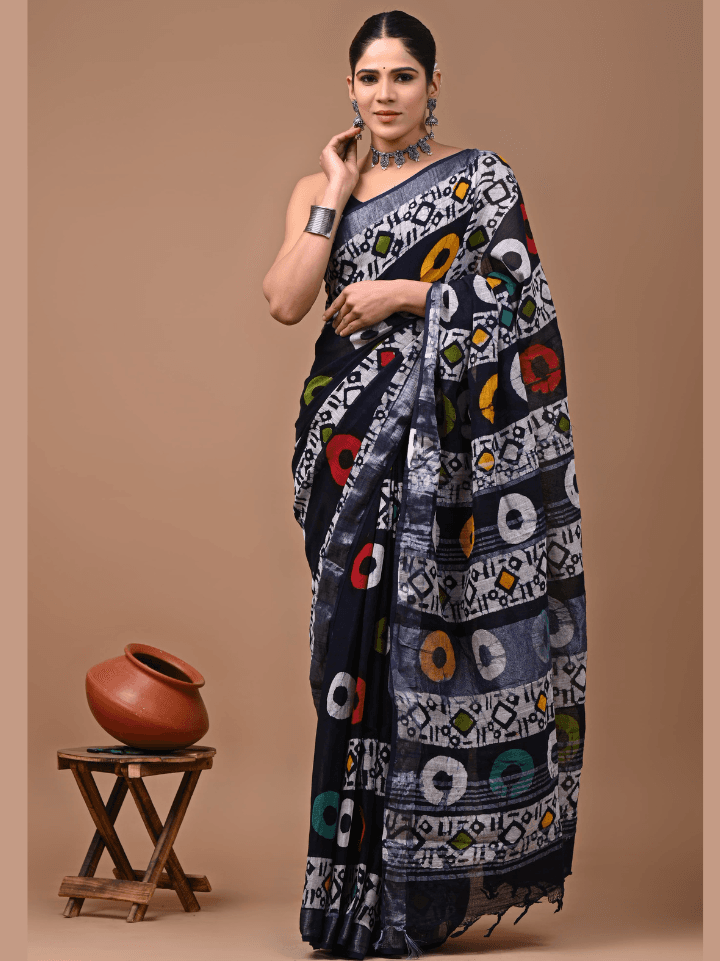
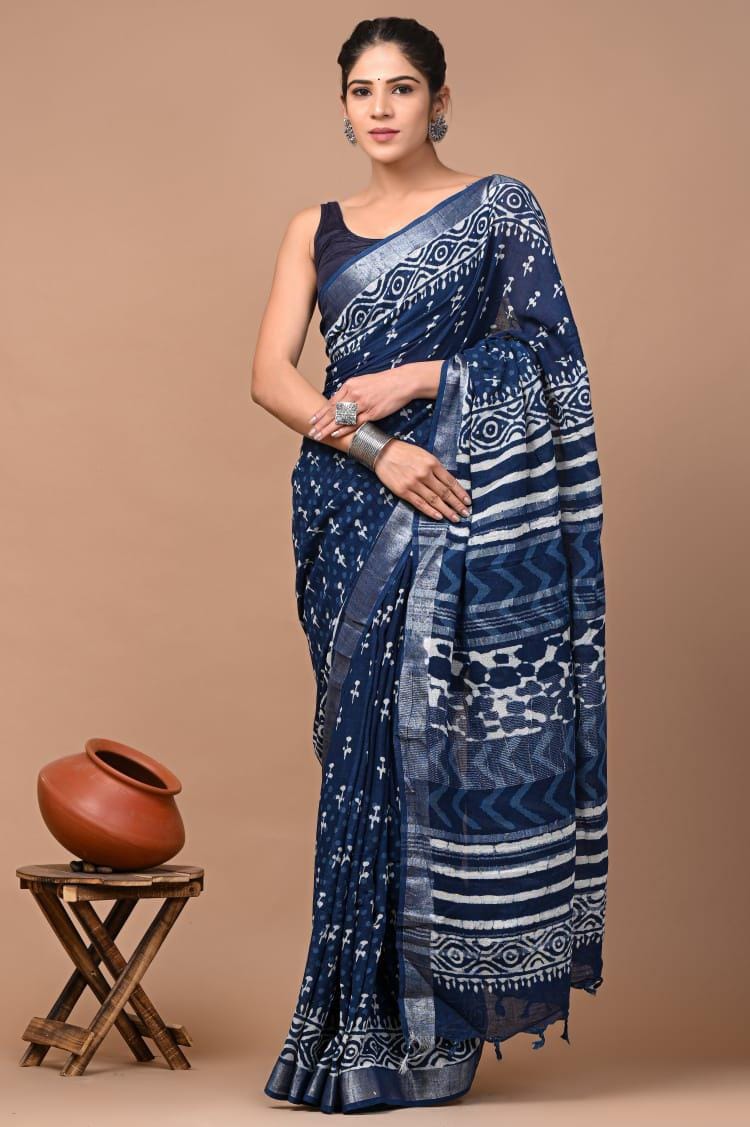
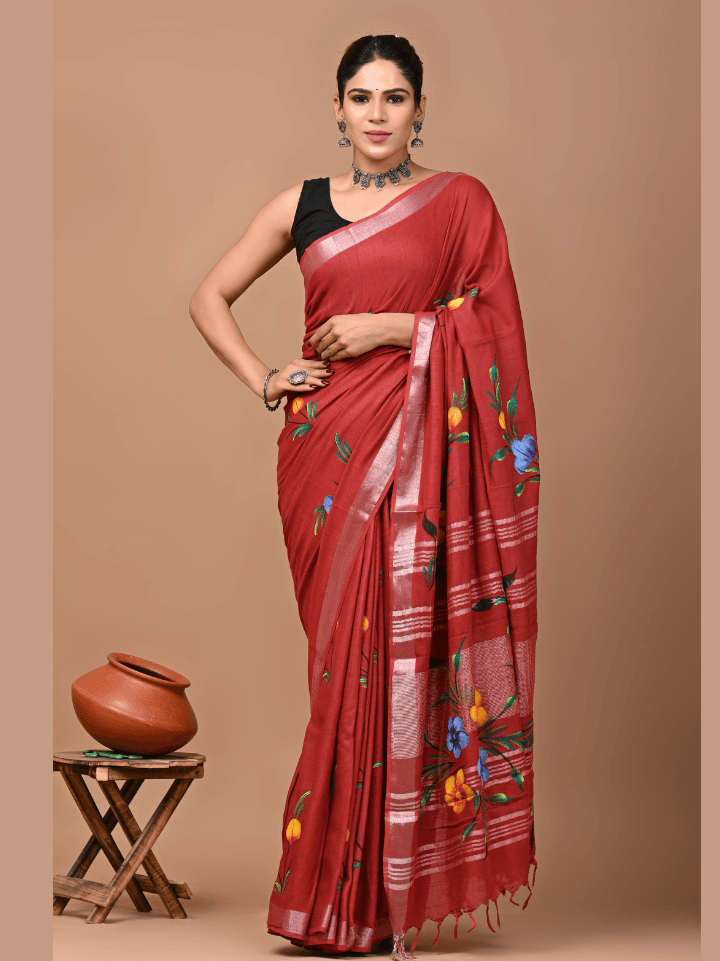
At SA Fab, our artisans in Bagru use traditional wooden blocks — some carved to centuries-old patterns — to print on pure linen using natural dyes. The result is a print that looks handmade because it is: slightly irregular, deeply coloured, and genuinely one of a kind.
↑ A few from our collection of 65+ hand block printed linen sarees. View all →
Goes From Office to Wedding Without Changing
Linen has an effortless formal quality that is hard to explain but easy to recognise. Draped as a saree, it sits with a natural crispness — not stiff, not limp — that works equally well at a morning meeting, a festive lunch, and an evening wedding.
The hand block printed designs from Bagru add an artisan elegance that elevates the simplest drape. Pair with a cotton blouse for the office. Switch to silk blouse and statement earrings for the evening. The saree holds both occasions comfortably.
The Most Sustainable Choice in Your Wardrobe
Flax — the plant linen comes from — requires significantly less water than cotton to grow, needs very little pesticide, and every part of the plant is used. Linen is also fully biodegradable: at the end of its long life, it returns to the earth without leaving microplastics behind.
When paired with natural dyes — as our Bagru artisans use — a hand block printed linen saree has one of the smallest environmental footprints of any garment you can own. This is not a greenwashing claim. It is simply what happens when you choose a fabric that has been sustainable for three thousand years.
How Linen Compares to Other Summer Saree Fabrics
A practical comparison for Indian summers — across the qualities that actually matter.
| Property | Pure Linen | Cotton | Chanderi | Organza |
|---|---|---|---|---|
| Breathability | ✔ Excellent | ✔ Very Good | ◑ Moderate | ✘ Low |
| Heat Conductivity | ✔ Draws heat away | ◑ Neutral | ◑ Neutral | ✘ Traps heat |
| Moisture Absorption | ✔ Up to 20% | ◑ ~8% | ◑ ~6% | ✘ Very Low |
| Durability | ✔ 2–3x cotton | ◑ Good | ◑ Moderate | ✘ Delicate |
| Block Print Quality | ✔ Excellent depth | ✔ Very Good | ◑ Good | ✘ Poor |
| Sustainability | ✔ Very High | ◑ Moderate | ◑ Moderate | ✘ Low |
| Drape Style | Crisp & structured | Soft & flowing | Sheer & light | Stiff & glossy |
| SA Fab Price | ₹949 – ₹1,399 | ₹799 – ₹1,299 | ₹1,199 – ₹1,799 | ₹1,499+ |
Zero-Maintenance Elegance (Yes, Really)
Linen does not need to be starched, dry-cleaned, or treated with anything special. Wash in cold water, dry in shade, and the fabric simply re-sets itself. The natural wrinkles in linen — what some people worry about — are actually part of its character. They are not a flaw. They are the signature of a real fabric.
A very light iron on a warm setting (or even just hanging the saree the night before) is all you need to have it looking crisp and ready. Compare this to silk sarees that need dry cleaning, or synthetic sarees that retain odours — and linen starts to look remarkably practical.
- Wash in cold or lukewarm water — never hot, which can shrink the fibres
- Use a mild detergent; avoid bleach or harsh chemicals on natural dyes
- Dry in shade — direct sunlight can fade the hand block print colours over time
- Iron on medium heat while slightly damp for the best results
- Store folded, not hung — hanging over time can stretch the fabric at the drape
The Bagru Difference — Craft That Has a Story
Not all hand block printed sarees are equal. The printing tradition of Bagru, Jaipur — practiced by the Chhipa community for over 450 years — uses natural dyes derived from madder root, indigo, pomegranate rind, and iron-based blacks. These dyes bond with linen differently than with cotton, producing colours with an unusual warmth and depth.
When you buy a SA Fab linen saree, the piece was printed in Bagru — typically within a few kilometres of where we are based. There is no factory. No industrial printing machine. Just wooden blocks, natural dye vats, and a craftsperson who learned this from their family. That story is in every piece you wear.
The Price Makes More Sense Than You Think
Our hand block printed pure linen sarees start at ₹949. For a saree that is handmade, naturally dyed, made from a fabric that will last for years, and created by artisans who are fairly paid for their craft — that is genuinely good value.
Compare that to a synthetic saree at ₹600 that will pill after three washes, or a fast-fashion ethnic piece that was made in a factory overseas. The cost-per-wear of a good linen saree, maintained properly, is often far lower than cheaper alternatives. It is the kind of purchase that makes more sense the longer you think about it.
So, Is a Pure Linen Saree Right for You?
A quick honest summary before you decide.
A pure linen saree is a great choice if you want a fabric that is genuinely cool in summer, looks elegant without trying too hard, and gets better with age. It is especially well-suited for women who wear sarees regularly — because the durability and easy care make it a practical daily choice, not just an occasional one.
It is not the right choice if you need a very fluid, flowing drape — that is where silk or georgette shines. Linen has a natural crispness and structure. But for most summer occasions — work, festive gatherings, casual outings, weddings — it handles them all with grace.
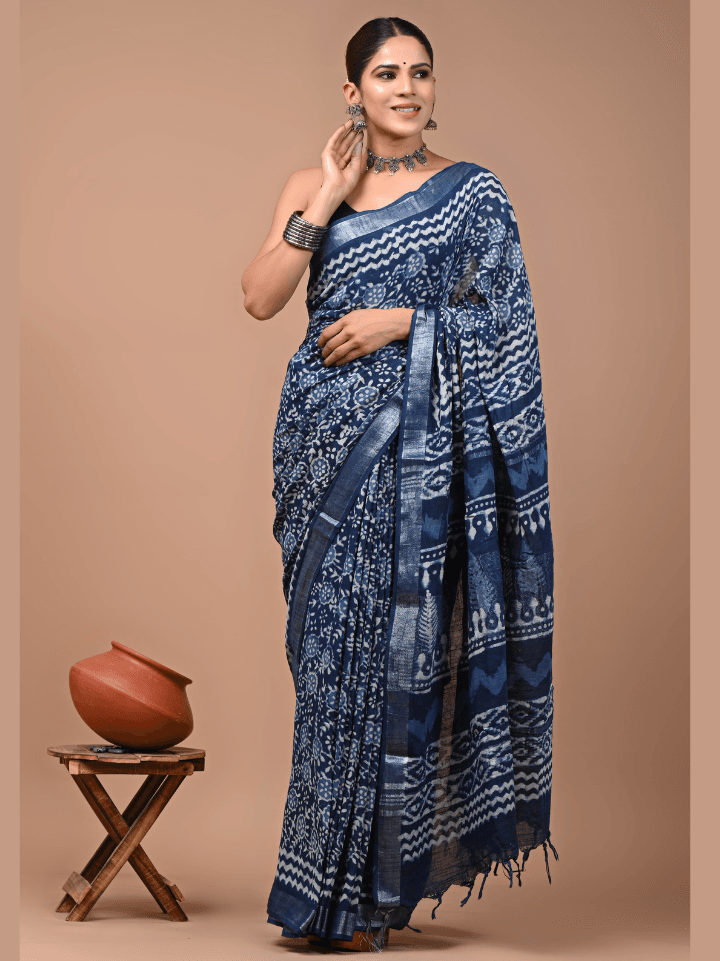
If you are new to linen sarees, we'd suggest starting with one of our hand block printed pieces in a neutral or earthy tone. They are the most versatile, the easiest to style, and — in our honest opinion — the most beautiful expression of what Bagru craftsmanship can do on a linen base.
Frequently Asked Questions
Answers to the questions we hear most often about linen sarees.
Browse our full linen saree collection →
You Might Also Like
65+ Pure Linen Sarees.
All Hand Printed in Bagru.
Starting at ₹949. Free shipping across India. 7-day returns.
Printed by Chhipa artisans in Bagru, Jaipur — since generations.