
Hand Block Printing — The Ancient Craft of Bagru, Jaipur Explained in Full
What it is, how it is done, which natural dyes are used, and where to buy hand block printed fabric directly from the artisans who make it.
100% Handmade
No screens, no rollers — every print is a hand press.
Natural Dyes Only
Madder root, indigo, harda, iron — no synthetic chemicals.
Made in Bagru
Chhipa community artisans, 30 km from Jaipur.
Direct from Source
Shop fabric and clothing straight from the workshop.
Hand block printing is not a technique. It is a rhythm — the steady press of a carved wooden block, the tap of a mallet, the pull of the cloth forward, and the press again. In Bagru, near Jaipur, this rhythm has continued without interruption for over 450 years. SA Fab is based inside this village, working directly with the Chhipa families who carry this tradition.
What is Hand Block Printing?
Hand block printing is a textile craft in which hand-carved wooden blocks are pressed onto fabric to transfer a pattern using natural dye pastes. Each block carries one element of a design — a border, a floral fill, a geometric repeat — and multiple blocks are used in sequence to build a complete print. The entire process is manual. No electricity, no screen, no digital file.
The blocks themselves are carved from teak or sheesham wood by specialist carvers. A single detailed block can take two to three days to carve. It may then be used for years — the wood absorbing dye over time and developing a patina that makes prints progressively richer.
What distinguishes hand block printing from screen printing or digital printing is not just the method — it is the result. Because each press is slightly different, the finished fabric carries the evidence of a human hand: soft edges at pattern joins, minute alignment shifts, colour gradations that a machine cannot replicate. These are not defects. They are the definition of authenticity in this craft.
Quick fact: A skilled Chhipa artisan in Bagru can print approximately 8–10 metres of fabric per day by hand. The same output from a machine print factory takes seconds. The difference in quality and durability is measurable.
History of Hand Block Printing in Bagru, Jaipur
Bagru, a village 30 kilometres southwest of Jaipur in Rajasthan, has been a centre of natural dye block printing for over 450 years. The Chhipa community — whose name literally means "printer" in the local language — settled here because of the mineral-rich water of the Sanja River, which proved ideal for dyeing and washing naturally printed cloth.
The craft grew under royal patronage during the Rajput period, with the Jaipur court placing regular orders for block printed cloth for palace use, ceremonial occasions, and trade. Bagru prints became known across India for their specific visual character: earthy tones from iron-based resist pastes, deep madder reds, and the geometric border patterns that remain the signature of the tradition today.
Unlike many Indian textile crafts that were disrupted by industrialisation in the 19th and 20th centuries, Bagru block printing survived largely intact because its natural dye process cannot be replicated cost-effectively by machines. The steps require skilled hands, long timing, and access to specific materials. This is what makes Bagru prints both rare and enduring.
Read the full origin story in our dedicated article: The Rich History of Bagru Block Printing.
"The Chhipa name means printer. Not craftsman, not artisan — printer. That is how central this work is to who these families are."
SA Fab — Bagru, JaipurThe Hand Block Printing Process — 12 Steps from Cloth to Finished Fabric
Hand block printing in Bagru is not a single action — it is a sequence of twelve carefully ordered steps. Skip one or rush one, and the colour will not hold, the resist will not work, or the print will bleed. This is why the process takes two to three days per piece, and why it cannot be shortened without compromising the result.
Fabric Preparation (Saaj)
Raw fabric is washed thoroughly in plain water to remove any sizing or starch applied during weaving. This opens the fibres and ensures even dye penetration later. Cotton and linen fabrics are typically soaked overnight.
Mordanting (Harda Treatment)
The washed fabric is treated with a mordant — typically a solution made from harda seeds (terminalia chebula). Mordanting fixes the fabric's ability to bond with natural dyes. Without this step, natural colour has nothing to hold onto. The fabric takes on a pale yellow-green cast from the harda at this stage.
Resist Block Printing (Khariyaan / Dabu)
A resist paste — either a white clay-lime mixture (khariyaan) or the mud-based dabu — is applied using hand-carved blocks onto the mordanted fabric. Wherever the resist is printed, the dye will not penetrate. This creates the white or light-toned areas in the final design.
Drying in the Sun
After resist printing, the fabric is spread in the sun to dry and harden the resist paste. Bagru's dry Rajasthani climate makes this step efficient — the paste sets firmly in two to three hours on a clear day.
Background Dyeing
Once the resist is set, the fabric is dipped into the dye bath. Common background dyes include madder root for red-terracotta tones and iron solution for black. The resist-printed areas remain undyed. The dye bath is held at a specific temperature, and the fabric is turned regularly to ensure even penetration.
Washing Off the Resist
After dyeing, the fabric is washed in river water or running water to remove the resist paste. Where the paste was, the original fabric colour is revealed — white, off-white, or pale harda yellow depending on earlier treatment.
Over-Block Printing (Detail Passes)
With the base dye set, artisans apply additional block prints using different dye pastes — typically red, black, and green — to add pattern detail, outlines, and layered colour. Each pass dries before the next is applied.
Fixing the Colour (Alizarin Bath)
The fully printed fabric is boiled in a solution containing alizarin (a compound derived from madder root) and other mordant salts. This step deepens and fixes the colours permanently into the fibre. Reds become richer, blacks sharpen, and the overall palette settles into its finished tone.
Final Washing
The fabric undergoes multiple rounds of washing to remove any unfixed dye, residual mordant, and surface paste. This is the step that determines colour fastness — well-washed natural dye fabric holds its colour for years.
Drying on the Ground (Phad)
Washed fabric is laid flat on clean ground or on grass in open fields to dry in the sun. In Bagru, you can see lengths of printed fabric drying across open land — a sight specific to this village and its tradition.
Stretching and Straightening
Damp fabric is stretched along its grain and pinned or pegged at the edges to prevent distortion as it dries. This ensures the finished piece drapes cleanly and maintains its dimensions.
Final Quality Check
Each piece is inspected for print registration, colour evenness, and resist clarity. In hand block printing, slight variations are expected and accepted — the check is for genuine defects: dye bleed, missing block passes, or uneven ground colour.
Natural Dyes Used in Bagru Block Printing
Every colour in a Bagru block printed fabric has a source in nature. This is not a marketing claim — it is the technical foundation of the craft. Natural dyes behave differently from synthetic ones: they age, deepen with washing, and develop a patina over time rather than fading abruptly.
Madder Root Red
From the root of Rubia tinctorum. Produces terracotta to deep brick red depending on mordant used. The defining colour of Bagru printing — rich, warm, and light-fast.
Indigo Blue
From the Indigofera tinctoria plant, reduced in a fermentation vat. Deep, cool blue that deepens with repeated dyeing. One of the oldest natural dyes in India.
Harda Yellow
From terminalia chebula (harda) seeds. Used both as a mordant and as a dye. Produces warm yellow-green tones. Combined with indigo it creates Bagru's characteristic earthy green.
Iron Black (Kassis)
A solution of ferrous iron prepared by soaking iron scraps. Produces black and dark grey. Used for outlines, fills, and resist paste. Creates crisp definition in geometric patterns.
Pomegranate Rind
From dried pomegranate skins. Warm ochre to tawny tones. Used as an overdye on mordanted fabric. Adds depth to gold and amber shades in layered prints.
Indigo + Harda = Green
The bottle green specific to Bagru is created by overdyeing a harda-treated fabric with indigo. This combination cannot be made in a single synthetic dye — it only exists as a result of two natural dye processes.
Ajrakh Block Printing — The 16-Step Geometric Tradition
Ajrakh is one of the most demanding forms of hand block printing practised in India. Originating among the Khatri community in Kutch (Gujarat) and Barmer (Rajasthan), Ajrakh printing uses a resist-and-dye process repeated up to 16 times to build a single piece of fabric. The result is a double-sided print — identical on both faces of the cloth — that no other technique can produce.
The colour palette of Ajrakh is specific and recognisable: deep indigo blue, madder red, natural black, and the off-white or ivory of the resist-protected areas. Patterns are geometric — star forms, interlocking medallions, angular floral fills — derived from Islamic geometric art and Central Asian textile traditions carried into Rajasthan over centuries.
At SA Fab, we source Ajrakh fabric from Khatri artisans using the traditional 16-step process. The fabric is available in 10-metre rolls with no minimum order — right for tailoring, fashion projects, home furnishing, or any use where you need an authentic, traceable piece of Indian craft cloth.
What to expect: Each Ajrakh fabric roll is unique. The geometric patterns may vary by block design. Colours are natural — deep indigo, madder red, iron black — not dyed to match a Pantone reference. This is the character of the craft.
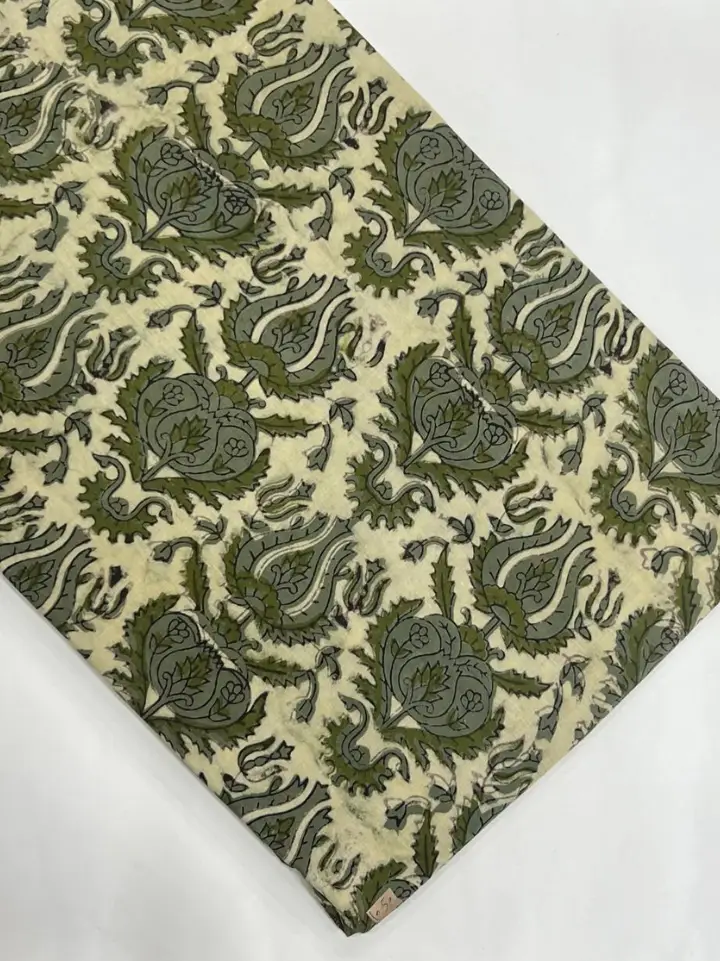
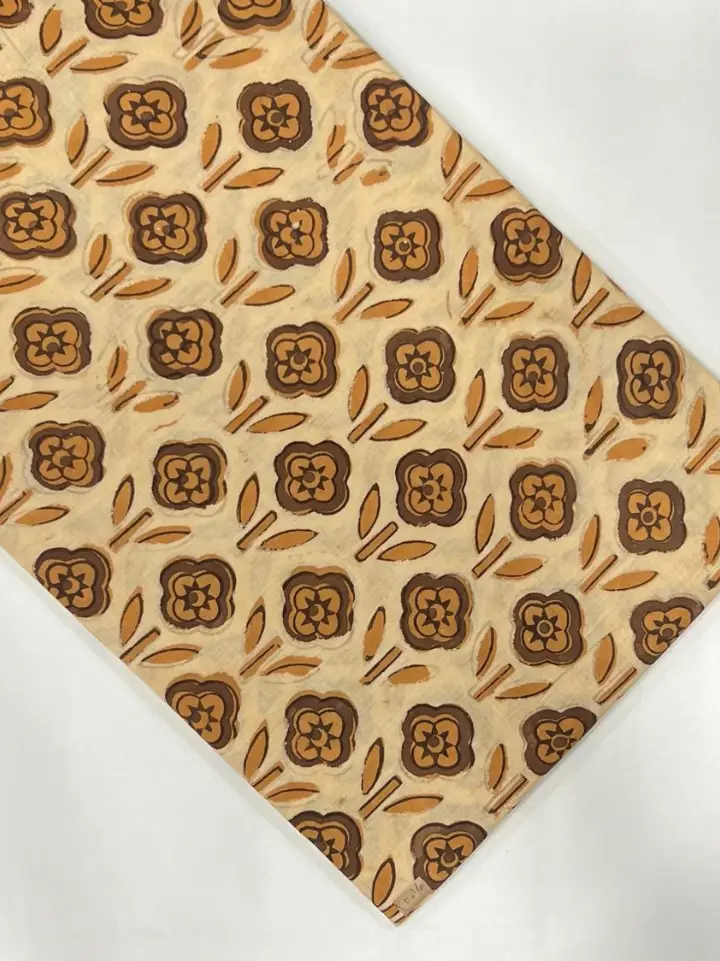
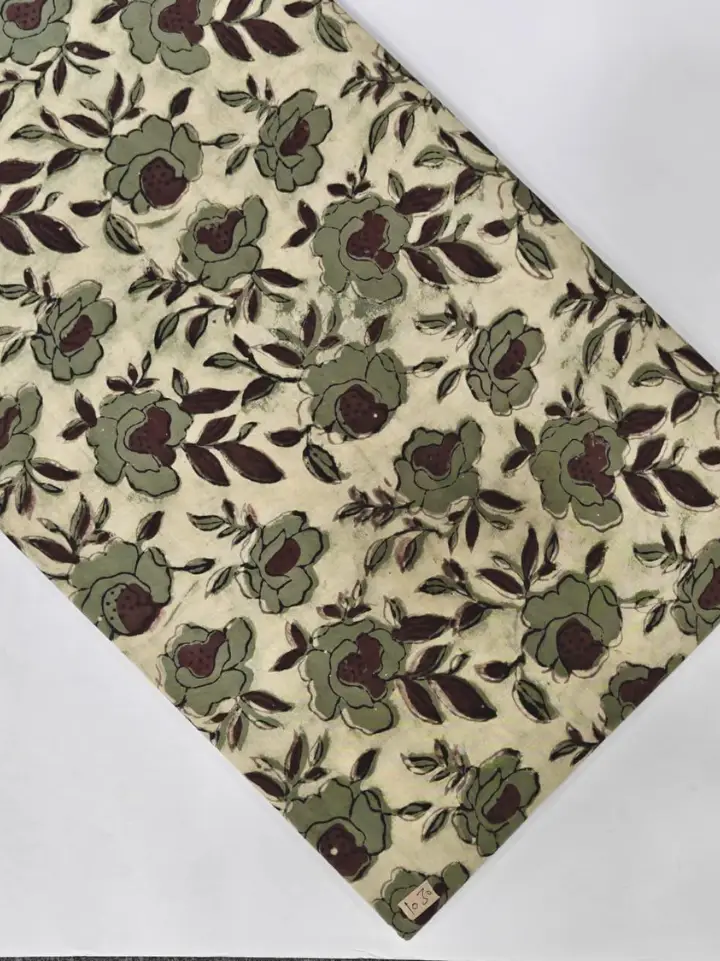
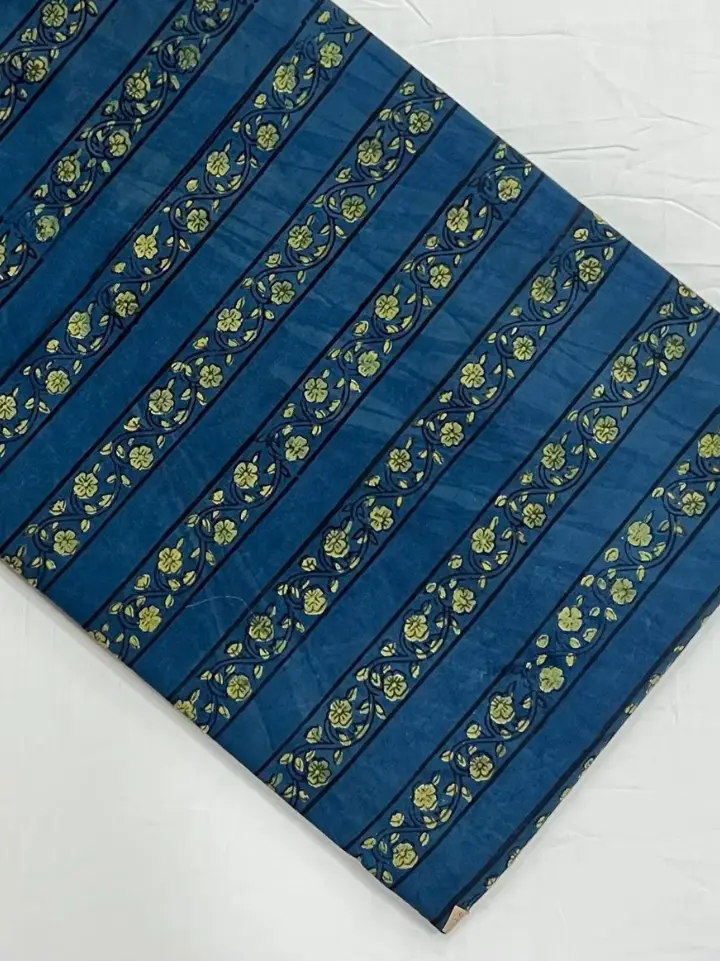
Browse the full range: Ajrakh Print Fabric — all designs
Dabu Mud Resist Printing — Bagru's Signature Technique
Dabu printing is unique to Bagru. The resist paste — called dabu — is made from black clay, lime, gum, and wheat bran. Artisans mix this paste fresh each day. It is applied by hand-carved wooden block onto mordanted fabric, then immediately dusted with sawdust to prevent the wet paste from transferring to the dye bath walls. When the dye is applied, the dabu-covered areas resist it completely. After dyeing, the paste washes away to reveal the pattern.
The signature of dabu printing is its soft edges. Because the mud paste has a slight give when wet, the resist boundary is never perfectly sharp. This creates a slightly blurred outline at pattern edges — a quality that is immediately recognisable and specific to this technique. No machine process produces this effect.
Dabu patterns are typically organic and floral — large flowering motifs, leaf forms, vine fills — in earthy tones of terracotta, ochre, sage green, and indigo. The palette reflects the natural dye sources available to Chhipa artisans in Bagru: madder, harda, indigo, and iron.
What to expect: Dabu fabric has a soft hand feel and matte finish. The slightly blurred print edges are a feature, not a defect. Each 10-metre roll carries the variation inherent in mud resist printing — no two rolls are identical.
Light Moss Green Dabu Print Pure Cotton Fabric – Hand Block Printed 10 Metre Roll
₹1,890.00This product has multiple variants. The options may be chosen on the product pageClear10mLunar Green Leaf Dabu Print Pure Cotton Fabric – Hand Block Printed 10 Metre Roll
₹1,890.00This product has multiple variants. The options may be chosen on the product pageClear10mBlack Traditional Motif Dabu Print Pure Cotton Fabric – Hand Block Printed 10 Metre Roll
₹1,890.00This product has multiple variants. The options may be chosen on the product pageClear10mAsh Floral Dabu Block Print Pure Cotton Fabric – Hand Block Printed 10 Metre Roll
₹1,890.00This product has multiple variants. The options may be chosen on the product pageClear10m
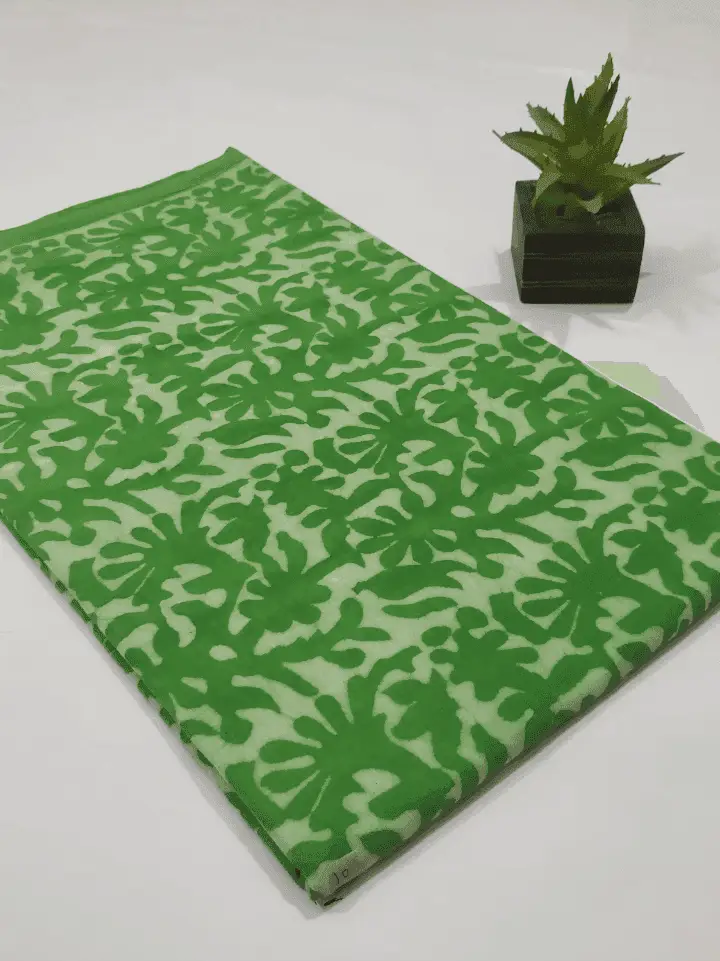
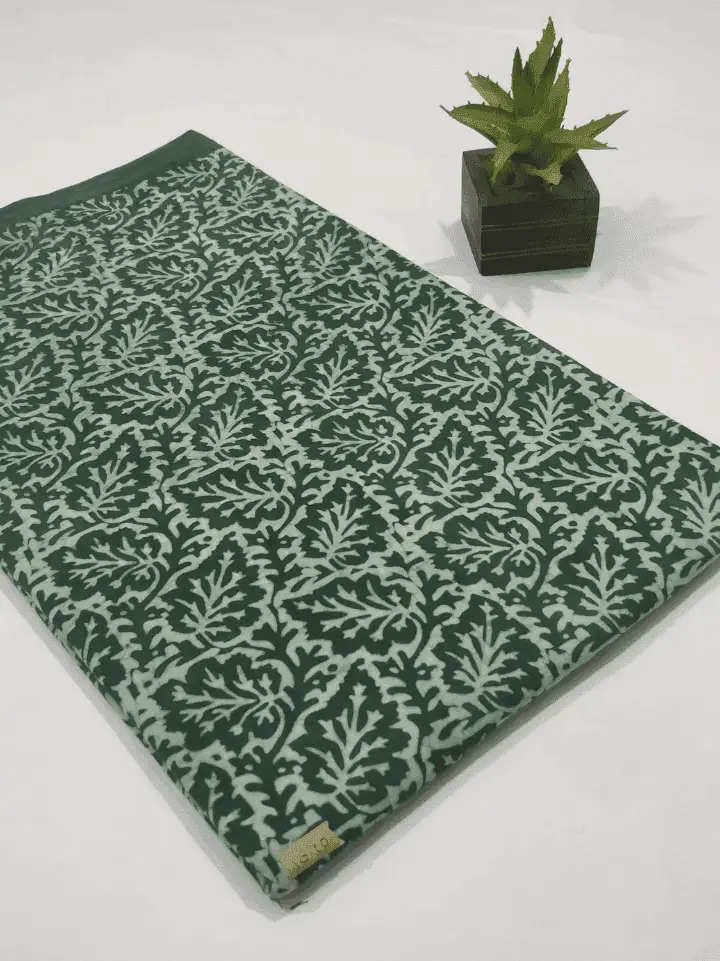
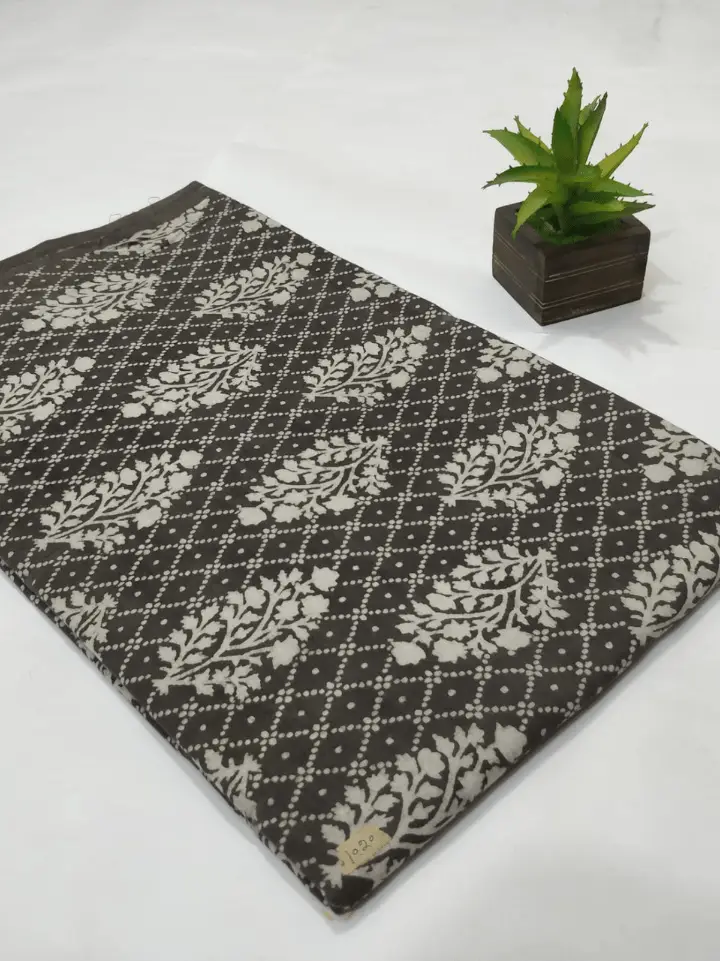
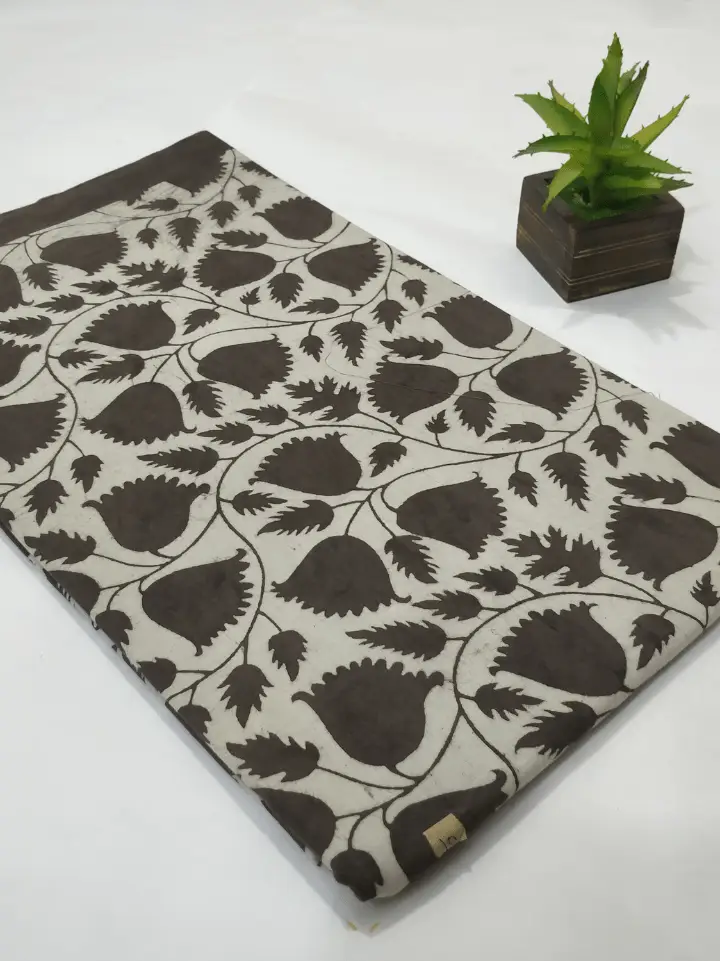
Browse the full range: Dabu Print Fabric — all designs
Indigo Block Printing — Natural Vat Dyed Fabric from Bagru
Indigo is among the oldest dyes in human history. In India, indigo cultivation and dyeing has a documented history of over 4,000 years. In Bagru, indigo is used both as a dye bath for solid grounds and as a block print paste for pattern work on lighter fabric.
Natural indigo is not water-soluble in its raw form. It requires reduction in a fermentation vat — a living solution maintained by artisans who adjust its chemistry daily using lime, jaggery, and reducing agents. The fabric is dipped into this vat and immediately appears yellow-green as it is removed. Contact with air oxidises the indigo and the cloth turns blue within minutes. The depth of blue increases with repeated dipping — from pale sky blue after one dip to deep navy after multiple passes.
Our indigo block printed fabric combines vat-dyed grounds with hand-printed block patterns in contrasting natural dyes — typically madder red or iron black on an indigo base. The combination is classic to Bagru and Rajasthani block printing and remains one of the most visually striking natural dye combinations available.
What to expect: Natural indigo can release slight colour in the first wash — this is normal. It is not bleeding; it is excess surface dye. After two cold washes, the colour stabilises and remains fast for years. Dry in shade to maintain depth.
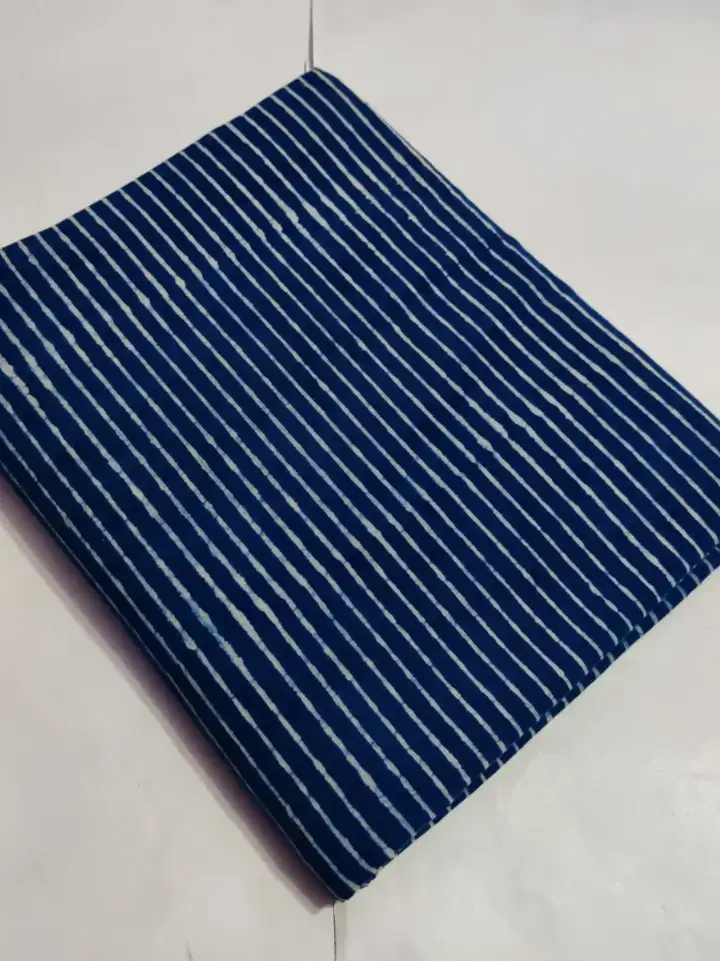
Indigo White Stripe Pure Cotton Fabric – Hand Block Print 10 Metre Roll
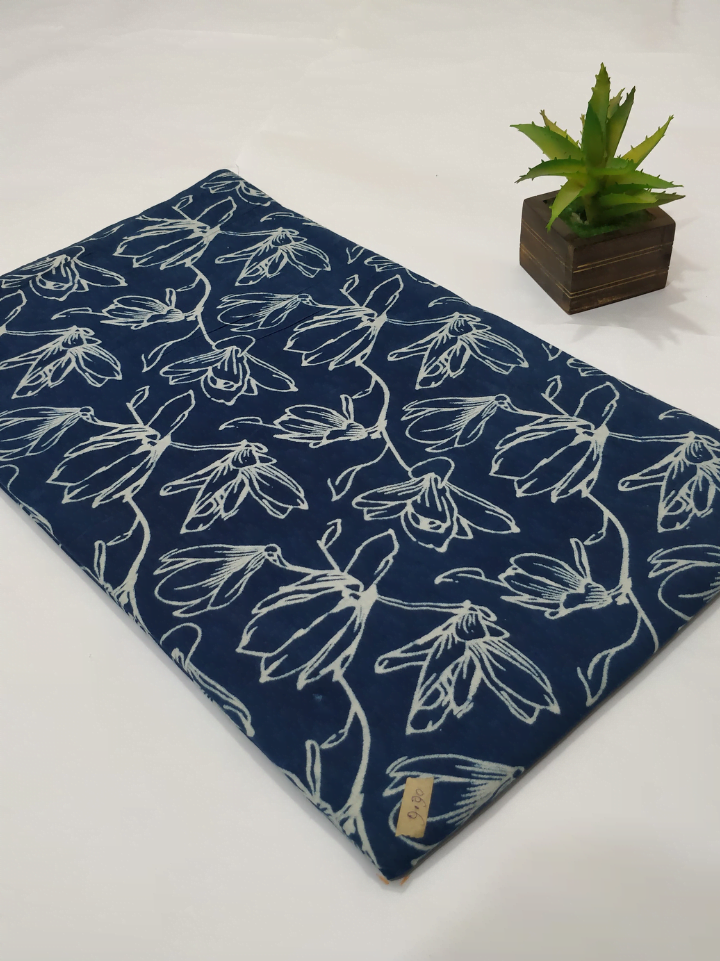
₹1,890.00This product has multiple variants. The options may be chosen on the product pageClear10mIndigo Floral Print Dyed Pure Cotton Fabric – Hand Block Print 10 Metre Roll
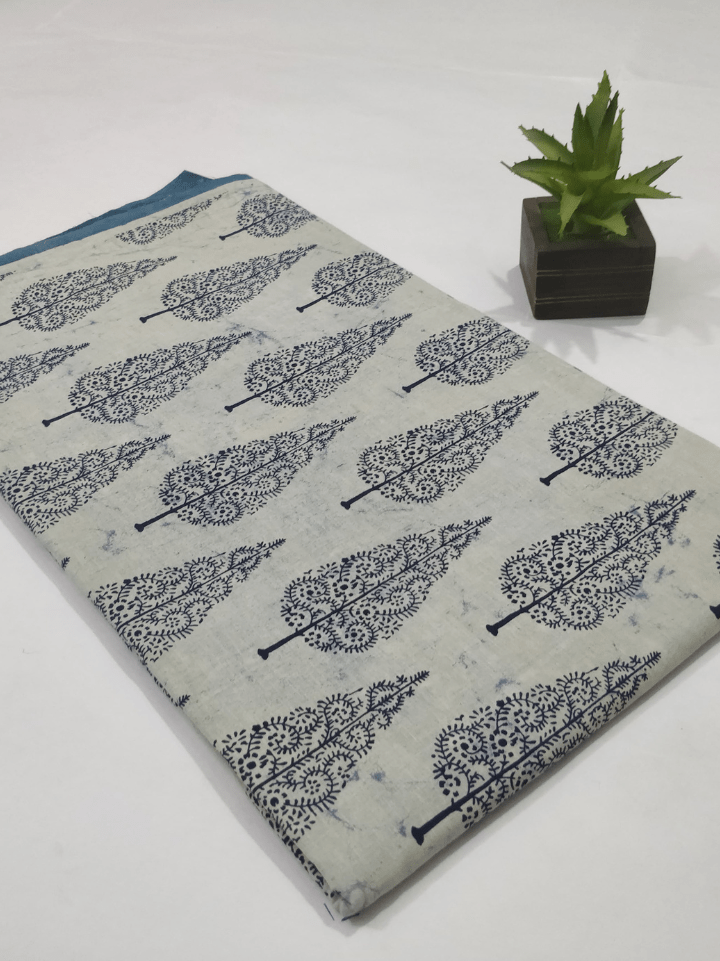
₹1,890.00This product has multiple variants. The options may be chosen on the product pageClear10mIndigo Print Fabric
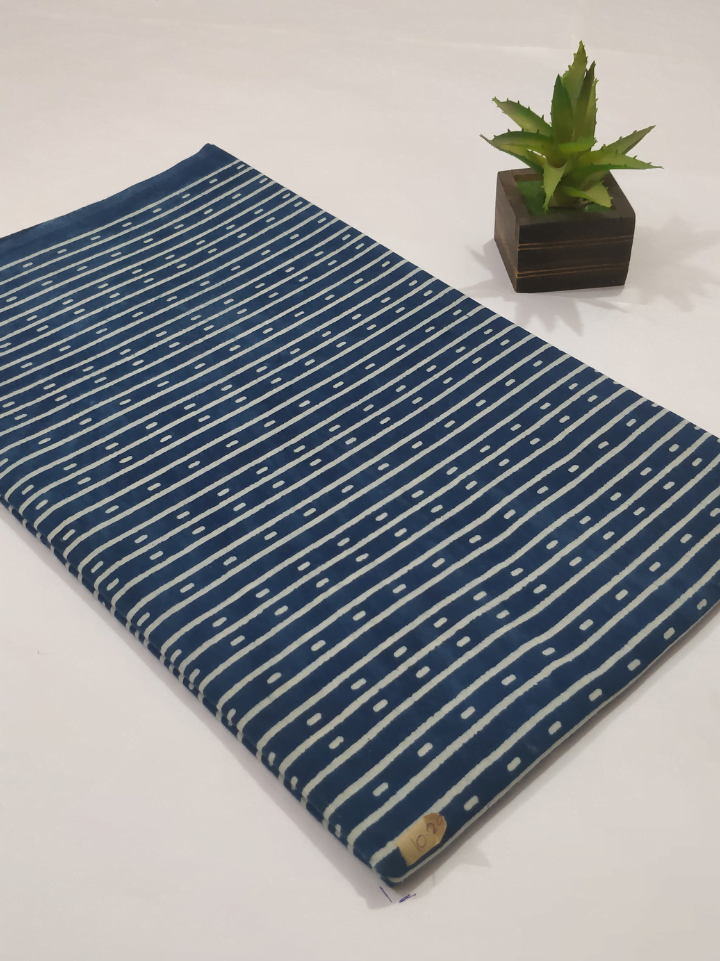
₹1,890.00This product has multiple variants. The options may be chosen on the product pageClear10mIndigo Linear Geometric Hand Block Print Pure Cotton Fabric 10 Metre Roll – Bagru Print
₹1,890.00This product has multiple variants. The options may be chosen on the product pageClear10m
Browse the full range: Indigo Print Fabric — all designs
Rapid Prints — Block Printed Fabric with Faster Turnaround
Rapid prints are hand block printed fabric that uses a streamlined dyeing process — fewer resist steps and a reduced mordanting sequence compared to Ajrakh or full Dabu. The block printing itself is identical: the same hand-carved wooden blocks, the same Chhipa artisans, the same Bagru workshop. What changes is the dye process behind it, which reduces production time while maintaining the handmade character of the print.
Rapid print fabric is a practical choice for fashion projects with shorter lead times, home furnishing applications, or buyers who want authentic hand block printing without waiting for the extended Ajrakh or Dabu process. The patterns are clean and well-defined, the colour range is broad, and the print quality is consistent with what you expect from Bagru.
Like all SA Fab fabric, rapid print rolls are available in 10-metre lengths with free shipping across India and no minimum order.
What to expect: Rapid prints have a cleaner, slightly crisper print edge compared to Dabu. Colours may be slightly less layered than full Ajrakh — they are brighter and more direct. Still fully hand block printed. Still made in Bagru.
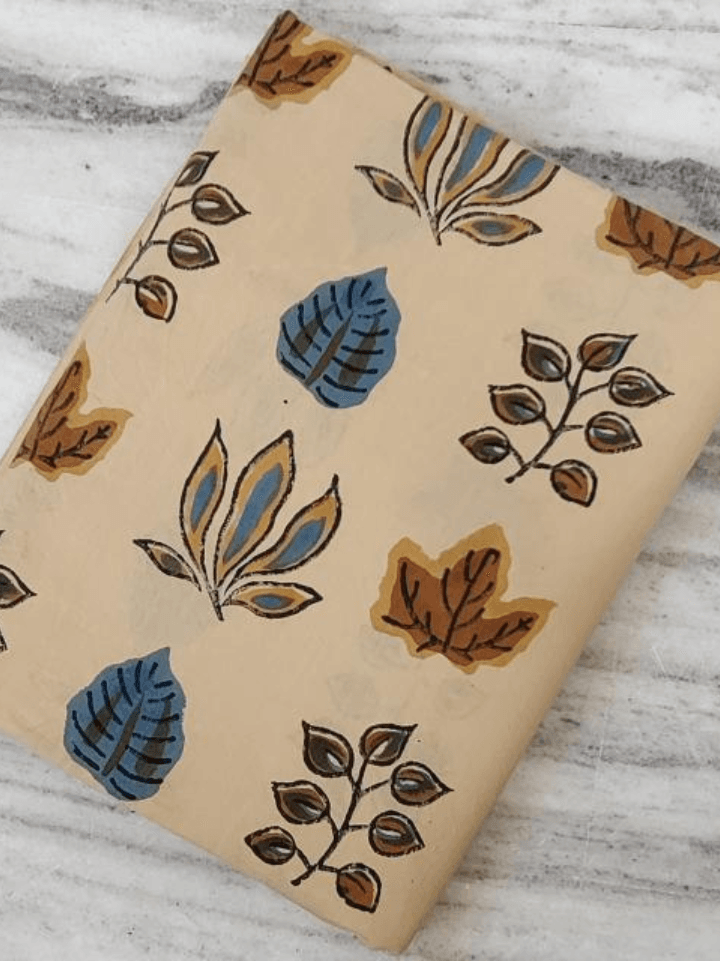
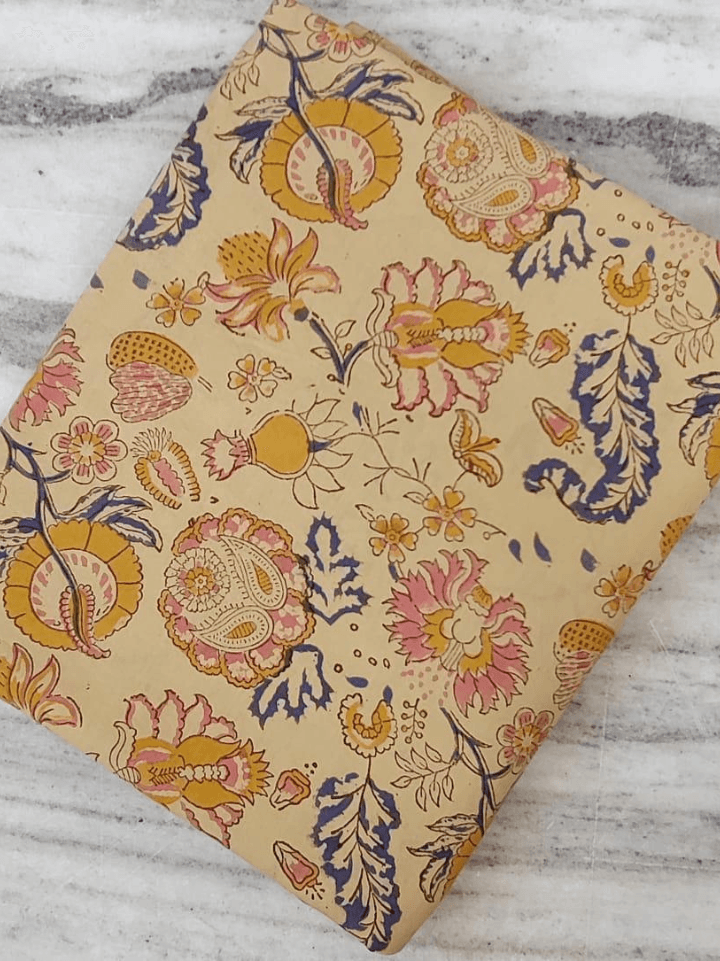
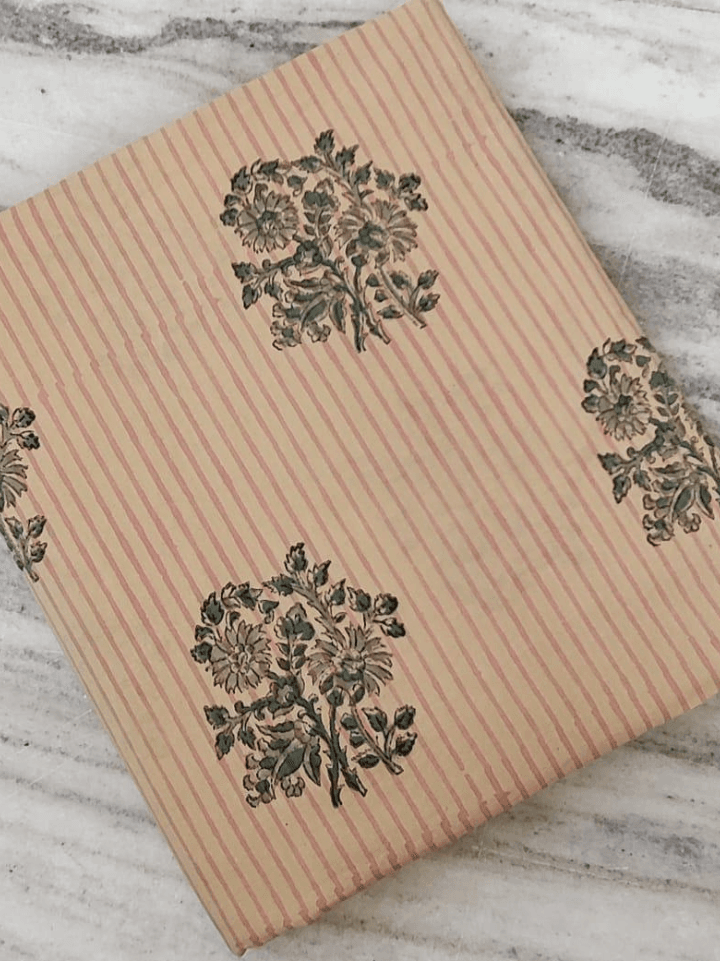
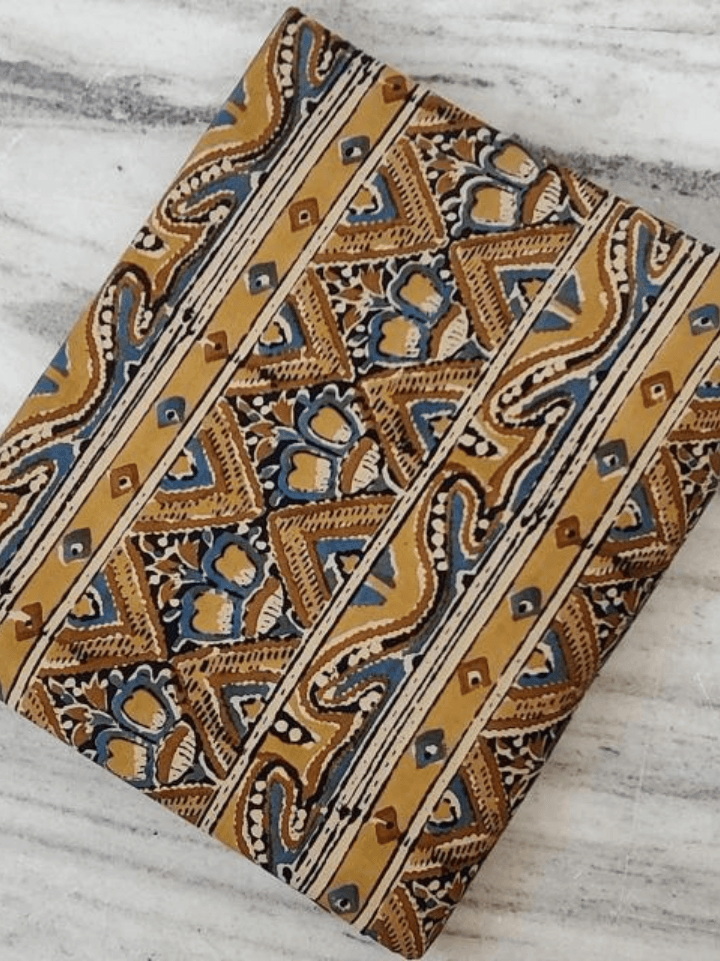
Beige Hand Block Printed Rapid Cotton Fabric 10 Metre Roll — Jaipur Block Print
₹2,190.00This product has multiple variants. The options may be chosen on the product pageClear10mKhaki Floral Rapid Print Pure Cotton Fabric 10 Metre Roll — Hand Block Printed Bagru
₹2,190.00This product has multiple variants. The options may be chosen on the product pageClear10mNeutral Tan Traditional Motif Rapid Print Pure Cotton Fabric 10 Metre Roll — Hand Block Printed Bagru
₹2,190.00This product has multiple variants. The options may be chosen on the product pageClear10mGolden Oak Heritage Rapid Print Pure Cotton Fabric 10 Metre Roll — Hand Block Printed Bagru
₹2,190.00This product has multiple variants. The options may be chosen on the product pageClear10m
Browse the full range: Rapid Print Fabric — all designs
Ajrakh vs Dabu vs Indigo vs Rapid Prints — How They Compare
Not sure which block printed fabric is right for your project? Here is a direct comparison across the four styles we carry at SA Fab.
| Feature | Ajrakh | Dabu | Indigo | Rapid Print |
|---|---|---|---|---|
| Process steps | Up to 16 | 8–10 | 6–8 | 4–6 |
| Resist type | Clay + lime (double-sided) | Mud (dabu paste) | Vat dye + block print | Direct block print |
| Pattern style | Geometric, structured | Organic, floral | Geometric + floral | Varied |
| Colour palette | Indigo, madder red, black | Earthy — terracotta, ochre, sage | Deep indigo, red, black | Broad — many combinations |
| Print edge | Very clean | Soft, slightly blurred | Clean to moderate | Clean, defined |
| Best for | High-end fashion, home furnishing | Ethnic fashion, sarees, dupattas | Shirts, kurtas, home linen | All-purpose fashion projects |
| Community | Khatri (Barmer/Kutch) | Chhipa (Bagru) | Chhipa (Bagru) | Chhipa (Bagru) |
For a deep-dive on two of these: Ajrakh vs Dabu Printing — full comparison article.
People Also Ask — Answered Directly
What is hand block printing?
Hand block printing is a manual textile printing technique in which carved wooden blocks are pressed onto fabric using natural or chemical dye pastes to create repeating patterns. In Bagru, Jaipur, the craft uses natural dyes and has been practised by the Chhipa community for over 450 years. Each block is pressed by hand — no machines, no electricity — and slight variation between each press is a natural feature of the process.
Is hand block printing expensive?
Hand block printed fabric costs more than machine printed fabric because every step is done manually and takes significantly more time. A single saree takes two to three days to complete. At SA Fab, we keep prices accessible by selling direct from our Bagru workshop — no middlemen, no retail markup. Fabric rolls start from ₹1,500 for 10 metres. The cost reflects fair artisan wages and genuine natural dyes, not brand premium.
Which place is famous for block printing?
Bagru and Sanganer, both near Jaipur in Rajasthan, are the two most well-known centres of hand block printing in India. Bagru is specifically known for natural dye printing by the Chhipa community — earthy tones, mud resist (dabu), and Ajrakh-style geometric work. Sanganer is known for finer, lighter floral prints on a white ground using both natural and synthetic dyes. Other significant centres include Kutch in Gujarat (Ajrakh), and Pethapur in Gujarat (block carving).
Can you hand block print at home?
Yes, hand block printing at home is possible using textile-safe dyes, purchased wooden blocks, and plain cotton fabric. The basic technique — inking a block and pressing it onto cloth — can be learned in a single session. What cannot be replicated at home is the natural dye process used in Bagru, which requires mordanting, specific mineral waters, and a sequence of baths that takes multiple days. Home block printing is creative and accessible; traditional Bagru printing is a specialist craft.
About SA Fab — Why We Write About This From Bagru
SA Fab is not a brand that sources block printed fabric from a supplier and sells it online. We are based in Ganga Vihar, Bagru, Rajasthan — inside the village where this craft lives. Our workshop works directly with Chhipa artisan families whose relationship with natural dye block printing spans generations.
Everything in this guide reflects what we see, practise, and sell daily. When we describe the 12-step process, we are describing the process happening in the workshop beside us. When we list the natural dyes, those are the same materials our artisans prepared this morning. This is not sourced knowledge — it is working knowledge.
We share it because buyers deserve to understand what they are buying. Hand block printed fabric is not a style category — it is a specific, traceable, human-made thing. Knowing how it is made makes owning it different.
Reach us directly: WhatsApp +91 80055 43240 · info@handblockprintsbagru.com · Monday–Saturday 10am–7pm IST.
Frequently Asked Questions
Shop Hand Block Printed Fabric Direct from Bagru
Ajrakh, Dabu, Indigo, and Rapid prints. 10-metre rolls. Free shipping across India. Made by Chhipa artisans at SA Fab, Bagru.