
The Hidden Cost of
Fast Fashion Ethnic Wear
Why buying direct from Bagru artisans matters, and what happens when massive brands steal the soul of traditional craft.
I still remember the first time I stood in a real block printing unit in Bagru. The air smelled sharp. Earthy. It was a thick mix of natural indigo, wet mud, and drying fabric baking under the Rajasthan sun.
"Thwack. Thwack. Thwack."
That is the sound of a seasoned artisan stamping a carved wooden block onto soft cotton. It takes rhythm, muscle, and a ridiculous amount of patience. There is no undo button here. One slip, and the yard is ruined. That raw, human energy is exactly what makes true Bagru prints breathe.
Then, you walk into a fast fashion mall.
You see racks of "ethnic" kurtas and sarees. They look vaguely like ours. But touch them. The fabric feels lifeless. Flat. The prints are perfectly identical, churned out by massive digital printers in some overseas mega-factory. And the price tag? Cheap. So cheap it makes your stomach drop.
Someone Else Paid the Difference
But here is the ugly truth about that cheap price tag. Someone else paid the difference.
Big brands love to steal traditional Indian designs. They strip away the soul of the craft, mass-produce it using cheap synthetic dyes, and completely cut out the original creators. The very artisans who spent generations perfecting Dabu and Ajrakh prints are left fighting for survival. Fast fashion does not just copy. It exploits. It starves the roots of our heritage while pretending to celebrate it.
Why We Started SA Fab
We started SA Fab because I could not stand watching this happen. I didn't want to build just another clothing brand. I wanted to build a bridge.
When you buy from SA Fab, you aren't lining the pockets of some anonymous corporate board. You are buying directly from the men and women whose hands are dyed blue from indigo. You are paying for their kids' schooling. You are keeping a centuries-old art alive in a world desperate to automate everything.
Slip on one of our pure cotton sarees or a hand-stamped Ajrakh kurta. You will notice the difference instantly. The rough, honest texture of the cotton. The slight, beautiful imperfections in the print where the human hand applied a bit more pressure. It feels alive. Because it is.
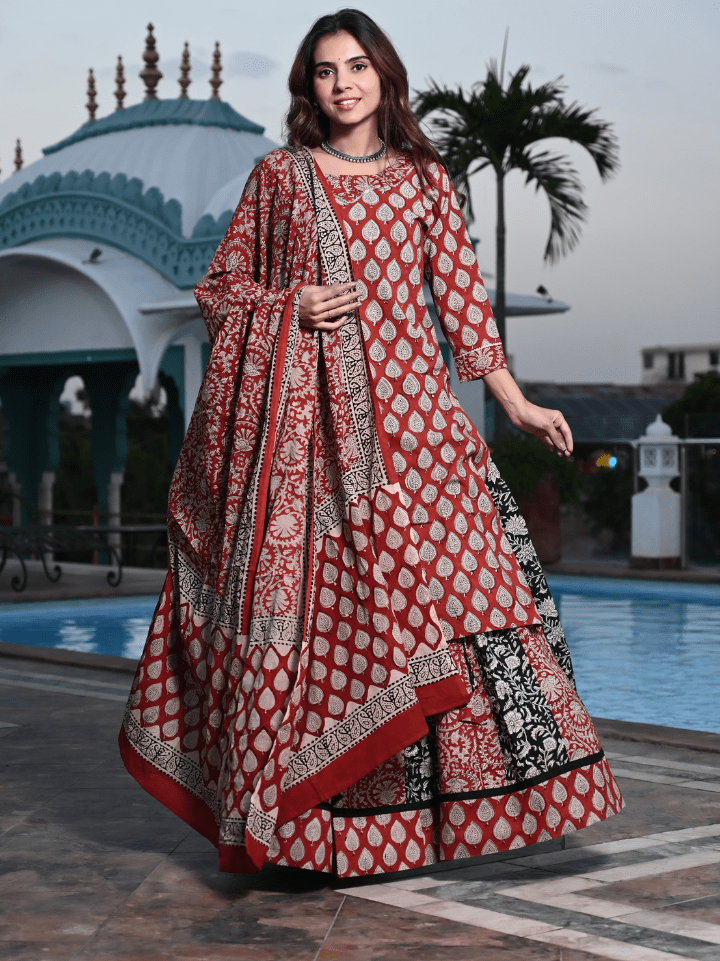
The unmistakable glaze and rich texture of authentic Bagru hand block printing.
Clothes With a Heartbeat
Fast fashion wants you to think ethnic wear is disposable. Buy it for a festival, wear it once, toss it out. We reject that completely.
Our clothes are made to be lived in. Washed, worn, loved, and passed down. Yes, genuine Bagru handblock printing takes time. Yes, it costs a little more than factory-made knockoffs. But the cost of losing this craft entirely? That is a price none of us should be willing to pay.
The Reality of "Buying Direct"
"Buy from artisans" can sound like a nice idea without a clear next step. In practice, it means a few concrete things: no factory intermediary sitting between the printer and the price you pay, natural dyes instead of synthetic shortcuts, and a craft origin you can actually trace back to a real village and a real community, not a vague "ethnic inspired" label.
If you want to start with fabric rather than a finished piece, our Dabu print fabric and Ajrakh print fabric both ship in 10-metre rolls with no minimum order, hand printed by Chhipa artisans in Ganga Vihar, Bagru, the same village this entire piece is about.
Frequently Asked Questions
Why is fast fashion ethnic wear so much cheaper than handmade pieces?
Do fast fashion brands actually copy traditional Indian prints?
What happens to artisans when fast fashion brands copy their prints?
How do I make sure I'm buying directly from artisans and not a reseller?
Choose the Artisans. Choose Authenticity.
Clothes with a heartbeat, hand printed in Bagru, sold with zero middlemen between the workshop and your wardrobe.
Free shipping across India · Worldwide delivery available · 7-day easy returns and exchange
Questions about sourcing or the craft behind a piece? WhatsApp us — Monday to Saturday, 10am to 7pm IST.