
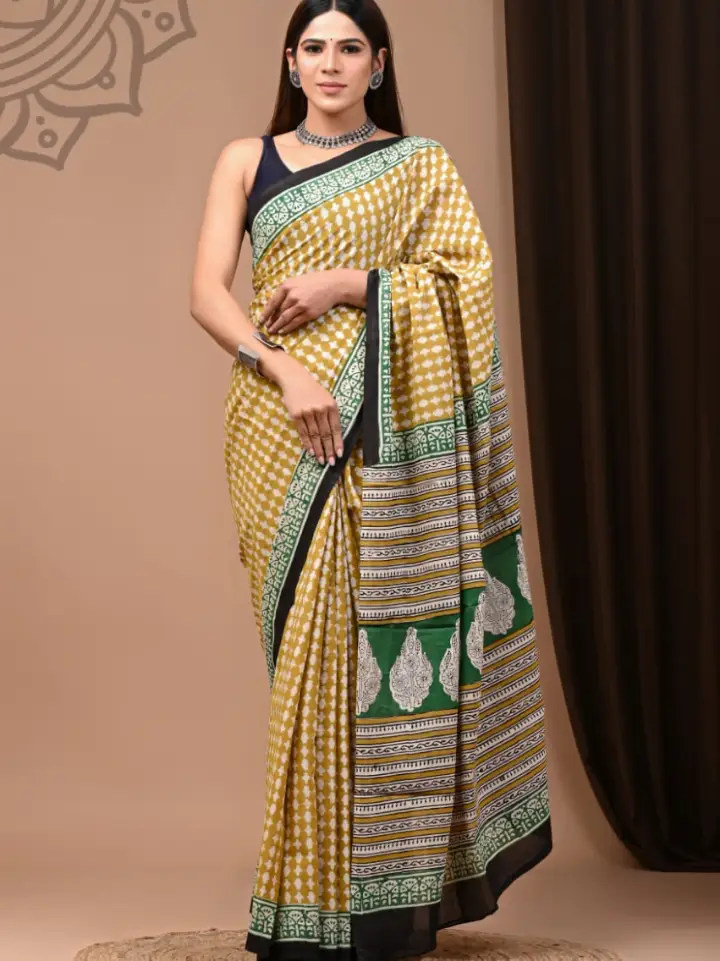
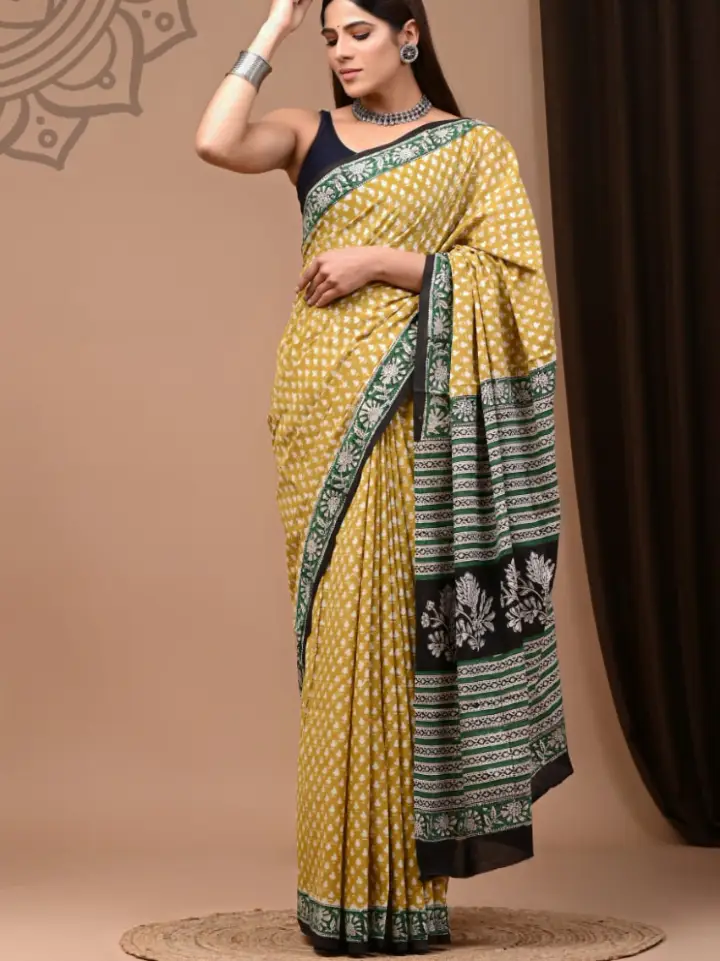
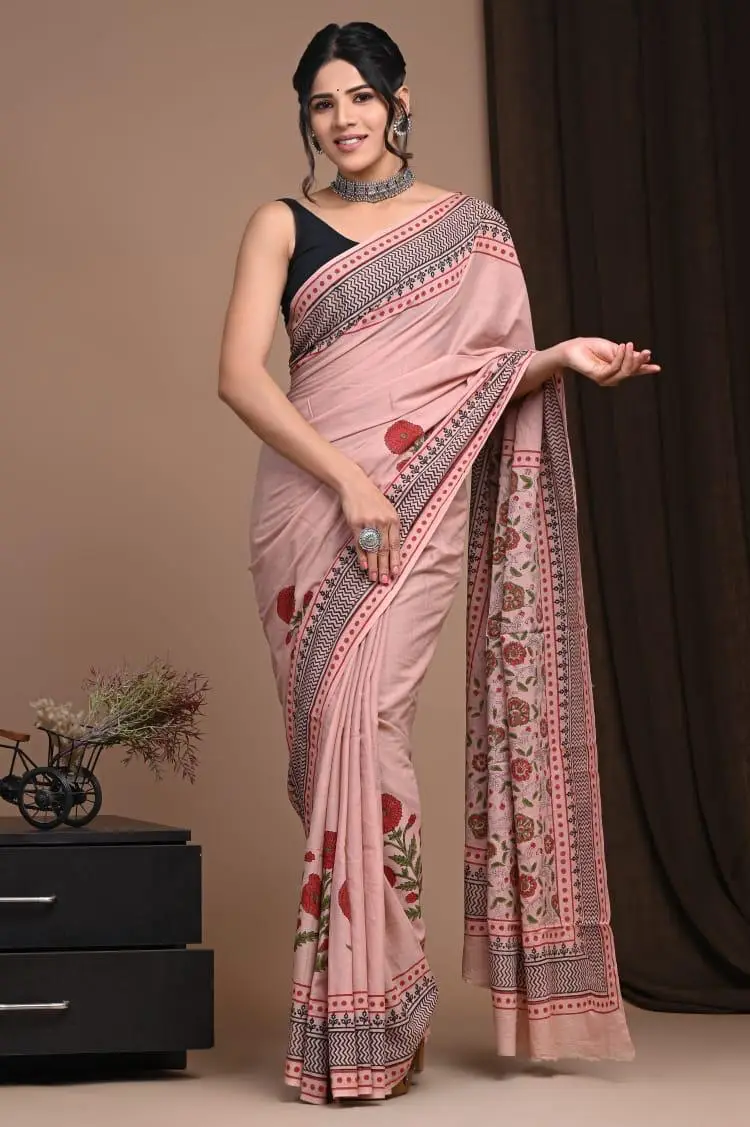
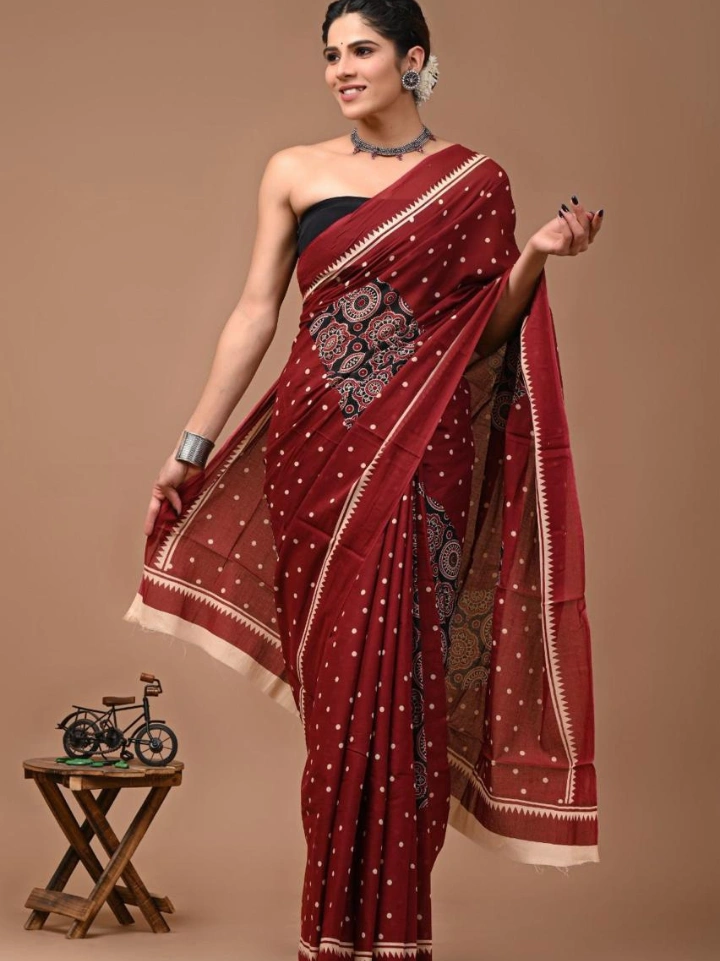
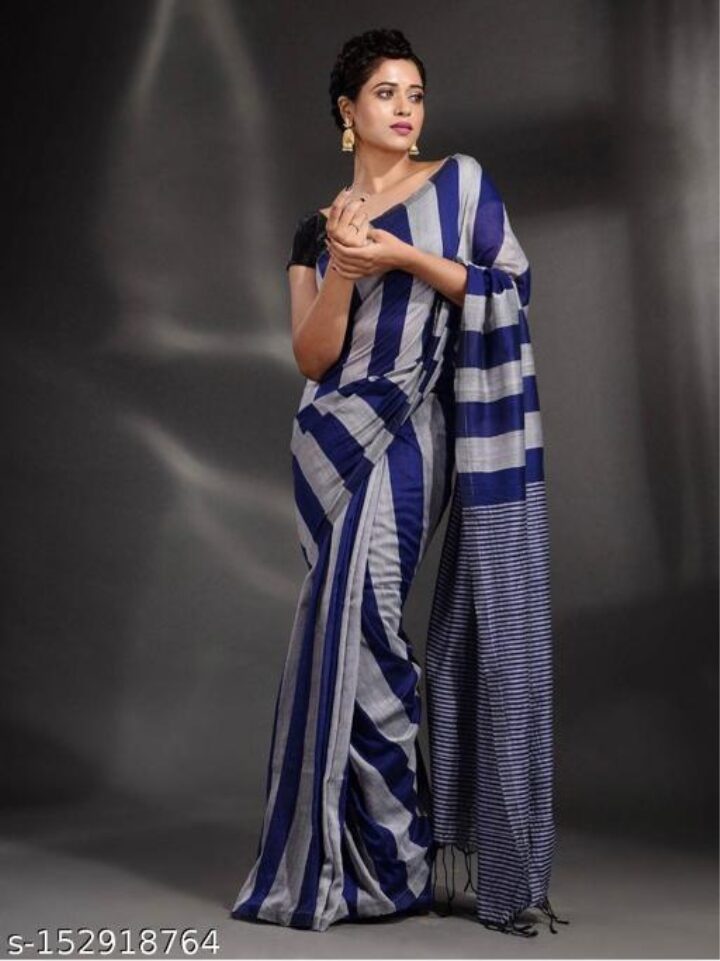
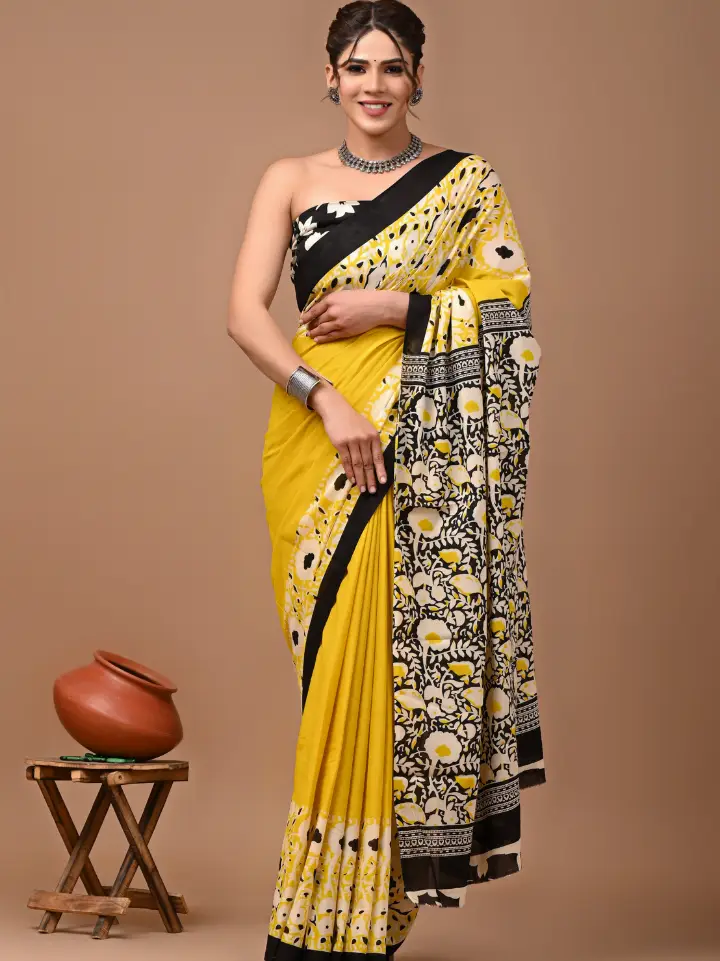
Block Printed Cotton Saree for Women — Hand Printed in Bagru, Jaipur
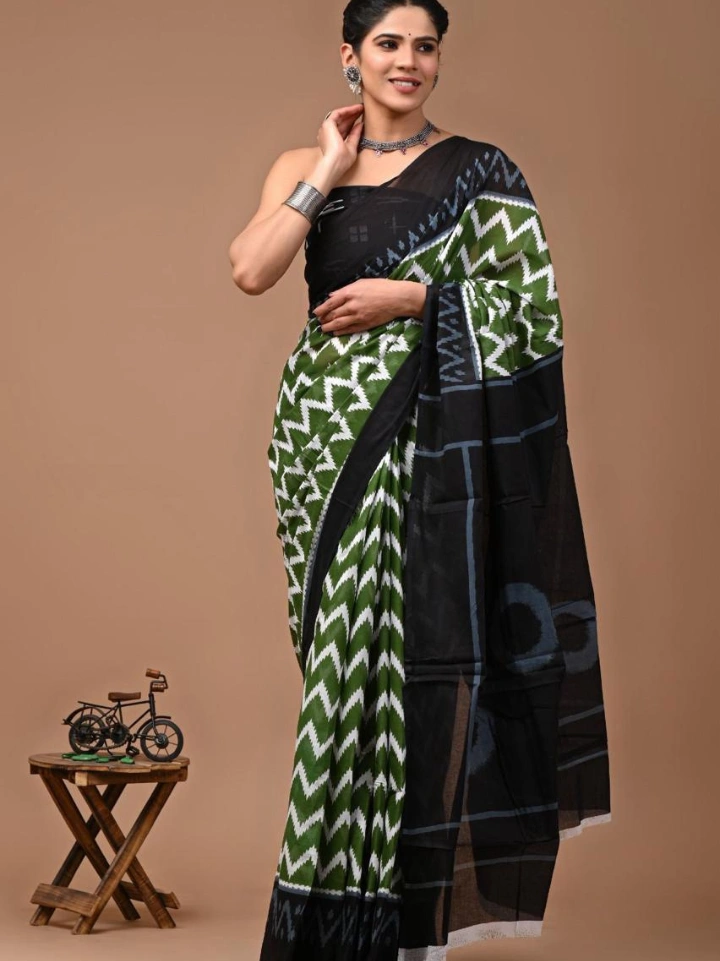
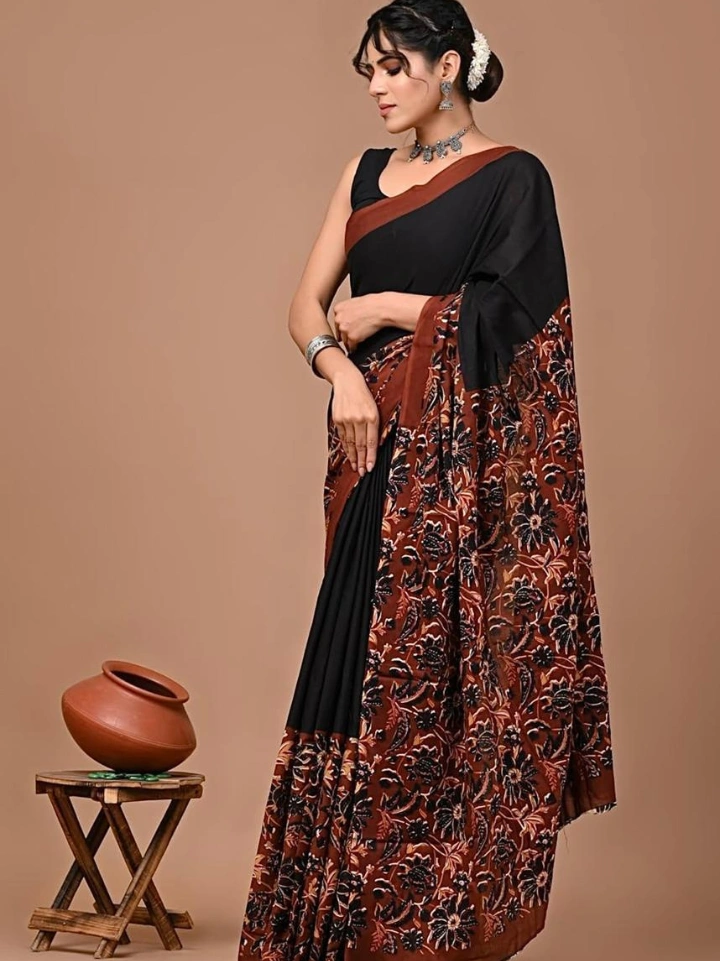
Every block printed cotton saree in this collection is made by hand in Bagru, Rajasthan. This is the village where the Chhipa community has practised natural dye block printing for over 450 years. A Chhipa artisan presses a hand-carved wooden block into natural dye paste and stamps the motif across 6.3 metres of pure cotton — border, body, and pallu — each section printed in sequence. No digital shortcut. No screen print. Every saree is genuinely handmade.
We use natural dyes throughout: madder root for deep reds and terracotta, indigo plant for rich blues and navies, harda seed for warm yellows and sage greens, and iron solution for blacks and greys. Because these dyes are plant-based with no synthetic azo compounds, they are gentle against the skin. They also age gracefully — deepening slightly over time rather than fading flat.
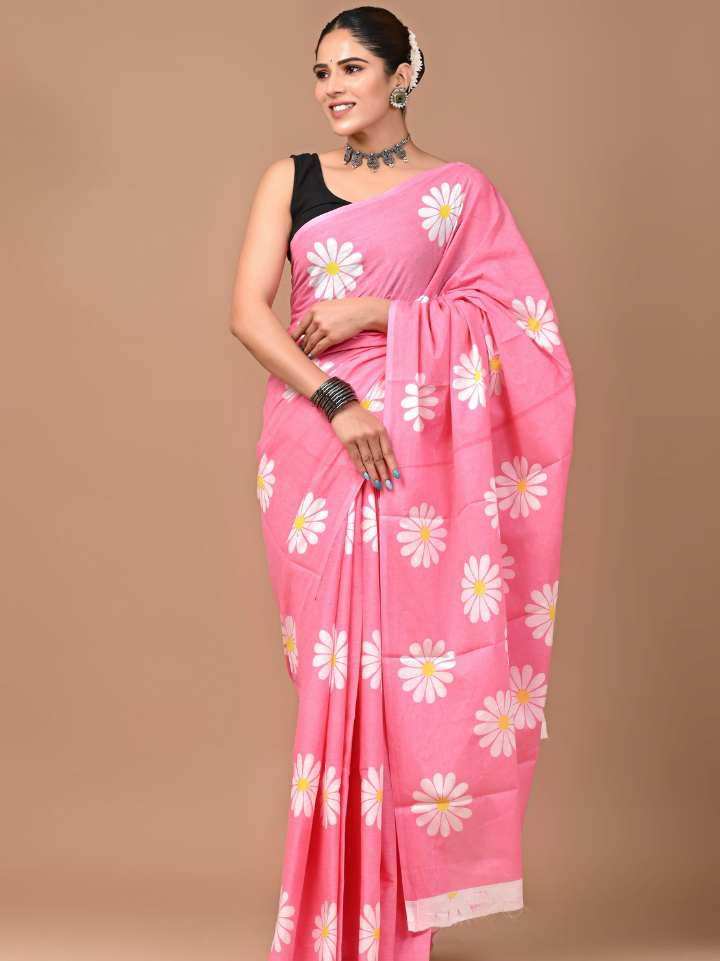
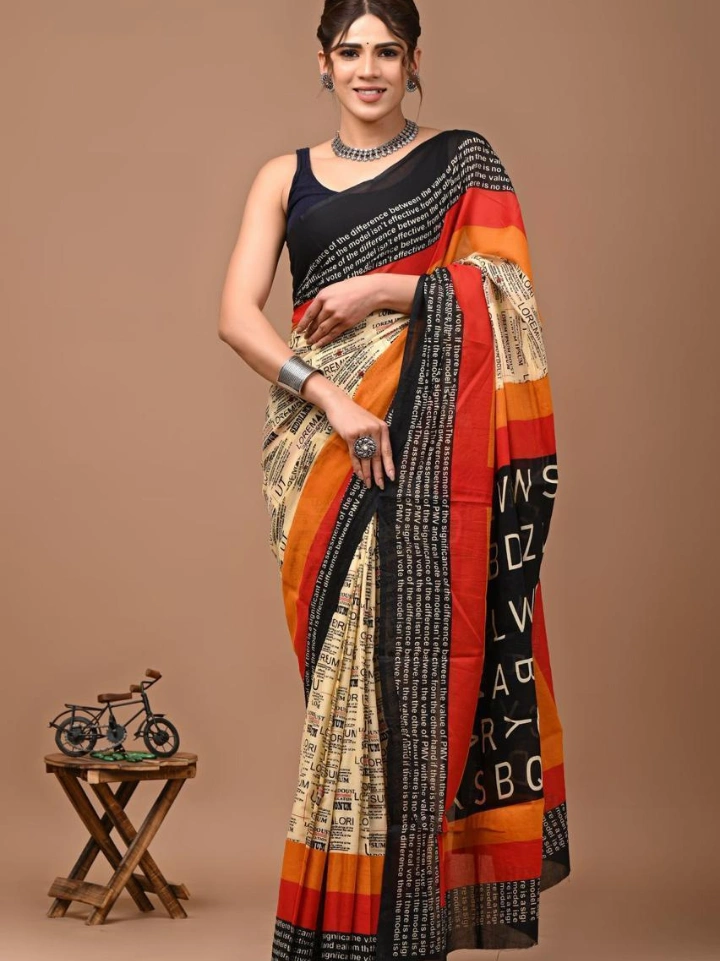
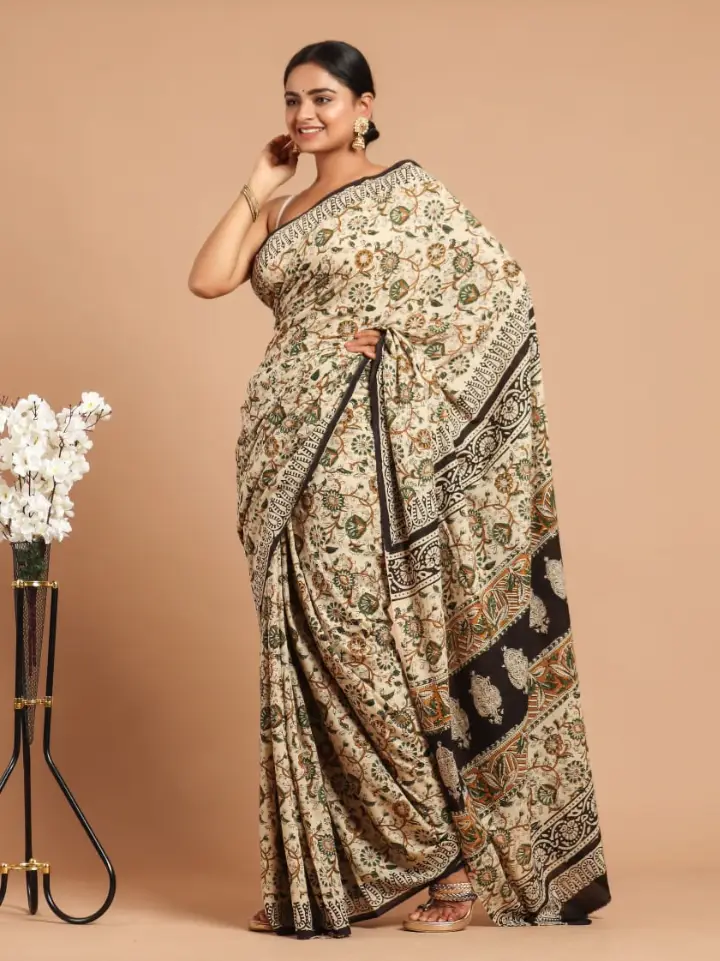
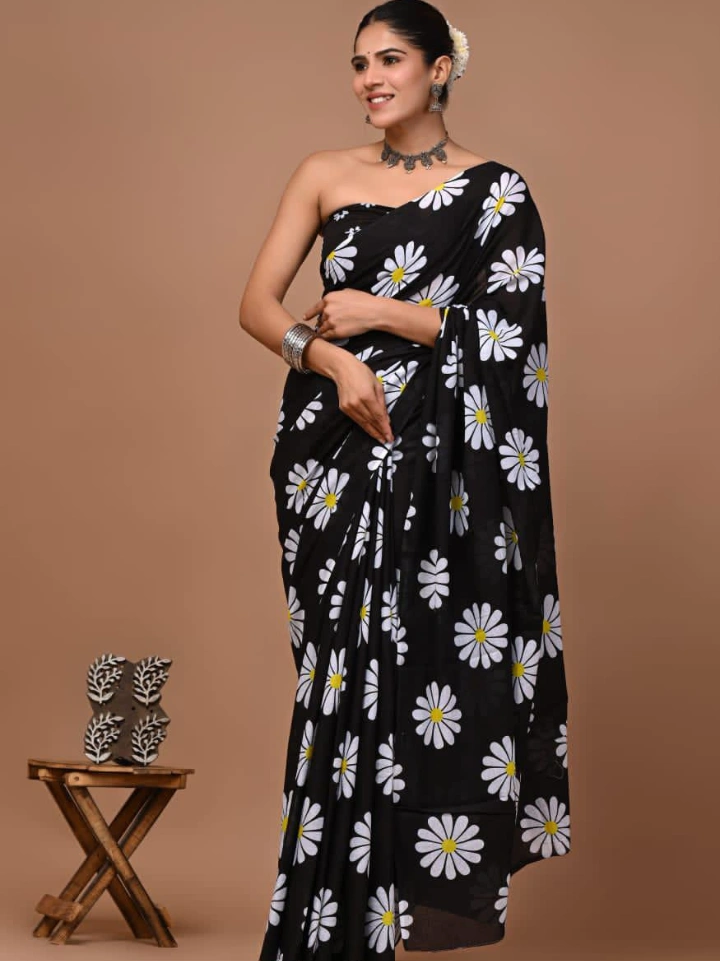
With 34 styles across pure cotton and cotton mulmul bases, in prints ranging from dense traditional Bagru motifs to delicate florals and bold geometric borders — this is the most complete block printed cotton saree for women collection we offer. Every saree comes with an unstitched blouse piece in the same print.
What’s in This Collection
34 block printed cotton sarees across three distinct fabric bases and several print traditions. Here is how to navigate them:
Pure Cotton Block Print Sarees
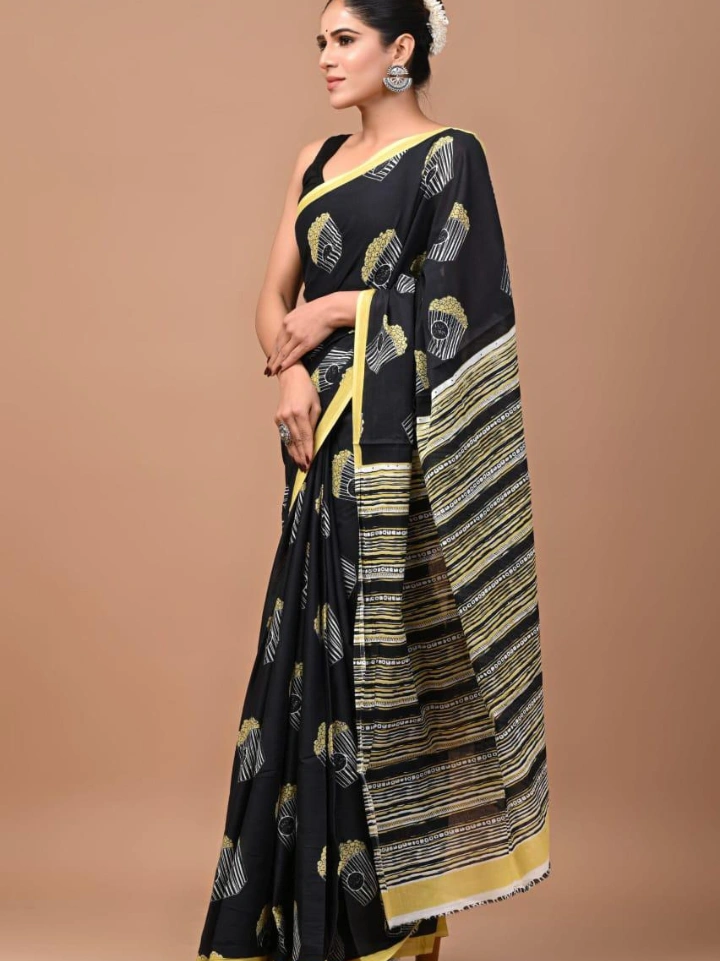
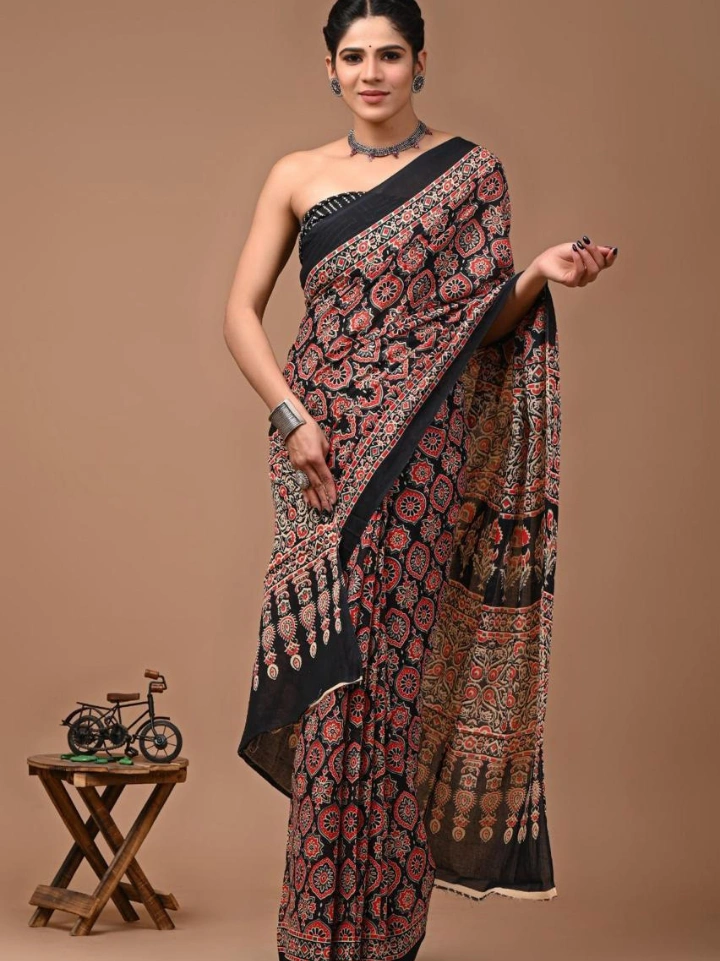
Our pure cotton sarees are the core of this collection. The fabric is a standard-weight pure cotton — firm enough to drape cleanly, soft enough to feel comfortable against the skin across a full day’s wear. These sarees carry the full Bagru block print vocabulary: dense repeat motifs across the body, a contrasting border in a complementary natural dye colour, and a distinct pallu with a bolder or wider print. These sarees work equally well for daily wear, office wear, festive occasions, and travel.
Cotton Mulmul Sarees
Our cotton mulmul sarees — including the Cloud Nine Cotton Mulmul style — use a finely woven, open-weave cotton muslin as the base fabric. Mulmul is distinctly lighter and sheerer than standard cotton. It drapes more softly and moves more freely. As a result, these are the most comfortable sarees in the collection for peak Indian summers, outdoor occasions, and long-wear days. The block print on mulmul has a slightly softer edge than on standard cotton — the ink bleeds slightly into the open weave, which creates a gentle, watercolour quality to the motifs rather than a sharp edge.
Bagru Print Cotton Sarees with Contrasting Borders
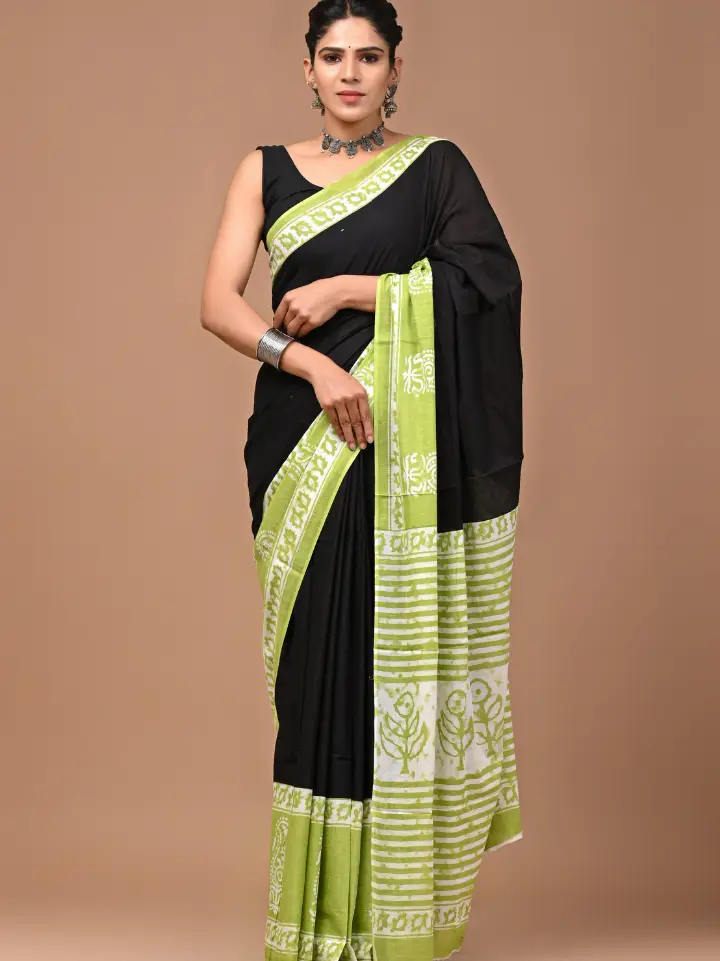
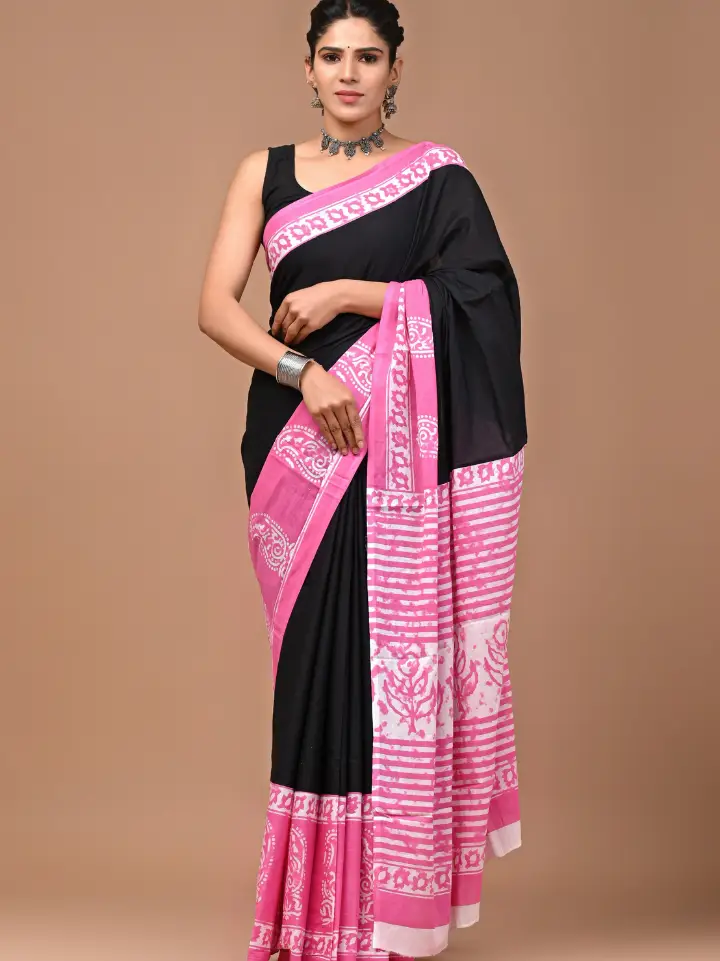
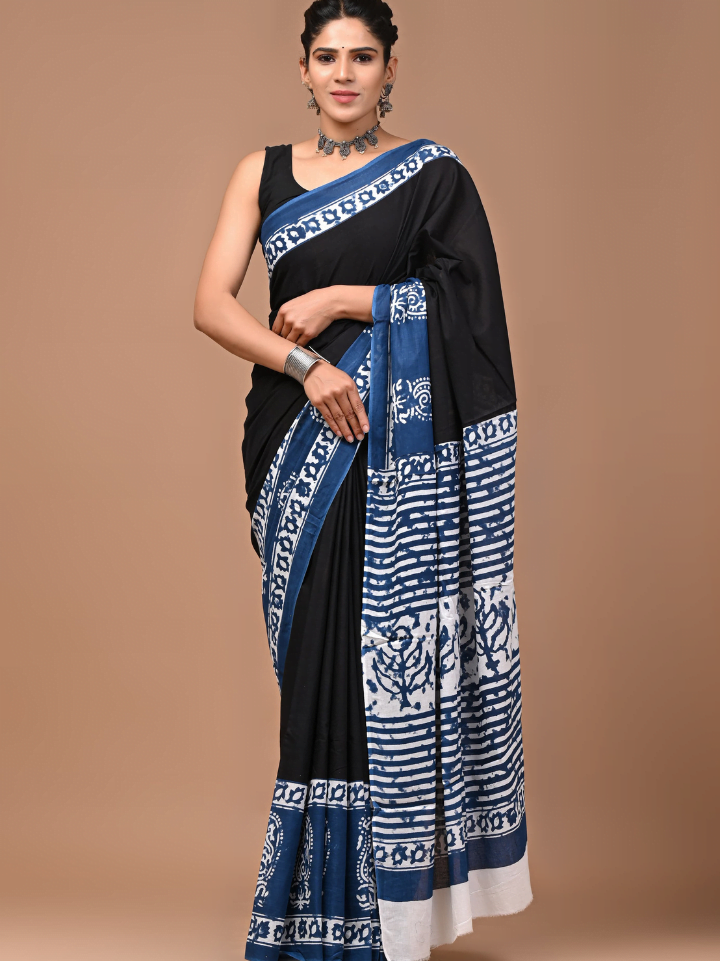
Several sarees in this collection are specifically designed around the contrasting border detail — a different natural dye colour at the border from the saree body. Our Black Cotton Saree with Gooseberry Border and Black Pure Cotton Saree with Pink Printed Border are the most distinctive examples. These sarees use a black natural dye ground on the body with a contrasting colour border — a design vocabulary that is specifically Bagru in character, drawing from the traditional resist-print aesthetic of the Chhipa community.
Why Pure Cotton Is the Right Fabric for a Block Printed Saree
Most printed sarees sold online use georgette, polyester, or viscose — fabrics chosen because they drape dramatically in product photographs. In reality, these synthetic fabrics trap heat, cling in warm weather, and feel uncomfortable against the skin through a full day’s wear. In contrast, pure cotton absorbs moisture, allows air circulation, and stays physically cooler in Indian summers.
Cotton also accepts natural dyes more deeply than synthetic fabrics do. Because natural dye molecules bond with the cotton fibre rather than sitting on the surface, the colour penetrates the weave and becomes part of the fabric rather than a coating on it. This is why a block printed cotton saree in madder red looks richer and more three-dimensional than the same colour on a polyester saree — the colour has depth because it is inside the fibre.
Furthermore, pure cotton softens with every wash. A cotton saree that has been worn and washed twenty times drapes better and feels softer than it did when new. Synthetic sarees do the opposite — they pill, snag, and lose their drape over time. So a well-cared-for block printed cotton saree is a long-term wardrobe investment, not a seasonal purchase.
Which Cotton Saree for Which Occasion
Daily Wear & Office
A pure cotton block print saree is the most practical choice for daily wear and office dressing. It breathes through full days, stays comfortable in both air-conditioned offices and warm commutes, and looks composed and deliberate rather than casual. For office wear specifically, deeper natural dye tones — indigo blue, black with contrasting border, brownish red — carry a professional register without needing embellishment. A crisp cotton blouse in a solid complementary colour completes the office look simply.
Festive & Occasion Wear
Our deeper-tone block print sarees — madder red, deep indigo, black with contrasting gooseberry or pink border — carry the festive register strongly. The block print itself reads as rich and considered without requiring zari, embroidery, or sequin work. For festive occasions, pair with a more elaborate blouse design to shift the saree’s register from daily to celebratory. Our stylish blouse design guide covers the best blouse cuts and necklines that work with block printed cotton sarees specifically.
Summer & Travel
Our cotton mulmul sarees are the best choice for Indian summers and travel. Mulmul weighs almost nothing, folds into a fraction of the space of a standard cotton saree, and stays cool in extreme heat. It is also the easiest cotton saree fabric to drape — the lightweight nature of the fabric means it falls into place naturally rather than needing careful pinning. For travel specifically, the block print means it always looks intentional even when unpacked straight from a bag.
Casual & Everyday Ethnic
Not every saree occasion needs to be a formal one. Our lighter floral and small-motif styles in pale natural dye grounds — cream, natural white, soft ochre — work beautifully for casual temple visits, family lunches, and everyday ethnic dressing. These styles drape easily and wear comfortably through the day without the visual weight of the deeper festive colours.
Draping and Blouse Tips for Block Printed Cotton Sarees
A block printed cotton saree drapes differently from a silk or chiffon saree. Here is what to know before you drape:
How Cotton Drapes
Standard-weight cotton holds a crease more firmly than georgette or chiffon. This means the pleats stay crisper and the pallu does not slip as easily — which is an advantage for saree beginners. However, it also means the pleats need to be set deliberately rather than falling naturally. For a clean drape, iron the saree lightly before wearing and set the pleats with your fingers before tucking. For detailed draping guidance across different styles, read our saree draping styles guide — it covers Nivi, Bengali, Gujarati, and other regional styles with step-by-step guidance.
Mulmul Drapes Differently
Cotton mulmul drapes more like a lighter fabric — softly, with natural fall rather than crisp pleats. As a result, mulmul sarees are easier to drape casually but harder to achieve precise pleats with. The most flattering drape for a mulmul saree is a relaxed Nivi style with loose pleats — attempting very tight, structured pleats with mulmul can make the front panel look bulky.
Blouse Choice Matters
A block printed cotton saree works with a wide range of blouse styles. For daily wear and office, a plain cotton blouse in a solid colour from the saree’s natural dye palette keeps the look composed. For festive occasions, a more detailed blouse — V-back, mirror work detail, or a contrasting print — elevates the block print saree without competing with it. For the full range of blouse options that work specifically with block print sarees, visit our stylish blouse design article.
Why a Handblock Printed Cotton Saree Is Different
Most “block print sarees” sold online are digitally printed on synthetic fabric — the block print pattern is applied by a machine using digital files, not by a craftsperson using a wooden block. The difference is visible in the print: digital prints have perfectly uniform edges and identical repeat spacing. Genuine block prints have slight variations — small shifts in motif placement, gentle ink bleeds, minor differences from one repeat to the next. These variations are the proof of authenticity.
Our sarees are printed by Chhipa community artisans in Ganga Vihar, Bagru — we work directly with them, without wholesalers or factory intermediaries. Fair wages go directly to the craftspeople. As a result, each saree carries a real, verifiable origin: a specific village, a specific community, a 450-year tradition behind every motif.
For the full story of how the printing process works, read our guide to the art of hand block printing. Alternatively, our Ajrakh vs Dabu article explains how Bagru’s two main printing traditions differ in technique and visual character.
How to Care for Your Block Printed Cotton Saree
- First wash separately in cold water. Some natural dye release is normal in the first 2–3 washes. This is excess dye clearing, not fading. Always wash separately first.
- Hand wash only for the first few washes. Thereafter, a gentle cold machine cycle works fine. Avoid hot water — it weakens natural dye bonds.
- Mild detergent only. Harsh detergents strip natural dyes faster. A gentle handwash liquid is sufficient. Never use bleach.
- Dry in shade, hanging from the pallu end. Direct sunlight degrades natural dye molecules over time. Hanging from the pallu end distributes the weight evenly and prevents distortion at the petticoat tuck area.
- Iron on medium heat, on the reverse. Cotton irons easily. Ironing on the printed side can flatten the print texture — so always reverse-iron.
- For mulmul sarees: dry flat or hang carefully. Wet mulmul is very delicate. Avoid wringing. Lay flat to dry or hang gently without pegs that leave marks on the fine weave.
Frequently Asked Questions
Will the colours of my block printed cotton saree bleed when washed?
In the first 2–3 washes, some natural dye release into the wash water is completely normal. This is excess dye clearing from the fabric surface — not the print fading. This is actually a marker of genuine natural dye printing, not a defect. After the first few washes, the dye stabilises. With cold washing and shade drying, natural dye colours deepen slightly over time rather than fading flat. Always wash separately for the first few washes to prevent colour transfer onto other fabric.
Are block printed cotton sarees suitable for hot Indian summers?
Yes — and they are one of the best saree choices specifically for Indian summers. Pure cotton absorbs moisture and allows air circulation against the skin. Our cotton mulmul sarees are the most breathable option in the collection — the fine, open-weave muslin is almost translucent and creates a cooling effect in extreme heat. In contrast, synthetic sarees in georgette or polyester trap heat and cling against the skin when the fabric warms. For summer dressing, cotton and cotton mulmul are always the right fabric choice.
What is the difference between a Bagru print and other block print traditions?
Bagru printing is specific to Bagru village, Jaipur — the Chhipa community uses a resist-and-dye process with natural dyes in a characteristic earthy palette of madder red, indigo blue, and natural cream. The motifs are dense, traditional florals and geometric repeat patterns. In contrast, Sanganeri block printing (from Sanganer, also near Jaipur) uses finer motifs on a white ground with brighter synthetic dye colours. Ajrakh printing from Kutch and Barmer uses a complex multi-step resist process with deep geometric patterns. All our cotton sarees in this collection use the Bagru tradition specifically — that is the origin, the craft, and the community behind every piece.
Does the saree come with a blouse piece?
Yes — every cotton saree in this collection includes an unstitched blouse piece in the same block print fabric. The blouse piece is typically 80–90 cm, which is sufficient for a standard blouse cut. Since the blouse fabric carries the same print and natural dye as the saree body, your blouse will match the saree precisely rather than approximating the colour. For guidance on which blouse styles work best with block printed cotton sarees, visit our stylish blouse design guide.
How do I drape a pure cotton block print saree?
Pure cotton drapes differently from silk or chiffon — the fabric holds a crease firmly, so pleats stay well once set but need to be placed deliberately. Iron the saree lightly before draping. Set the pleats with your fingers before tucking them into the petticoat. The pallu can be pinned at the shoulder or allowed to fall freely — both work with cotton. For mulmul sarees, use a relaxed drape style with loose pleats rather than tight, structured ones, since the fine weave does not support a stiff pleat. Our saree draping styles guide covers step-by-step guidance for Nivi, Bengali, and Gujarati draping styles.
Explore More Sarees from SA Fab
If you are building a complete saree wardrobe, these categories sit alongside our cotton collection:
- Pure Linen Sarees — even more breathable than cotton for extreme summers, with a characteristic texture and natural drape.
- Kota Doria Sarees — fine cotton-silk weave from Kota, Rajasthan. Lighter than standard cotton, with a characteristic square-grid texture.
- Chanderi Sarees — cotton-silk blend from Chanderi, Madhya Pradesh. Slightly sheer, with a gentle natural sheen.
- Modal Silk Sarees — for occasions where you want the softness of silk with the breathability of a natural fibre.
- All Sarees — the full SA Fab saree collection across all fabrics — cotton, linen, Kota Doria, Chanderi, Modal Silk, Maheshwari, Organza, and Ikkat.
- Block Printed Dupattas — add a block printed dupatta to a cotton suit or co-ord set in the same Bagru palette as your saree.
Free Shipping · 7-Day Returns · Directly from Bagru
Every saree ships free across India. Worldwide delivery is also available. If the colour or size of the blouse piece is not right, our 7-day easy exchange policy makes it simple to resolve. We accept UPI, Visa, Mastercard, RuPay, and net banking.
For help choosing the right cotton saree for your occasion, skin tone, or draping style — WhatsApp us between Monday and Saturday, 10am to 7pm IST. We know this collection well and will guide you straight to the right piece.