




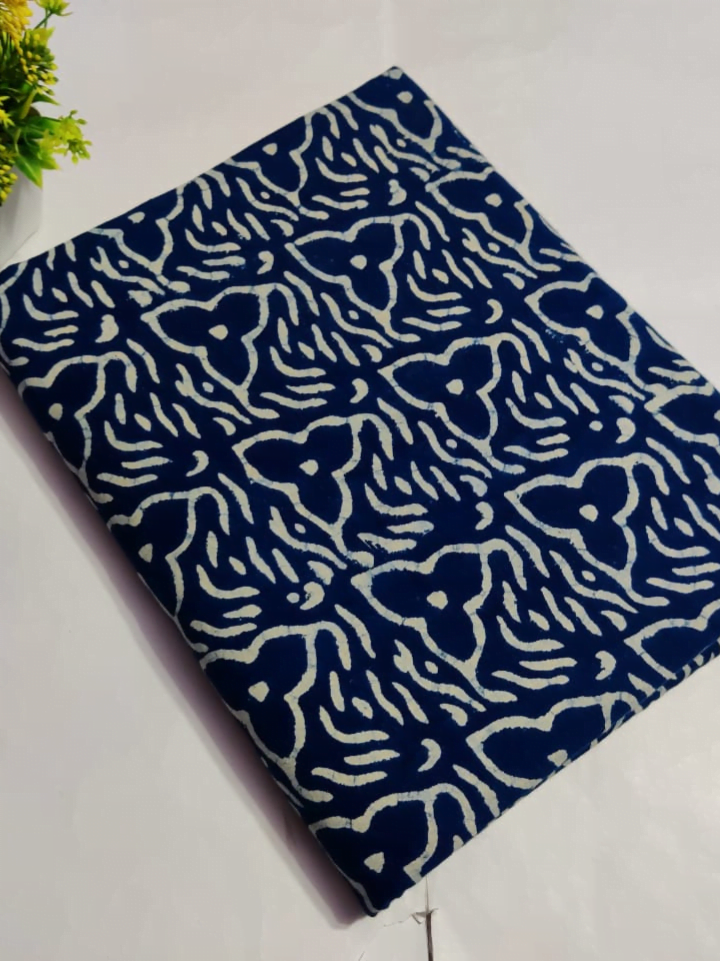
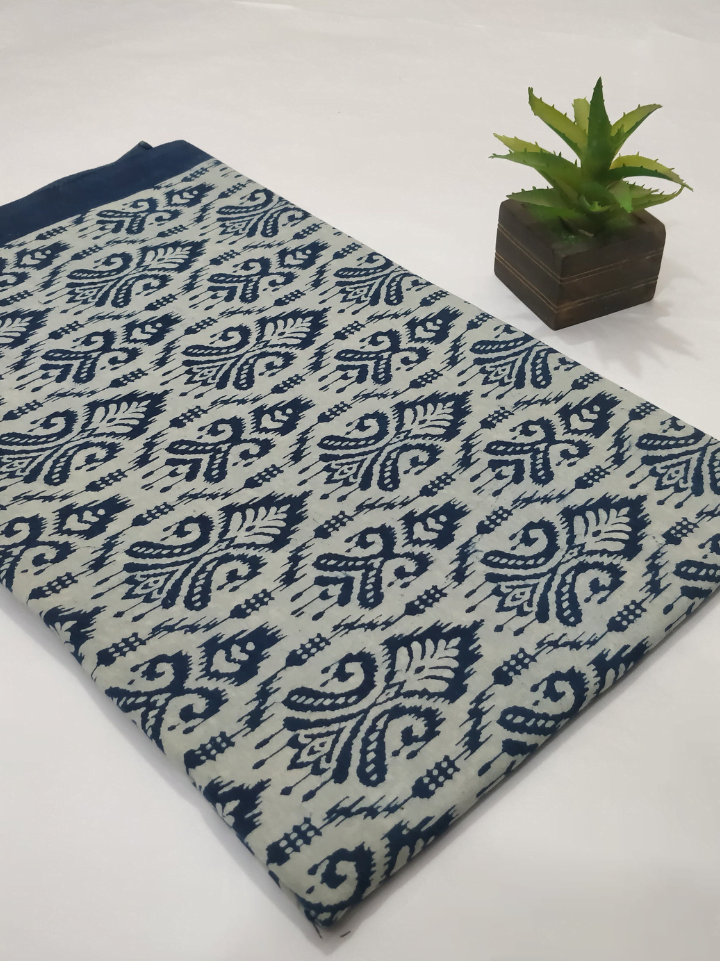
Indigo Print Fabric — Natural Vat Dyed, Hand Block Printed in Bagru
Every roll of indigo print fabric in this collection uses natural indigo — the same plant-based dye that has coloured cloth in India for over 4,000 years. The indigo comes from the Indigofera tinctoria plant, processed into a reduction vat, and applied to pure cotton through a dyeing and block printing process carried out entirely in Bagru, Rajasthan. No synthetic indigo. No chemical approximation. The blue in these fabrics is the same living colour that the Chhipa community of Bagru has been working with for generations.
Natural indigo behaves differently from synthetic blue dye. It does not sit on the surface of the cotton fibre as a coating. Instead, the dye molecules bond within the fibre itself — which is why natural indigo fabric looks and feels different from synthetically dyed cotton. The colour has depth and dimension. It also deepens slightly with every wash rather than fading flat, which is the reverse of how synthetic dyes behave. As a result, a well-cared-for piece of indigo dyed fabric looks richer after a year of use than it did when new.
All 36 fabrics in this collection are available in 10-metre rolls. No minimum order quantity. One roll is enough for a full saree with blouse piece, two suit sets, or multiple smaller garments. Free shipping across India. Worldwide delivery available.
How Natural Indigo Block Printing Works
Natural indigo printing is more technically complex than standard block printing with other natural dyes. Here is why — and why that complexity produces a colour that synthetic dyes cannot match.
The Indigo Vat
Natural indigo is not soluble in water in its normal state. To dye with it, artisans first reduce it into a soluble form using a fermentation vat — a combination of indigo powder, an alkaline agent, and a reducing agent. The fabric is dipped into this vat and the indigo bonds with the cotton fibre. On contact with air, the dye oxidises from a yellow-green to the characteristic deep blue. Multiple dips create darker blues. One or two dips create lighter, almost grey-blue tones. As a result, the depth of blue across our collection varies naturally based on the number of dye baths each fabric went through.
Resist Printing on Indigo
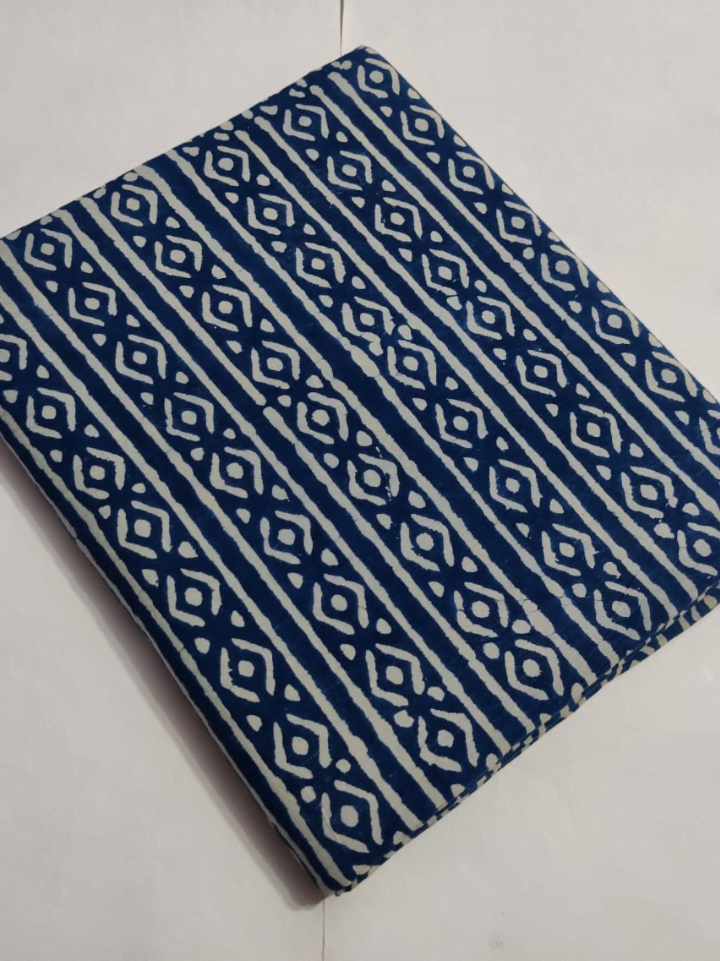
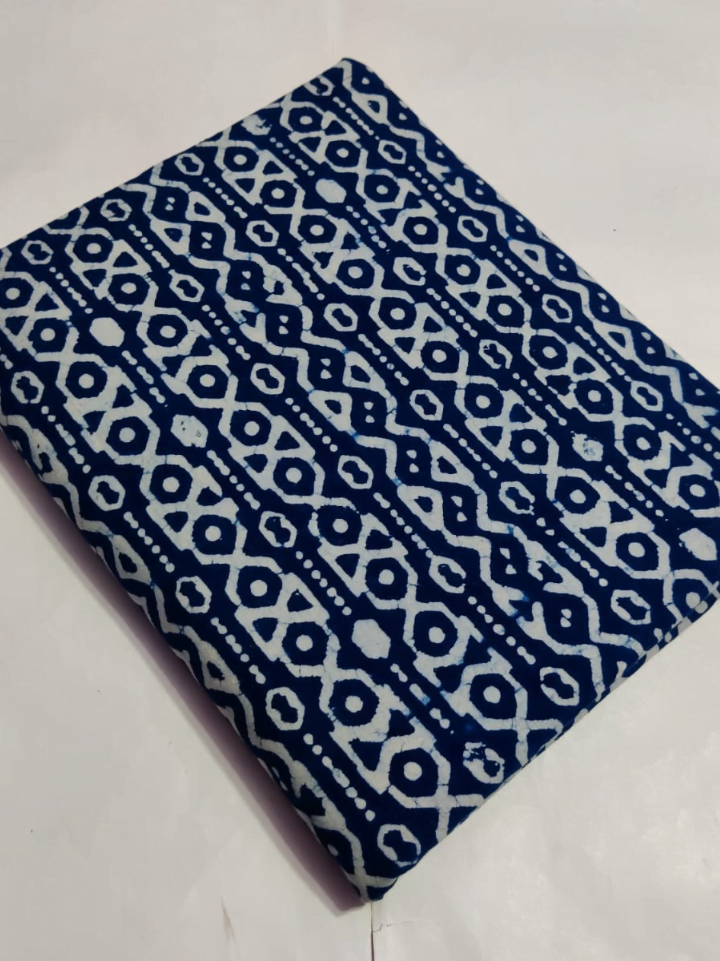
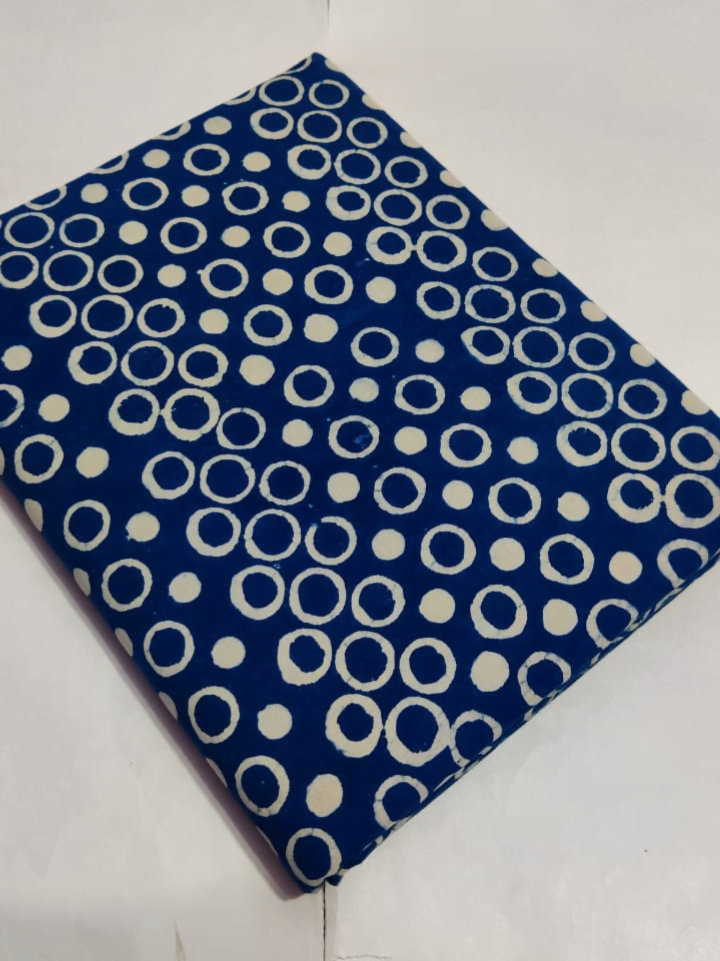
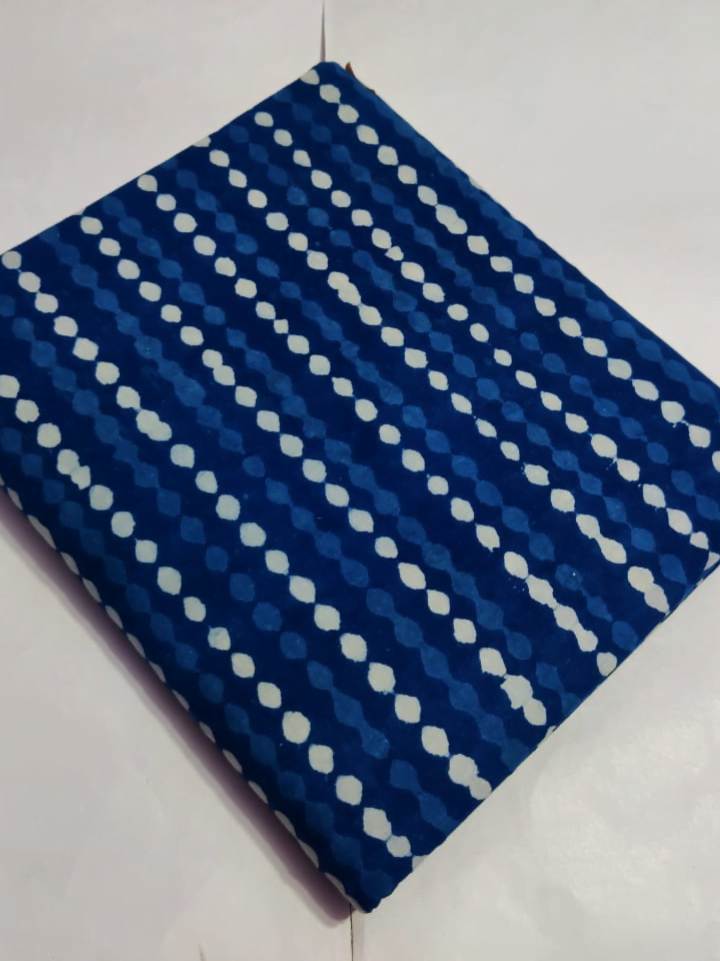
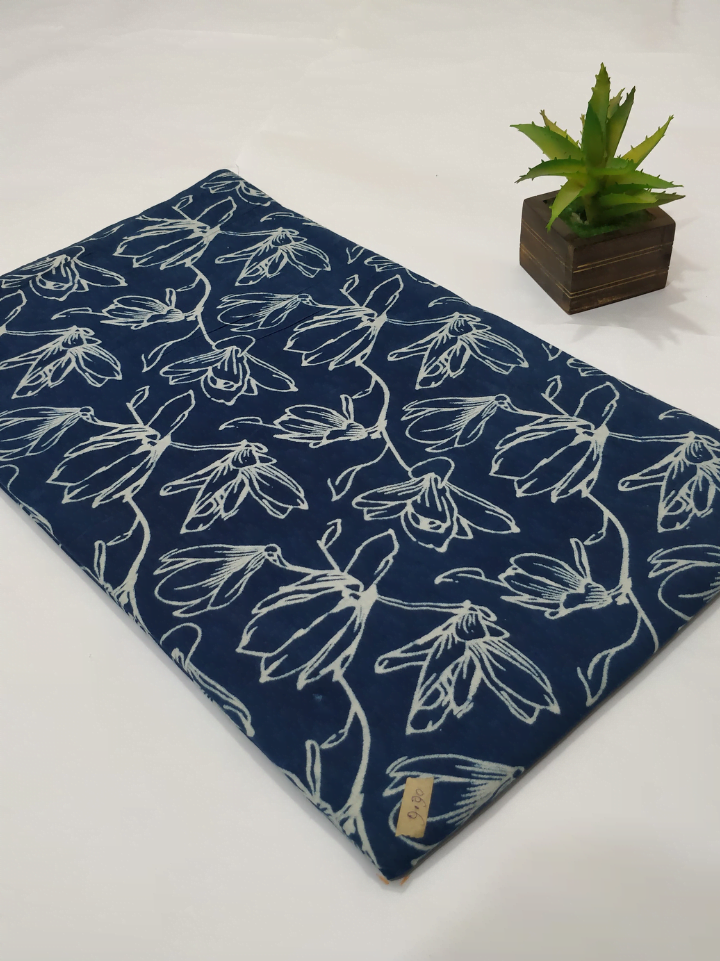
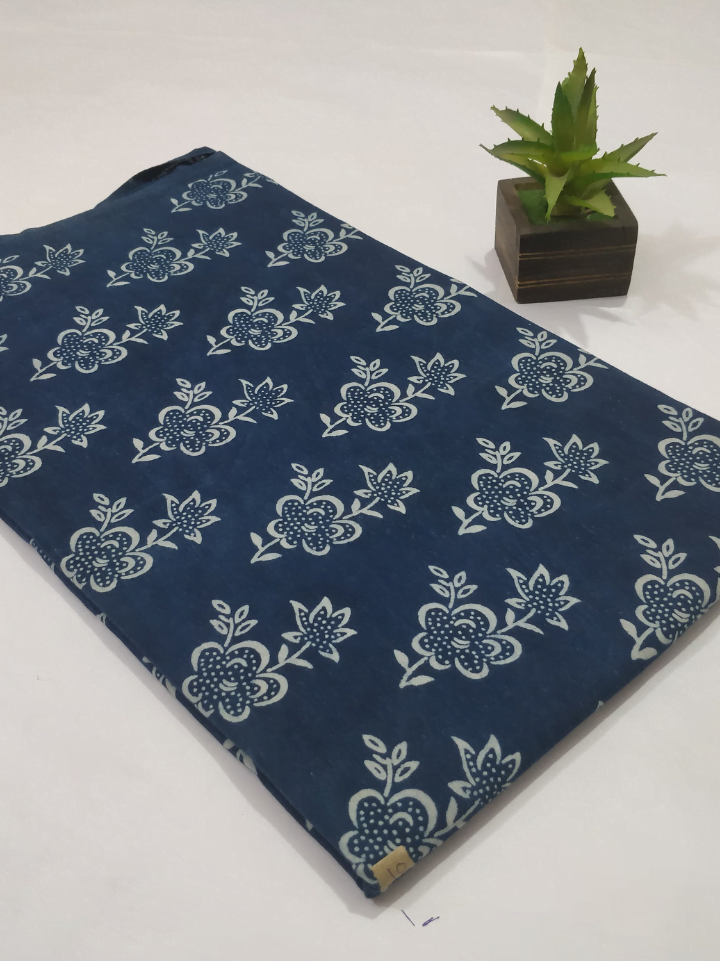
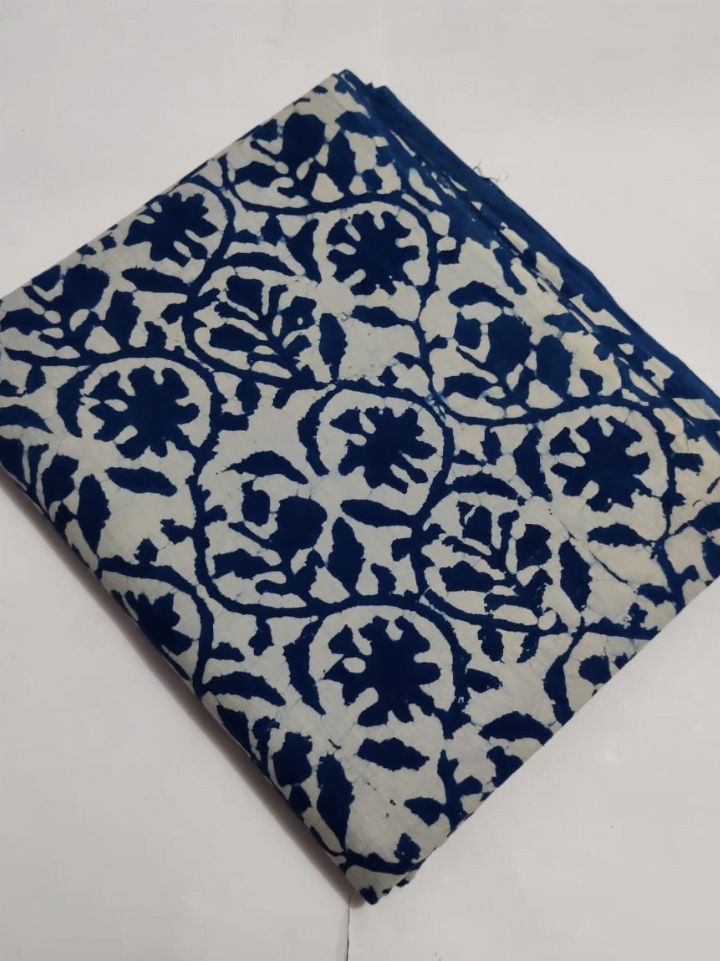
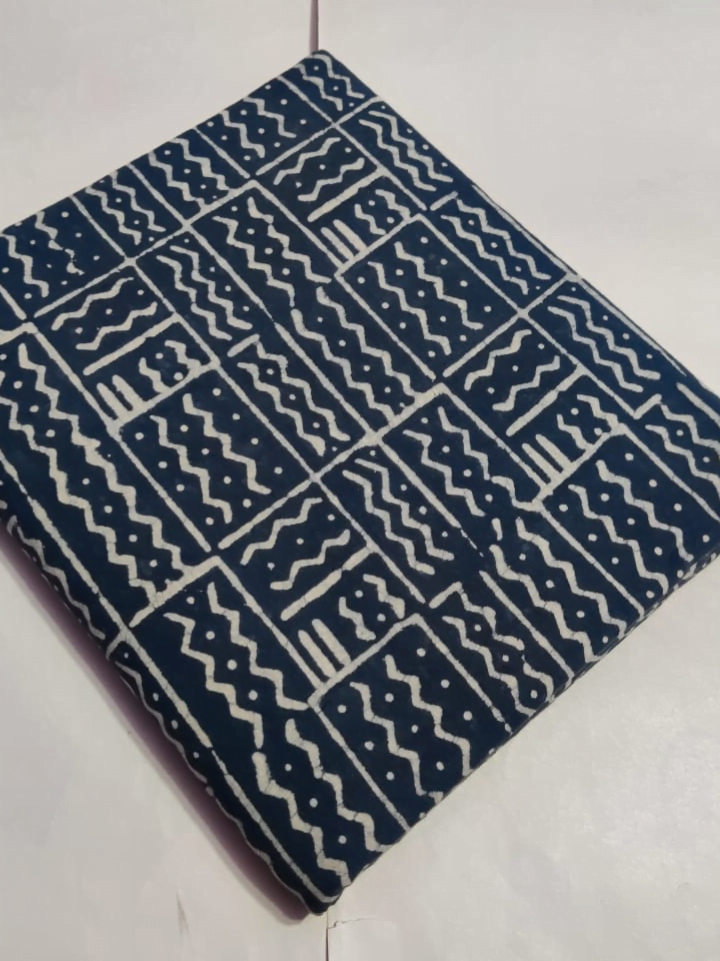
Several fabrics in this collection use a resist-print technique — a clay or wax resist paste is block-printed onto the cotton before the indigo dye bath. The resist protects those areas from the dye. When the resist is removed after dyeing, it leaves white or cream patterns on the deep indigo ground. This is the origin of the classic white-on-indigo pattern vocabulary that appears across our stripe, dotted, geometric, and floral styles. The pattern is created by absence rather than addition — the indigo goes everywhere except where the resist block touched.
Overprinting on Indigo Ground
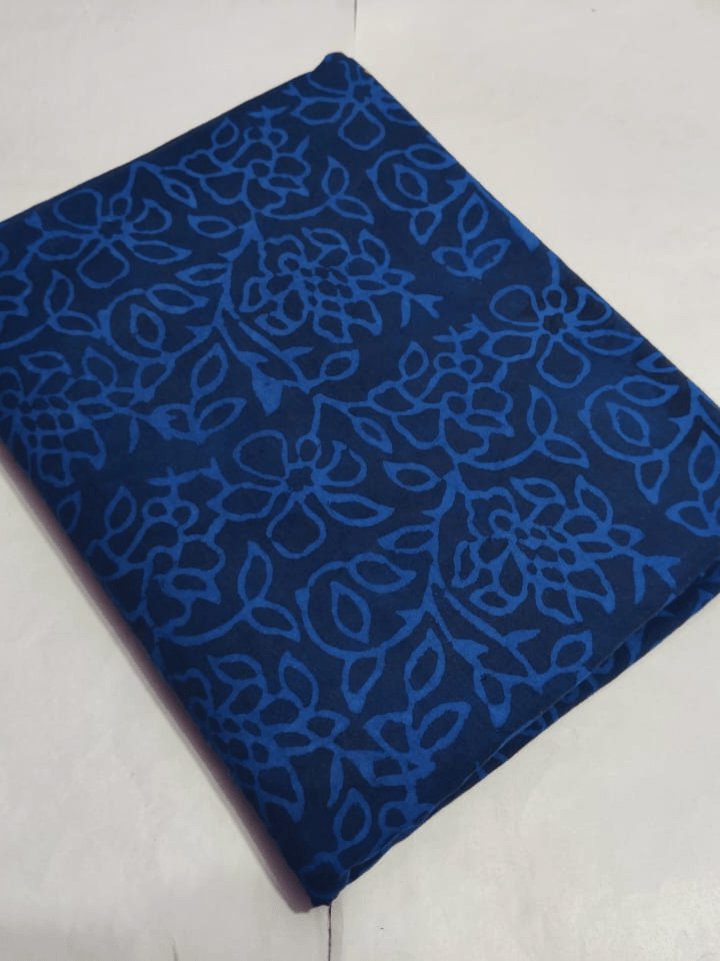
Other fabrics use an overprint technique — the fabric is dip-dyed indigo first, then block printed with a second colour (typically madder red, iron black, or harda yellow) on top of the indigo ground. This creates the richly layered colour combinations seen in our heritage motif, abstract, and floral styles where the indigo ground reads as a dark base for contrasting overprint colours.
What’s in This Collection
36 natural indigo block print fabrics across four distinct pattern vocabularies:
Geometric & Stripe Patterns
Our geometric and stripe styles — Deep Indigo Stripe, Indigo Chain Pattern, Indigo Circle Print, Indigo Dotted Bagru Print, Indigo Dotted Geometric, Indigo Geometric Hand Block Print, Indigo Geometric Print — carry the most structured, graphic patterns in the collection. These fabrics are the most versatile for garment making because geometric patterns are easier to match at seams than organic florals. They work particularly well for kurtas, shirts, straight-cut salwars, and home furnishing projects where pattern alignment matters. The clean geometry of indigo-on-white or white-on-indigo also suits both ethnic and contemporary garment silhouettes.
Floral & Botanical Patterns
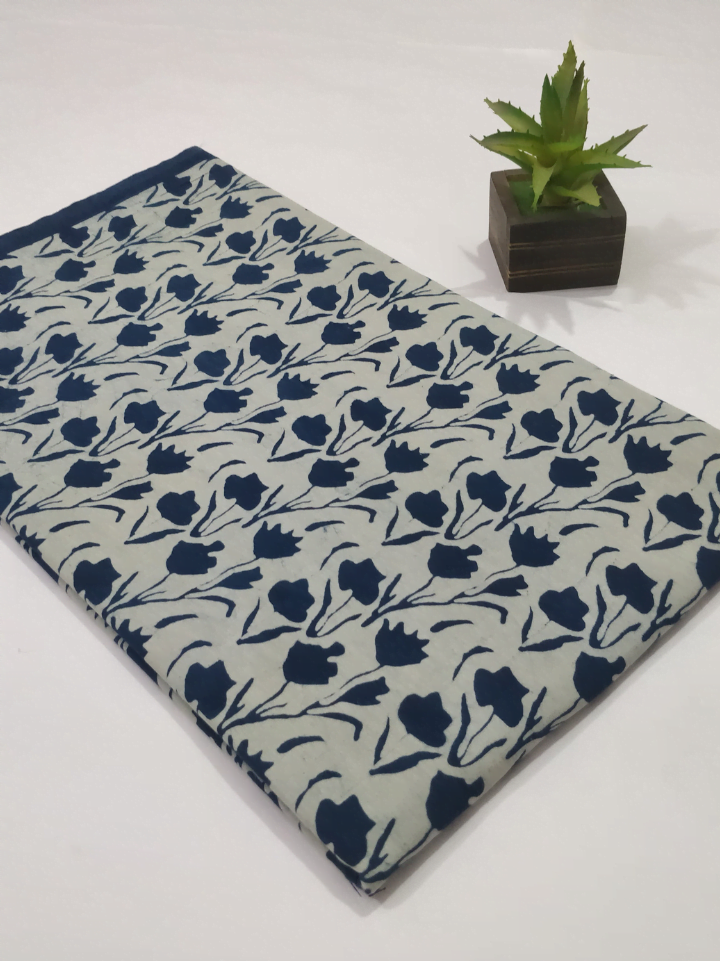
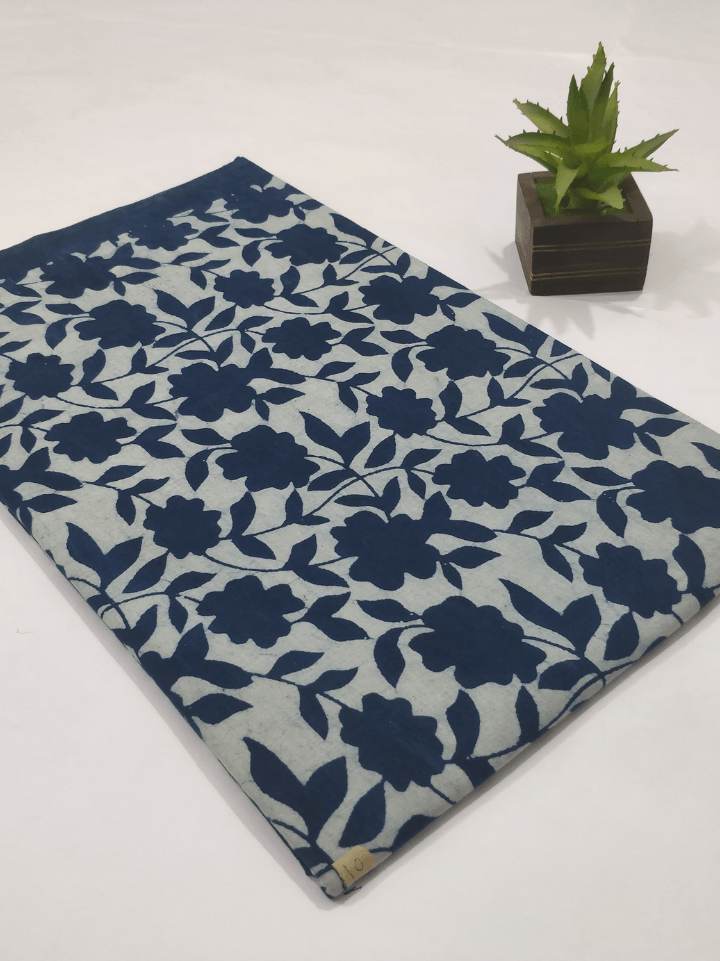
Our floral styles — Indigo Floral Hand Block Print, Indigo Floral Print Dyed, Indigo Floral Print (multiple variants), Indigo Flower Print — carry trailing botanical motifs, scattered florals, and organic repeat patterns in natural indigo on pure cotton. These are the most popular styles in the collection for sarees, dupattas, and flowing garments where the slight variation in a hand-pressed floral print reads as a feature rather than an imprecision. The natural indigo blue against a cream cotton ground creates the distinctive muted, considered palette that makes block print florals different from their synthetic counterparts.
Abstract & Heritage Motif Patterns
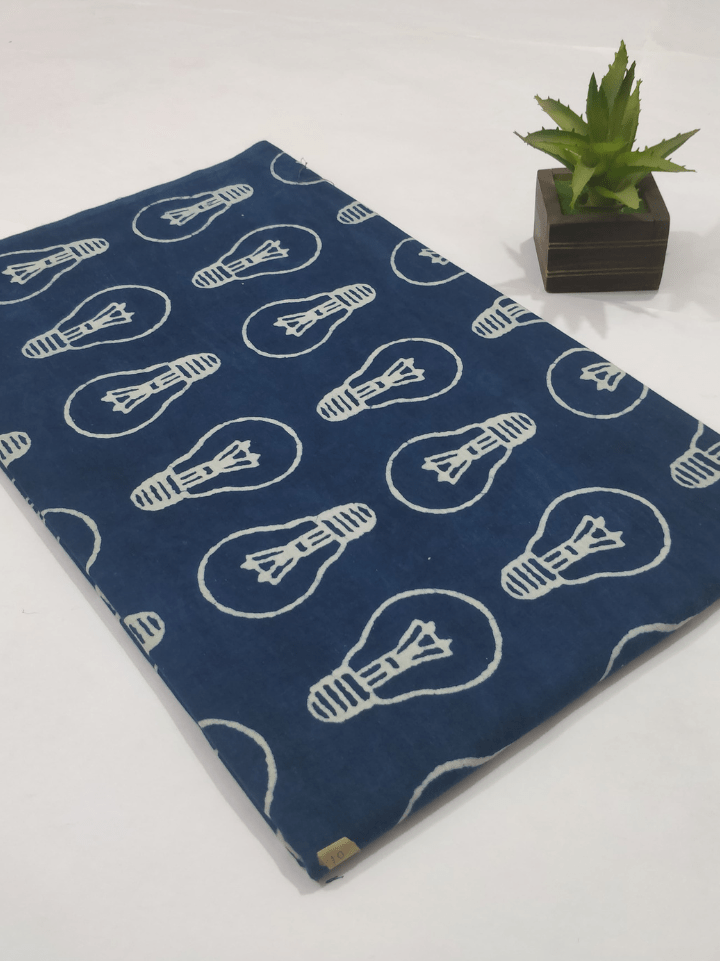
Our abstract and heritage styles — Asian Indigo Abstract Hand Block Print, Indigo Heritage Motif, Indigo Hand Block Print by the Yard, Indigo Bulb Print — carry bolder, less structured motifs that do not follow a tight repeat. The abstract style uses free-form block impressions across the fabric surface rather than a set repeat. The heritage motif style draws from traditional Bagru motif vocabulary — paisley derivatives, temple border details, and medallion elements. These are the most distinctive fabrics in the collection for fashion-forward garments and interior projects where individual motif character matters more than pattern uniformity.
What to Make with Natural Indigo Block Print Fabric
Garments
Indigo cotton fabric is well suited for a wide range of ethnic and contemporary garments. The deep blue palette works particularly well for sarees, salwar suits, kurtis, shirts, and wide-leg palazzo pants — where the colour’s depth reads as rich rather than flat under both natural and artificial light. For sarees specifically, the geometric and stripe styles drape well in the Nivi style. For kurtis and shirts, the floral and heritage motif styles carry sufficient pattern interest to work as standalone pieces without accessories. Visit our ready-made block printed kurtis and men’s block printed shirts if you prefer finished garments over fabric.
Home Furnishing
Natural indigo block print fabric translates exceptionally well into interior applications. The deep blue palette is timeless in home decor contexts — it works across cushion covers, curtains, table runners, upholstery, and bedding. The geometric patterns are particularly strong for interior scale because the repeat reads clearly at distance. For finished block printed home furnishing products already made up and ready to use, visit our home furnishing collection.
Craft & Quilting Projects
Natural indigo fabric has a long history in quilting and craft traditions worldwide — the colour coordinates across different indigo depths and prints without clashing, making it ideal for patchwork and quilting projects where multiple fabric pieces need to sit together. Our collection covers a range of blue depths and pattern scales, which gives quilters and craft makers the variety needed for a complete project from a single source.
Wholesale & Bulk Orders
We supply indigo block print fabric to boutiques, garment manufacturers, interior designers, and export buyers. If you need 5 or more rolls of a single design — or if you want to discuss custom yardage, colour combinations, or sample swatches — WhatsApp us directly for wholesale pricing and lead times.
Why Natural Indigo from Bagru Is Different
Synthetic indigo — produced from petrochemicals — accounts for the vast majority of blue dye used in global textile production. It is cheaper, faster, and more consistent than natural indigo. It is also what most “indigo fabric” sold online actually uses, regardless of whether the label says “natural” or “plant-based.”
Genuine natural indigo produces a blue with a depth and warmth that synthetic indigo does not. Under direct sunlight, natural indigo fabric has a slight greenish-gold undertone — this is the characteristic of plant-extracted indigo and is absent from synthetic blue. Furthermore, natural indigo does not contain the synthetic carriers and fixing agents that most synthetic dye processes require — making it genuinely skin-friendly in a way that synthetic indigo is not.
Our indigo fabrics are dyed and block printed by Chhipa community artisans in Ganga Vihar, Bagru. We work directly with these artisans — no factory intermediary, no wholesale markup. Fair wages go directly to the craftspeople. As a result, when you buy from SA Fab, you buy from the source with a verifiable craft origin: a specific village, a specific community, a 450-year tradition.
To understand the full printing process, read our guide to the art of hand block printing. For a comparison of Bagru’s two main resist-print traditions, our Ajrakh vs Dabu article covers both in detail.
How to Care for Natural Indigo Block Print Fabric
- Pre-wash before cutting. Natural indigo fabric releases excess dye in the first wash. Always cold pre-wash separately before cutting and stitching to remove excess dye and pre-shrink the cotton.
- Wash separately in cold water. Natural indigo can transfer colour onto light fabrics in the first several washes. Wash separately until the wash water runs clear.
- Mild detergent only. Harsh detergents — and especially bleach — strip natural indigo faster than synthetic dye. Use a gentle handwash liquid only.
- Dry in shade. Direct sunlight fades natural indigo faster than most other natural dyes. Shade-dry to preserve the depth and warmth of the blue.
- Iron on medium heat, on the reverse. Always iron on the reverse side to protect the print surface. Natural indigo fabric is pure cotton and irons easily.
- Expect colour evolution. Natural indigo deepens and shifts slightly over time with washing and use. This is a feature of genuine natural indigo — not a defect. The fabric becomes more characterful rather than faded.
Frequently Asked Questions
Is this fabric dyed with natural indigo or synthetic indigo?
Natural indigo — extracted from the Indigofera tinctoria plant. We do not use synthetic indigo in this collection. The difference is visible in the colour: natural indigo has a slight warmth and greenish-gold undertone under direct sunlight that synthetic indigo does not have. It also behaves differently when washed — natural indigo deepens slightly over time with proper care, whereas synthetic indigo fades uniformly. The excess dye release in the first few washes is also more pronounced with natural indigo than with synthetic, which is one of the ways to verify authenticity at home.
Why does natural indigo fabric release so much colour in the first wash?
Natural indigo dye has a characteristic called “crocking” — the surface dye molecules that did not fully bond with the cotton fibre during the vat dyeing process release in the first several washes. This is entirely normal with genuine natural indigo and is not the fabric fading. After the first 3–5 washes, the remaining dye is the portion that fully bonded with the fibre — and that portion is very stable and deepens over time. Always wash separately for the first several washes to prevent colour transfer onto other fabrics.
How many metres do I need for a saree, a kurta, or a suit set?
A standard saree requires 5.5 to 6.5 metres plus 0.8 to 1 metre for the blouse piece — one 10-metre roll covers a saree with blouse and leaves remainder. A long kurta requires approximately 2.5 metres for most sizes. A full suit set with kameez, pant, and dupatta requires 5 to 6 metres — one roll covers one suit set with a kurta’s worth of fabric left over. For custom yardage guidance, WhatsApp us with your measurements and garment type.
Can I use indigo block print fabric for home furnishing projects?
Yes — and it works exceptionally well for interior applications. Natural indigo blue is one of the most timeless colours in home decor. The geometric and stripe patterns in this collection translate strongly to cushion covers, curtains, table runners, and upholstery because the repeat is clear and consistent at interior scale. The pure cotton base is also practical for home furnishing — it washes well, holds its shape, and does not pill or snag the way synthetic fabric does. For finished block print home furnishing products, visit our home furnishing collection.
What is the difference between indigo block print fabric and Ajrakh fabric?
Both use natural indigo as a key dye colour, but the processes and visual results are distinct. Indigo block print fabric in this collection uses natural indigo as the primary or sole dye colour — applied either as a vat dye ground with resist-print patterns, or as an overprint colour on a lighter base. Ajrakh, in contrast, is a multi-step resist-print and dye process that uses both indigo and madder red through up to 16 alternating printing and dyeing stages — producing a fabric with layered colour depth and a specific geometric pattern vocabulary. Ajrakh prints identically on both sides. Our indigo prints are single-sided. For a full technical comparison, read our Ajrakh vs Dabu article, which also covers how indigo is used differently across these two traditions.
Explore More Block Print Fabrics
- Ajrakh Block Print Fabric — bold geometric patterns in deep madder and indigo through a multi-step resist-print process. Double-sided print.
- Dabu Print Fabric — mud-resist florals in earthy ochres, terracotta, sage green. The most organic and softly patterned fabric in the collection.
- Rapid Print Fabric — wider motif range, faster production, most accessible price point.
- All Block Print Fabrics — the full SA Fab fabric collection across all four printing traditions.
- Home Furnishing — finished block print products ready to use: cushion covers, curtains, bedsheets, table runners.
Free Shipping · No Minimum Order · Direct from Bagru
Every 10-metre roll ships free across India. Worldwide delivery is available. We accept UPI, Visa, Mastercard, RuPay, and net banking.
For wholesale enquiries, bulk pricing, sample swatches, or questions about a specific design — WhatsApp us between Monday and Saturday, 10am to 7pm IST.