
Hand Block Printed in Bagru, Jaipur
Chanderi Sarees Online — Hand Block Printed with Natural Dyes
Lightweight Chanderi sarees in pure cotton and silk, printed by Chhipa artisans using madder root, indigo, and harda. Direct from Bagru.
Natural Dyes Only
Madder root, indigo, and harda — no synthetic chemicals, ever.
Fully Handcrafted
Every saree printed by hand using carved wooden blocks in Bagru.
Pure Fabric
Cotton and silk Chanderi — lightweight, sheer, breathable.
Direct from Artisans
Chhipa community, Bagru — 450 years of block printing tradition.
A Chanderi saree has always been known for its quiet confidence — light enough to forget you're wearing it, sheer enough to let the print breathe. At SA Fab, we bring this fabric to Bagru, where Chhipa artisans press carved wooden blocks into natural dye pastes and stamp each design by hand. What you receive is not just a saree. It is a piece of craft with a full address.
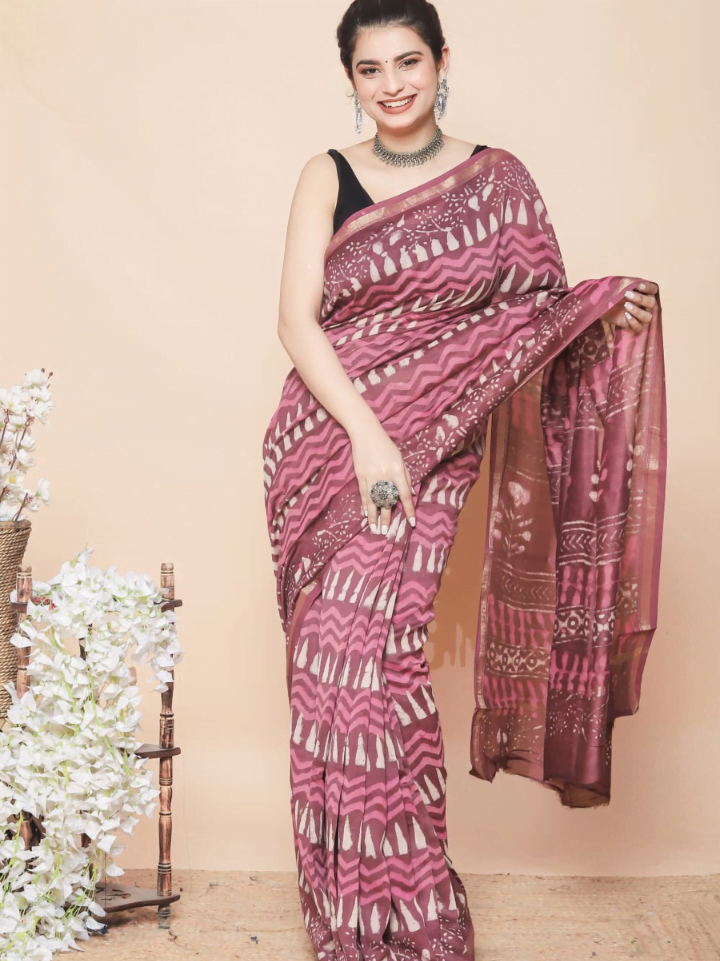
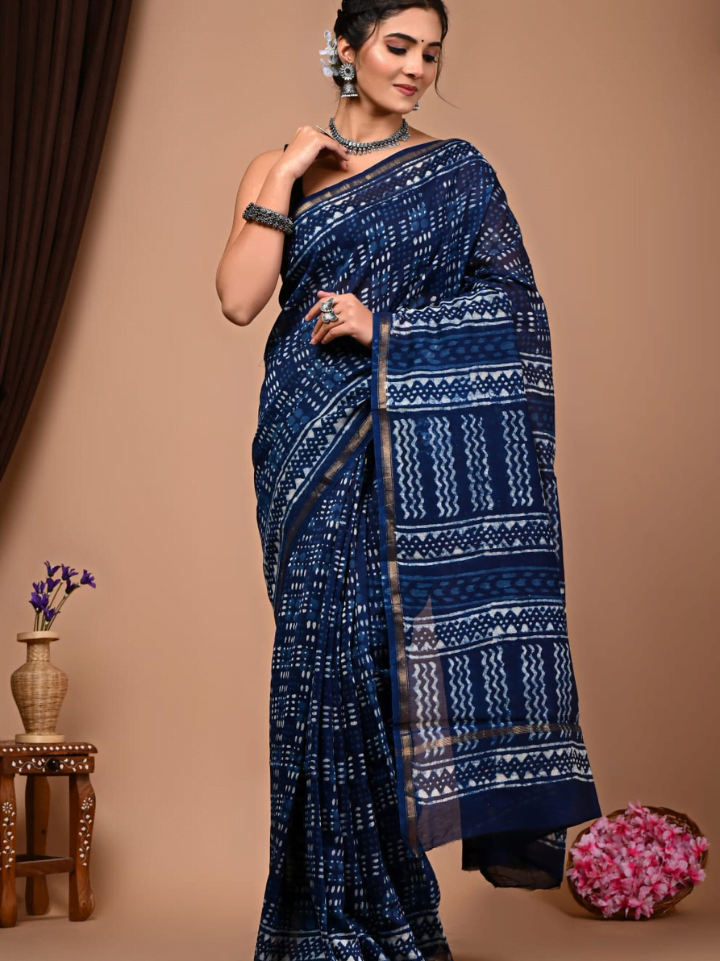
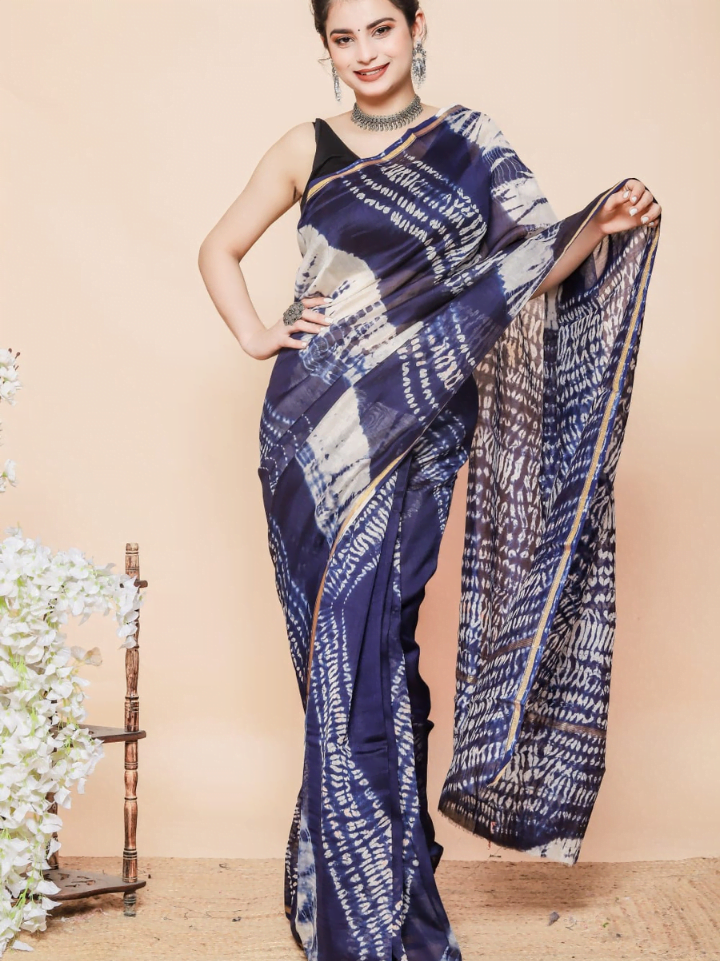
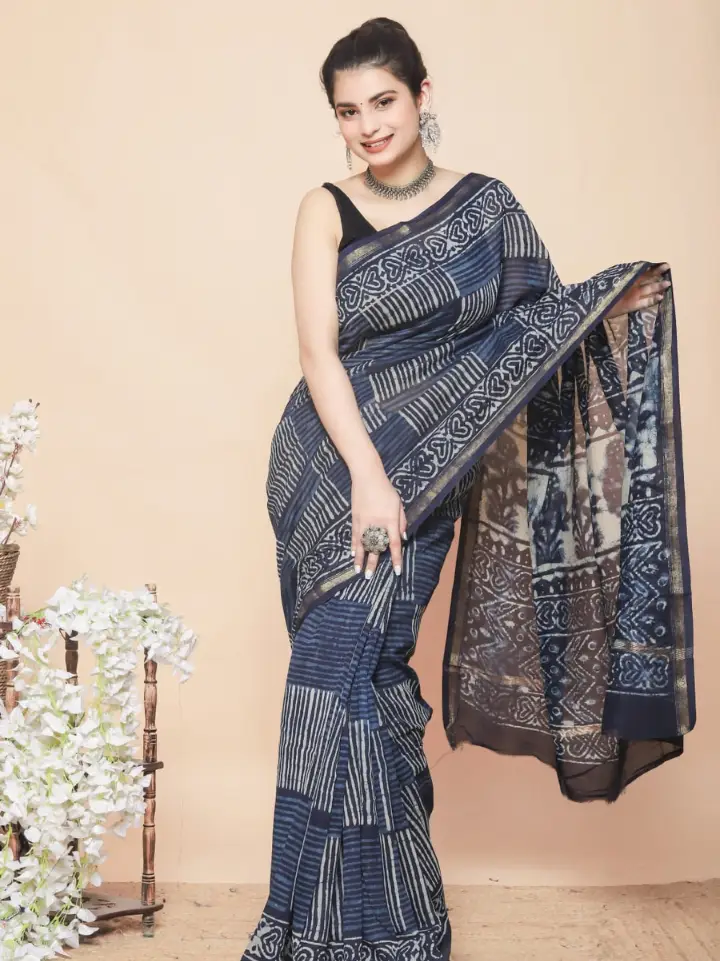
Chanderi Sarees — Hand Block Printed
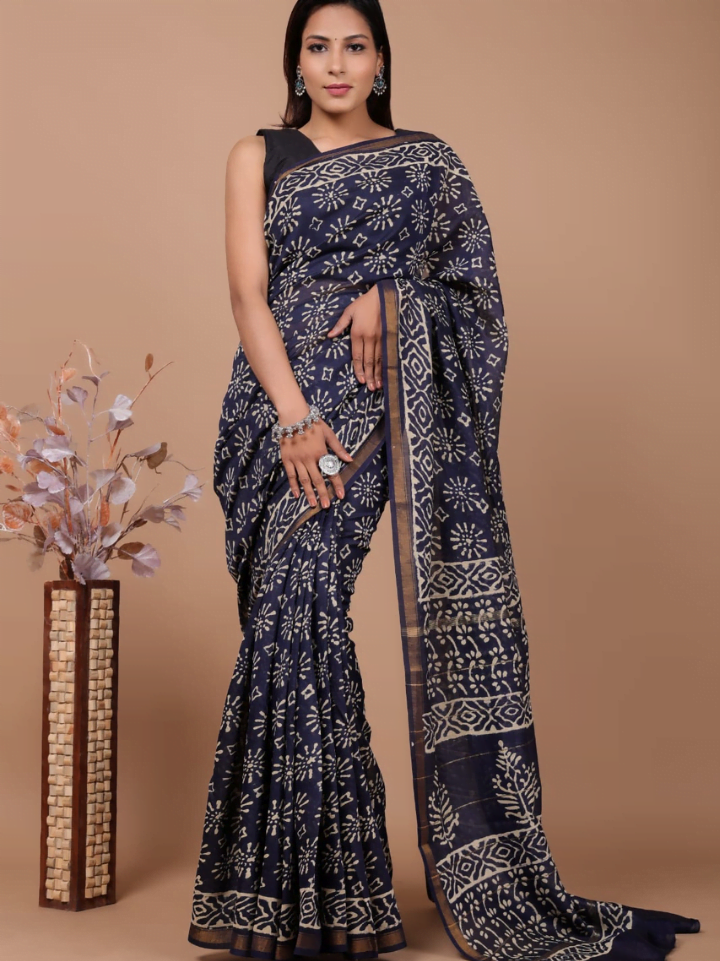
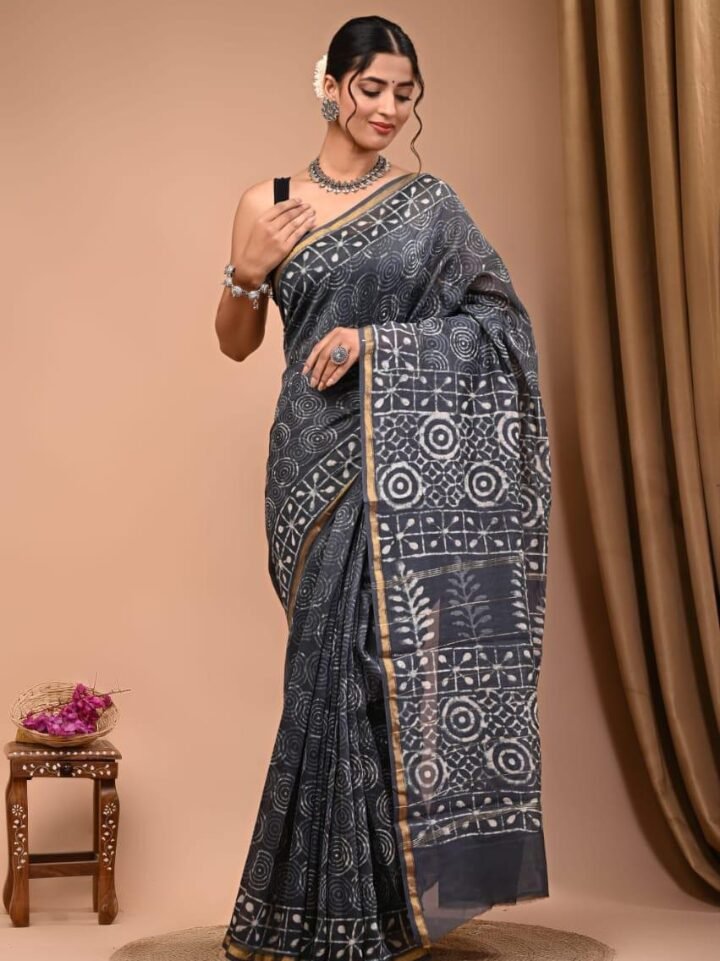
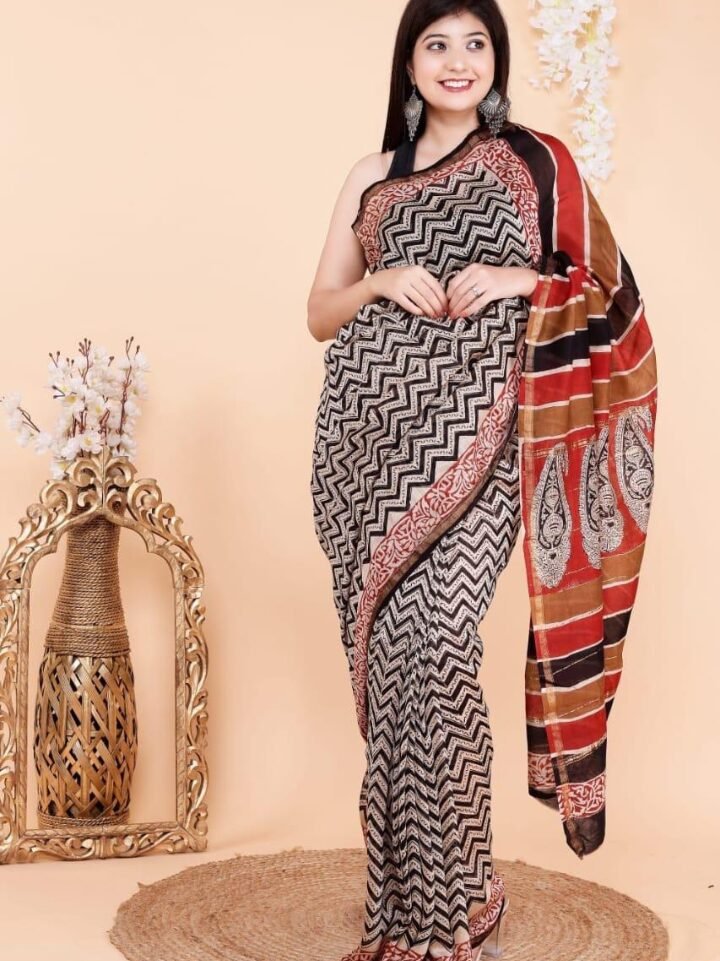
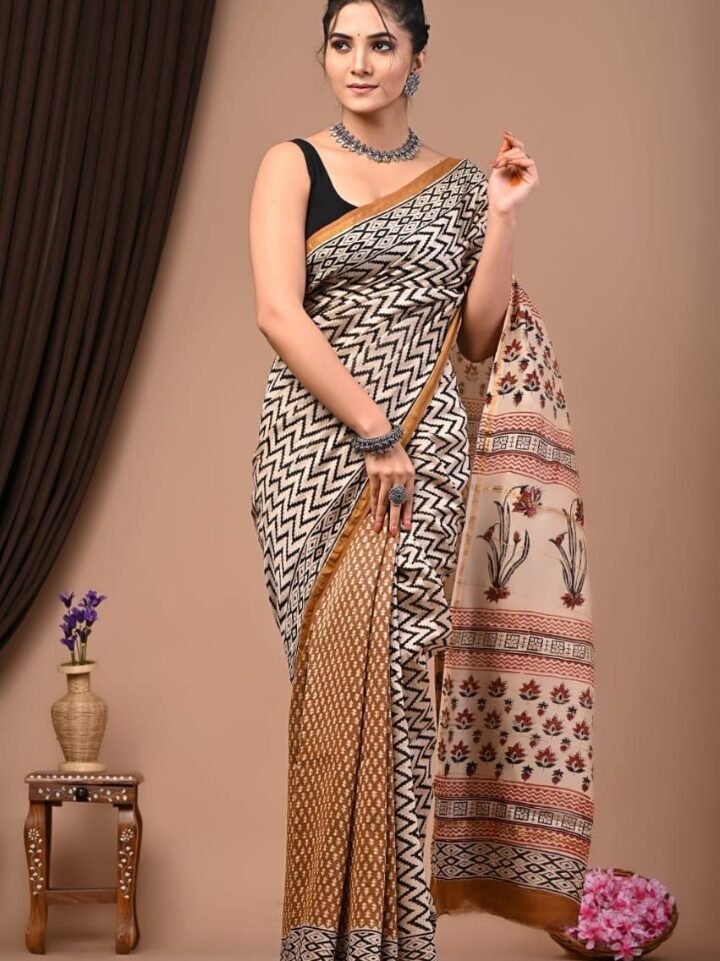
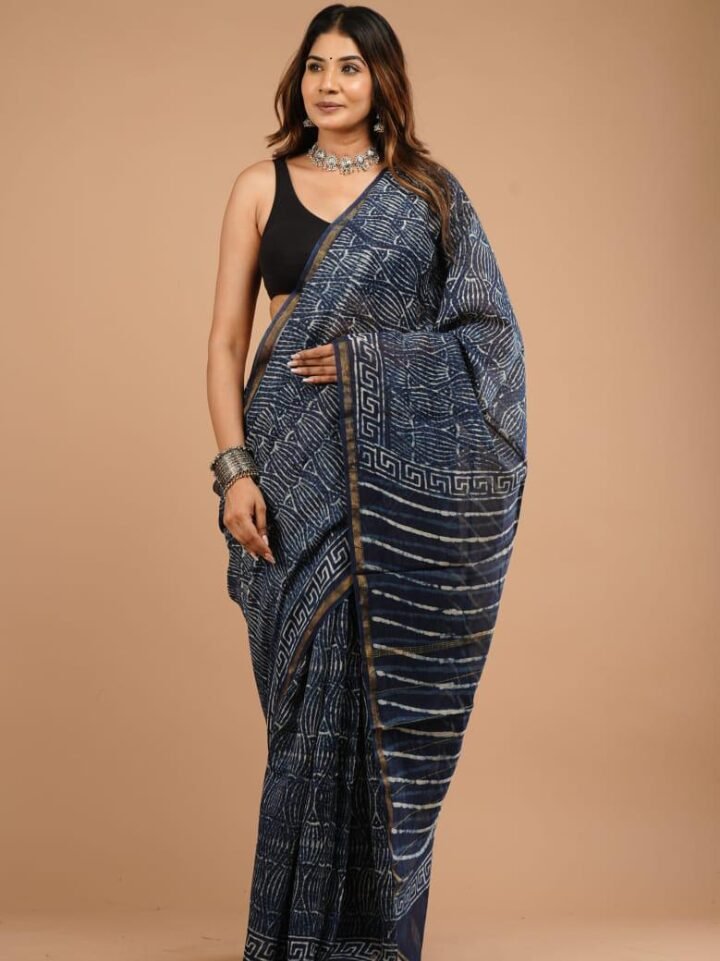
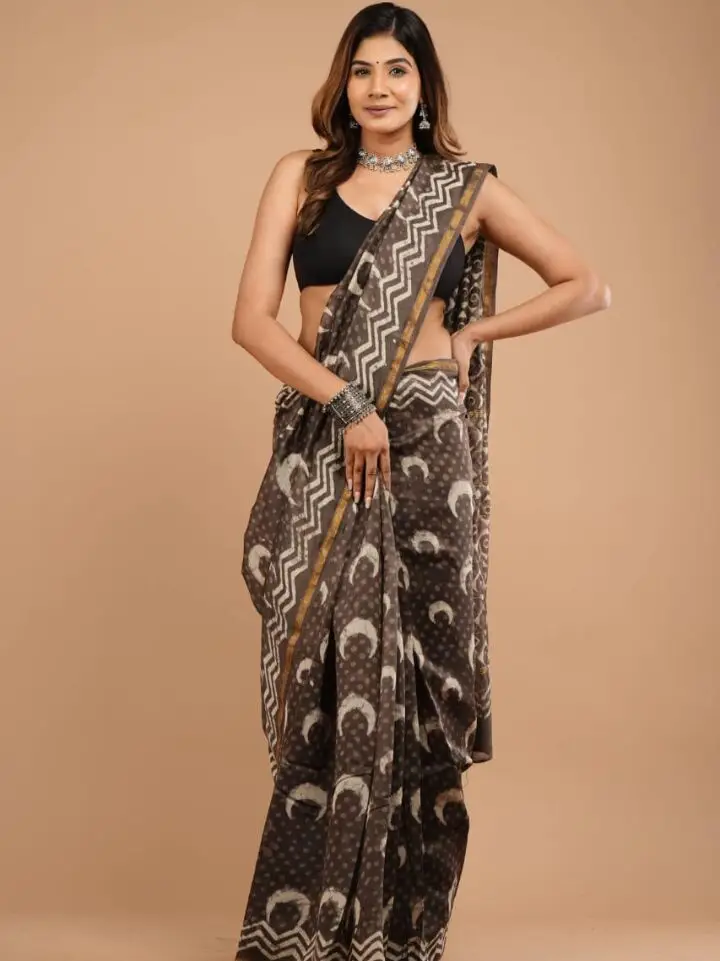
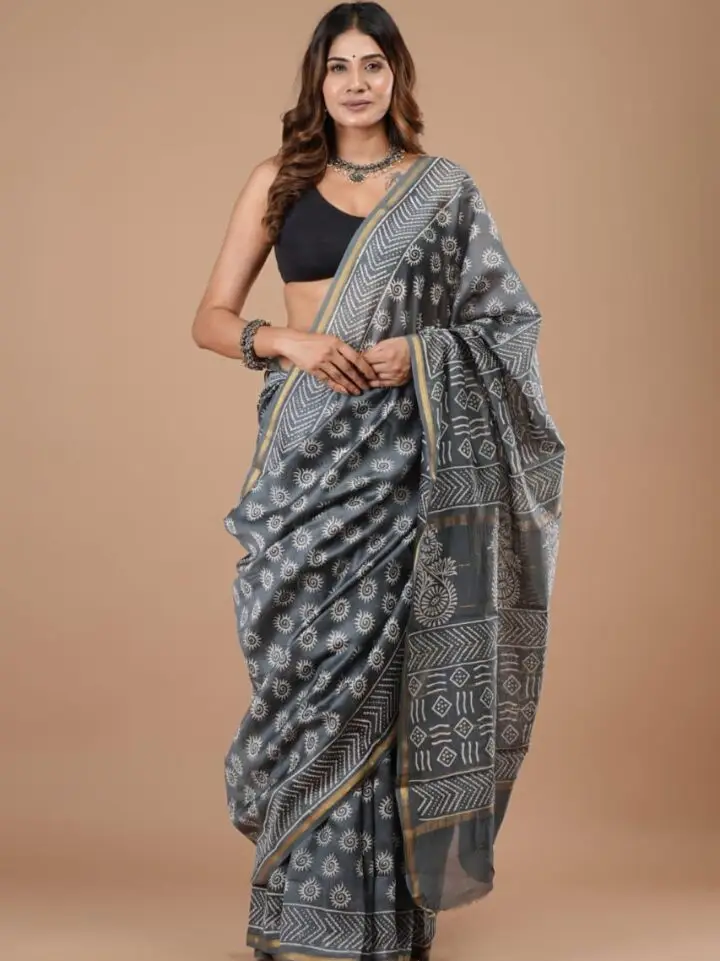
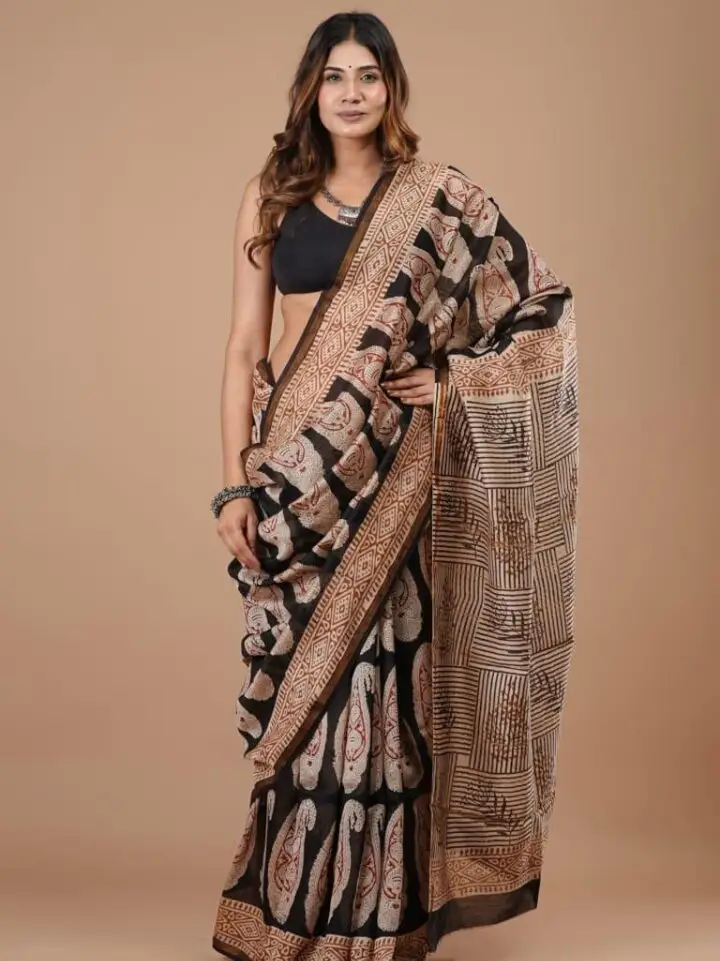
Every saree below is printed in Bagru using natural dyes. No factory. No machine print. Each one carries slight variation — that is the mark of a hand.
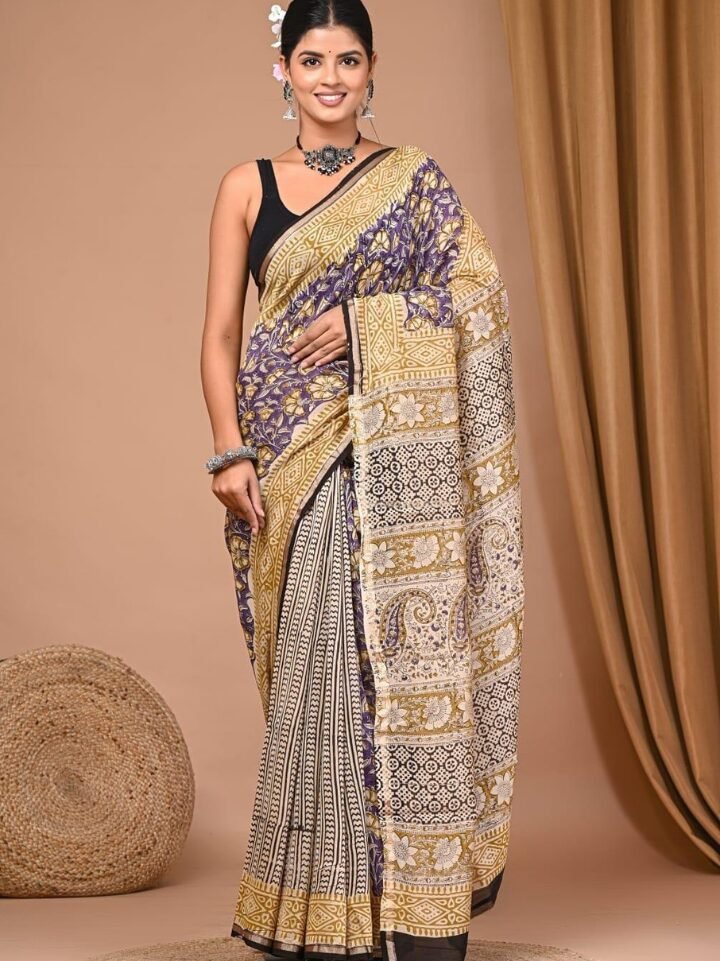
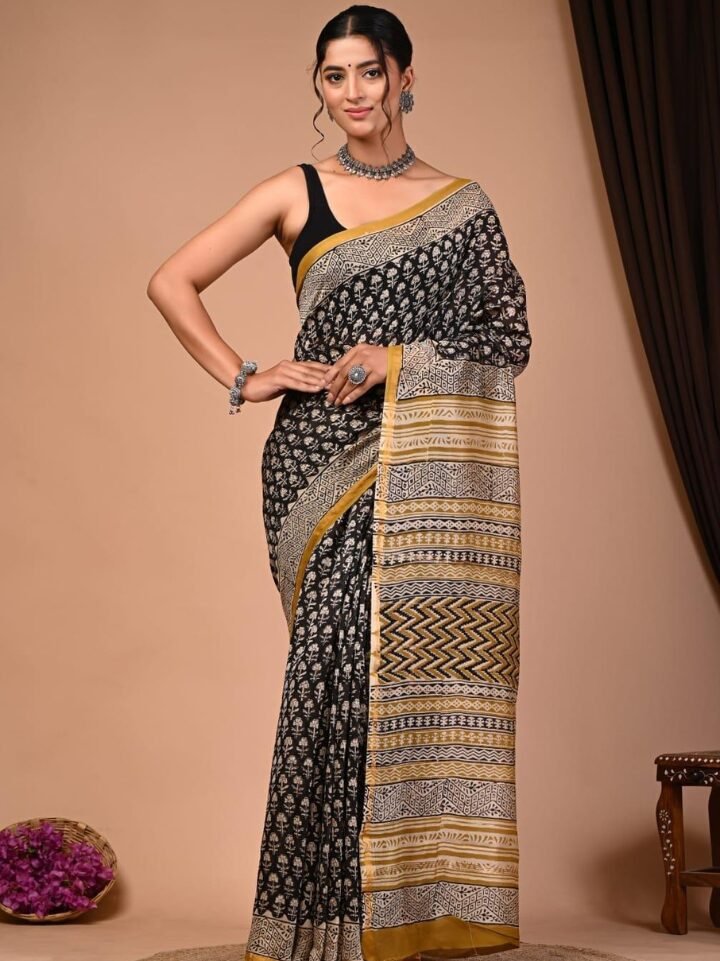
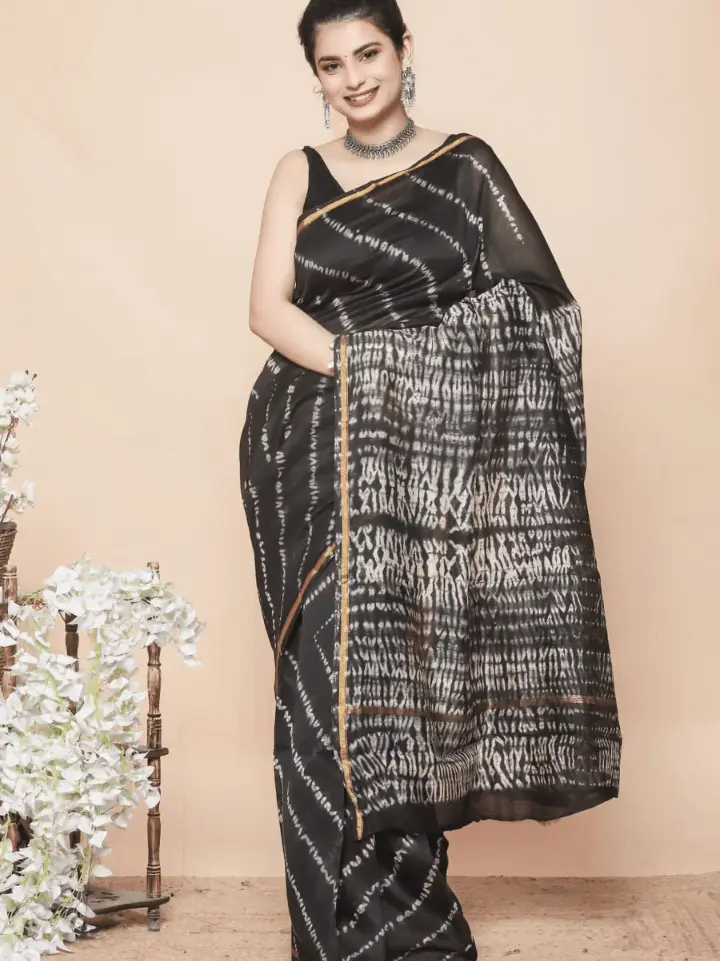
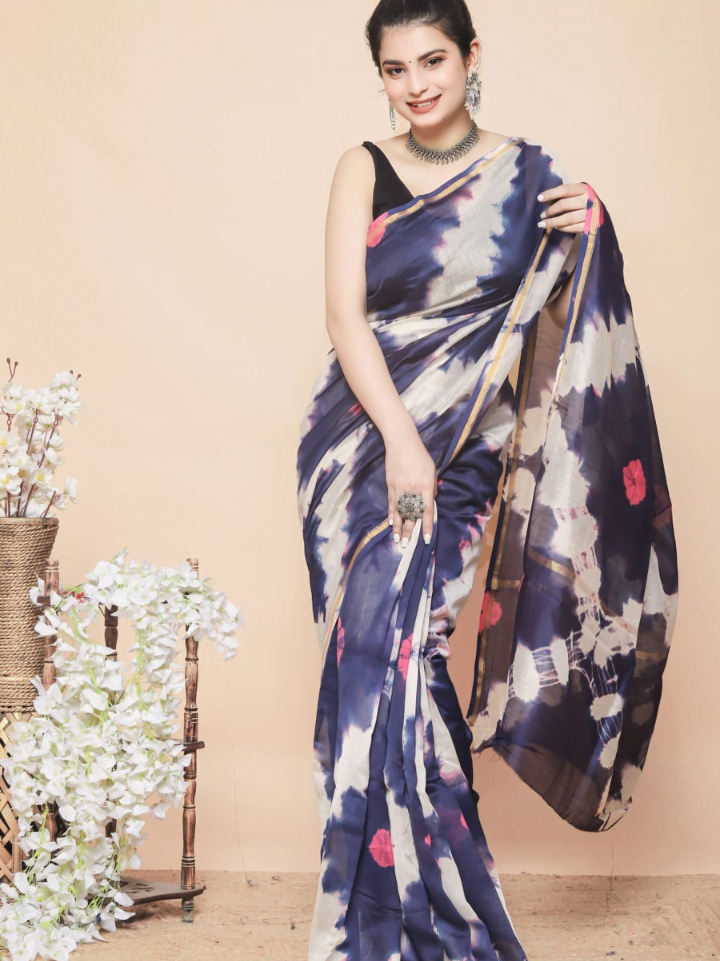
What is a Chanderi Saree?
A Chanderi saree comes from the town of Chanderi in Madhya Pradesh, where weavers have been crafting lightweight, semi-sheer fabrics since at least the 7th century. The name refers both to the place and to a specific weaving tradition — one that blends cotton and silk threads to produce a fabric that is airy, slightly lustrous, and unlike anything else in Indian textile heritage.
At SA Fab, we work with two varieties: pure cotton Chanderi and cotton-silk Chanderi. Both travel from the loom to our workshop in Bagru, Jaipur, where Chhipa artisans hand block print them using natural dyes. The weave gives the print a softness — colours appear slightly diffused, never harsh, because the fabric itself absorbs the natural dye differently than a plain cotton would.
What makes a hand block printed Chanderi saree different from any other printed saree is the combination of two handmade processes. The fabric is woven by hand. The print is applied by hand. Neither step involves a machine. That is rare, and it shows in how the finished saree feels.
Chanderi Cotton Saree vs Chanderi Silk Saree — Which One is Right for You?
Both are hand block printed at SA Fab using natural dyes. The difference lies in weight, occasion, and how the print settles on the cloth.
Chanderi Cotton Saree
Pure cotton Chanderi is more breathable and matte. The natural dye sinks deep into the cotton weave, giving rich, earthy tones — madder red, indigo blue, harda yellow. Best for daytime wear, office days, travel, and warm weather. Easier to manage and machine friendly after the first few washes.
Chanderi Silk Saree
Cotton-silk Chanderi catches light differently — there is a soft sheen from the silk threads in the weave. Natural dyes appear slightly brighter on silk. Better suited for evening occasions, festive gatherings, and weddings. Requires more careful handling but drapes with a grace that pure cotton cannot match.
Block Print Chanderi Saree
The block printed version of either fabric adds an additional layer of handmade character. Slight variations in print registration — where one stamp ends and another begins — are intentional. They are the fingerprint of the artisan. No two block printed Chanderi sarees are exactly alike.
Pure Chanderi Saree
When we say pure, we mean both fabric and dye. No synthetic blends, no chemical colours. The saree you receive has been made the same way Chhipa families in Bagru have made fabric for 450 years — carved block, natural paste, wooden press, sunlight to dry.
If you are choosing for the first time, start with a cotton Chanderi saree — it is forgiving, everyday-ready, and the natural dye colours are particularly rich on the cotton weave.
How Our Hand Block Printed Chanderi Sarees Are Made
The process starts before the block ever touches the fabric. Chhipa artisans in Bagru prepare the Chanderi cloth by washing it in plain water, then mordanting it — soaking it in a solution that opens the fibres to accept natural dye. Without mordanting, the colour would sit on the surface and wash away. With it, the dye bonds at a molecular level and lasts for years.
Once the cloth is prepared, hand-carved teak and sheesham blocks are inked with the dye paste and pressed onto the fabric in a steady, rhythmic sequence. A typical Bagru print uses between 6 and 12 blocks per design — each one carving a different element of the pattern. Flowers, geometric fills, border motifs, and field patterns are applied one at a time, layer by layer.
The printed cloth dries in the open air, then passes through a fixation bath and multiple wash cycles before it is ready. The entire process takes two to three days for a single saree. There is no shortcut in it.
You can read the full process in our hand block printing guide — it covers every step from block carving to the final wash.
Why Bagru Block Printing Makes Every Chanderi Saree Different
Bagru is a village 30 kilometres outside Jaipur. The Chhipa community has lived and printed here for over 450 years. Their craft is defined by natural dyes, wooden blocks, and a process that has not been mechanised — not because machines are unavailable, but because the Chhipa families have chosen to protect what makes their work valuable.
Bagru prints carry specific visual signatures: earthy base tones from the iron-clay paste used in resist printing, soft geometric borders, and floral fills that have been passed down through family workshops over generations. When you combine these prints with Chanderi's sheer weave, the result is a saree that feels simultaneously ancient and easy to wear today.
SA Fab works directly with these artisans. There is no middleman between the Chhipa workshop and your doorstep. The price you pay reflects fair artisan wages — not the margin of a showroom, distributor, or export house.
Read the full history in our rich history of Bagru block printing — it covers the Chhipa community, the natural dye tradition, and how Bagru became one of India's most important textile villages.
"A slight shift in the print, a border that doesn't align perfectly — these are not flaws. They are the evidence that a human hand made this."
SA Fab — Bagru, JaipurLatest Chanderi Sarees from Bagru
New block printed designs added regularly. Each one made in our Bagru workshop using seasonal natural dye combinations.
How Chanderi Compares to Other Saree Fabrics
Choosing a saree fabric is about matching the weave to the occasion and climate. Here is how Chanderi sits alongside other fabrics we work with at SA Fab.
| Feature | Chanderi Cotton | Chanderi Silk | Pure Cotton | Linen |
|---|---|---|---|---|
| Weight | Very light | Light | Medium | Medium-light |
| Sheen | Matte | Soft sheen | Matte | Matte |
| Drape | Flowing | Graceful | Structured | Casual flow |
| Best for | Daily / office | Festive / weddings | All seasons | Summer / travel |
| Natural dye absorption | Deep, earthy tones | Bright, luminous tones | Rich, saturated | Soft, natural tones |
| Block print quality | Clean, defined | Slightly diffused | Very defined | Slightly textured |
| Care | Cold hand wash | Dry clean or gentle hand wash | Easy hand wash | Cold hand wash |
All SA Fab sarees are hand block printed in Bagru using natural dyes regardless of fabric. The fabric changes; the craft does not.
For a deeper look at how Chanderi and cotton weaves compare as a purchase decision, read our article: Chanderi vs Cotton Saree — Which One Should You Buy?
Natural Dye Colour Stories in Our Chanderi Sarees
The colours in a hand block printed Chanderi saree do not come from a chemical formula. Each one has a source in nature, and each one behaves differently on fabric.
Indigo Chanderi Saree
Deep, cool blue from the indigo plant — one of the oldest natural dyes in India. On Chanderi's sheer weave, indigo takes on a rich, layered quality. The colour deepens with each wash rather than fading.
Madder Red Chanderi
Warm terracotta and madder red from the root of the Rubia plant. On cotton Chanderi, this reads as a deep brick red. On silk Chanderi, it pulls slightly brighter — closer to a pomegranate tone. These are the reds that give Bagru its visual identity.
Harda Yellow / Bottle Green
Harda seed produces a warm harda yellow, and when combined with indigo overdye, creates the earthy bottle green that is distinctive to Bagru block printing. Neither shade exists in synthetic dye — you cannot replicate this green in a factory.
Black Chanderi Saree
Ferrous iron solution is the source of Bagru's characteristic black. Applied as a resist or as a direct dye, it creates the crisp outlines and deep fills that define the geometric border work in traditional Bagru print sarees.
When to Wear a Chanderi Saree
The case for Chanderi has always been its range. It is not a fabric that waits for a special occasion. A cotton Chanderi saree at the office reads as considered and polished without trying. The same saree at a morning puja or small family gathering feels entirely appropriate. For festive evenings or a Chanderi saree for a wedding — move to the silk blend, where the natural dye colours are slightly luminous under light.
Office Wear
Cotton Chanderi in indigo or harda yellow. Lightweight, doesn't wrinkle easily on commutes, and looks intentional rather than dressed-up.
Festive Mornings
Block printed Chanderi in madder red or bottle green. The natural dye colours pair well with gold jewellery and are right for Diwali, Navratri, and Puja mornings.
Chanderi Wedding Sarees
Silk Chanderi in deep red or indigo. The sheen of the silk weave gives a subtle richness without competing with the jewellery or occasion. Appropriate as a wedding guest saree and as a mehendi or morning wedding outfit.
Travel
Cotton Chanderi is one of the most packable sarees you will own. It folds without bulk, releases creases easily, and the earthy natural dye colours look right in any setting.
Chanderi Saree Price at SA Fab
Hand block printed Chanderi sarees at SA Fab are priced to reflect the craft, not a retail markup. Every saree is made by Chhipa artisans in Bagru using natural dyes and genuine Chanderi fabric. Prices start from ₹2,499 for cotton Chanderi and go upward for silk blends with more complex block print designs.
Free shipping across India on every order. Worldwide delivery available. 7-day easy returns and exchange. We do not offer COD — payments via UPI, Visa, Mastercard, RuPay, and Net Banking.
To shop the full range, visit the Chanderi saree collection.
Care Guide — How to Wash a Hand Block Printed Chanderi Saree
Natural dyes are fixed deeply into the fibre, but they do need care in the first few washes. The rule is simple: cold water, gentle handling, shade drying. Follow this and your Chanderi saree will hold its colour for years.
Cold Hand Wash
Use cold water only. Warm water loosens natural dye faster.
Mild Detergent
Use a gentle, pH-neutral detergent. Avoid harsh chemicals.
Wash Separately
First two washes — separate from other garments. Some dye release is normal.
No Wringing
Gently press water out. Wringing distorts the Chanderi weave.
Shade Dry
Direct sunlight fades natural dyes. Always dry in shade.
Medium Iron
Medium heat, on the reverse side. Do not steam directly on print.
For cotton Chanderi, after the first few careful washes, the saree becomes softer and more pliable. The natural dye colours settle into a slightly muted tone — this is not fading, it is the natural aging of plant-based dyes, and it is considered beautiful.
About SA Fab — Why We Make Chanderi Sarees This Way
SA Fab is based in Ganga Vihar, Bagru, Jaipur — inside the village where these sarees are made, not in a city showroom that sources from it. Our workshop works directly with Chhipa community artisans whose families have been printing with natural dyes in Bagru for generations.
We do not use synthetic dyes. We do not use machine printing. We do not work through factory intermediaries. Every piece on this page was made by a person using a carved wooden block and a natural dye paste, in a workshop in Bagru, Rajasthan.
This is not a positioning statement. It is how the business works. When you buy a hand block printed Chanderi saree from SA Fab, you are buying from the source — and paying a price that supports fair artisan wages, not import margins.
Reach us on WhatsApp at +91 80055 43240 or email info@handblockprintsbagru.com. We are available Monday to Saturday, 10am to 7pm IST.
Frequently Asked Questions
Shop Chanderi Sarees Direct from Bagru
Hand block printed by Chhipa artisans. Natural dyes. Free shipping across India. 7-day returns.