
Hariyali Teej 2026: What to Wear
A green outfit guide for every kind of woman — from the saree lover to the kurti devotee
Hariyali Teej falls on 15 August 2026 — the most festive Sawan day of the year. Green is the colour. Here's how to wear it right, in hand block printed natural cotton and silk from Bagru.
Hariyali means green. And on this day, every shade of it is right — the deep forest green of a freshly washed Ajrakh print, the sage softness of hand-blocked cotton, the apple-green sheen of modal silk catching the Sawan light. This is the festival where the colour you wear isn't a trend choice. It's a devotion.
This year, Hariyali Teej falls on Saturday, 15 August 2026 — Sawan Shukla Tritiya, the day that celebrates the reunion of Goddess Parvati and Lord Shiva after her 107 lifetimes of devotion. It also falls on India's Independence Day, which gives this Teej a double significance worth dressing for. Women wear green, apply mehndi, observe the vrat, and celebrate the lushness of the monsoon all at once. Here's how to choose your Hariyali Teej outfit with a little more intention than just reaching for whatever's green in the wardrobe.
Why Green?
The word "Hariyali" means greenery — the earth covered in fresh growth after the monsoon arrives. Green symbolises fertility, new beginnings, and marital prosperity in Sawan traditions. On Hariyali Teej, wearing green is not a style preference. It is the festival itself, carried in the colour of your clothes, your bangles, and the mehndi on your hands.
"Goddess Parvati wore 107 lifetimes to earn this day. You can at least wear a good saree."— SA Fab
The Hariyali Teej Outfit Guide
Six genuine hand block printed pieces, all in the green family, for every kind of celebration.
Light Apple Green Leaf Print Modal Silk Saree
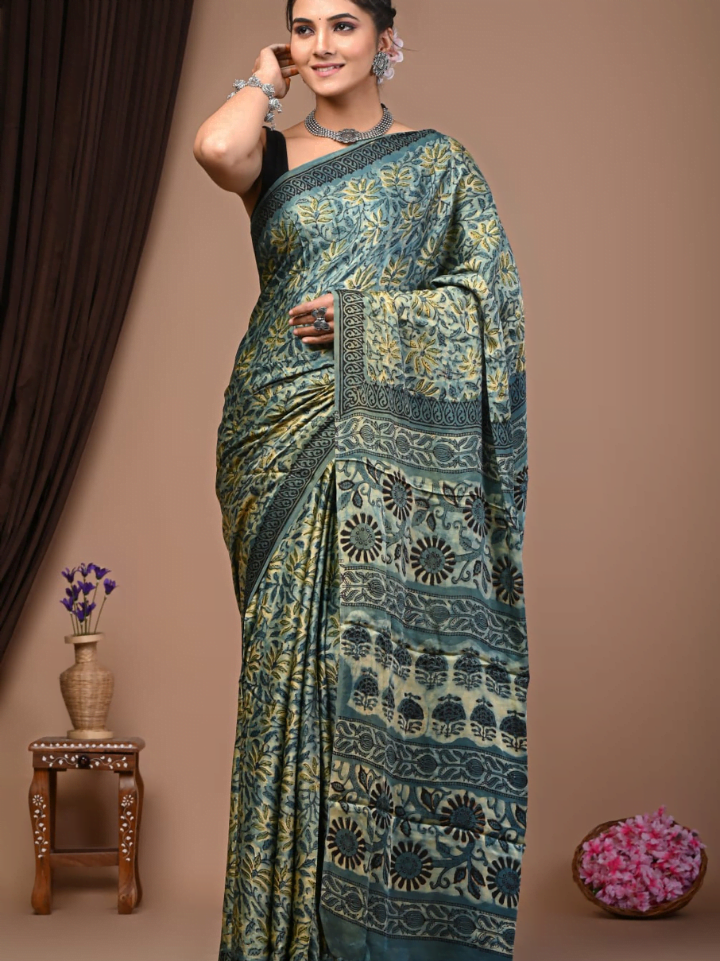
There's a specific kind of green that belongs to Hariyali Teej — not neon, not forest-dark, but the fresh, living green of new leaves on a monsoon morning. This apple green modal silk saree captures exactly that. The leaf print motif is botanical and quietly festive, the kind of detail that reads as intentional rather than try-hard. Modal silk drapes effortlessly and photographs beautifully in natural light.
Shop This SareePastel Green Small Motif Modal Silk Saree
If your Teej is a quieter one — a small family puja, a meal with the in-laws, an afternoon of mehndi rather than a full mehfil — then the pastel green small motif saree earns its place more than a bolder print would. The muted tone and delicate repeat keep the look graceful without requiring accessories to match. Let the mehndi on your hands do the talking; let the saree stay soft.
Shop This SareeSage Green Floral Anarkali Suit
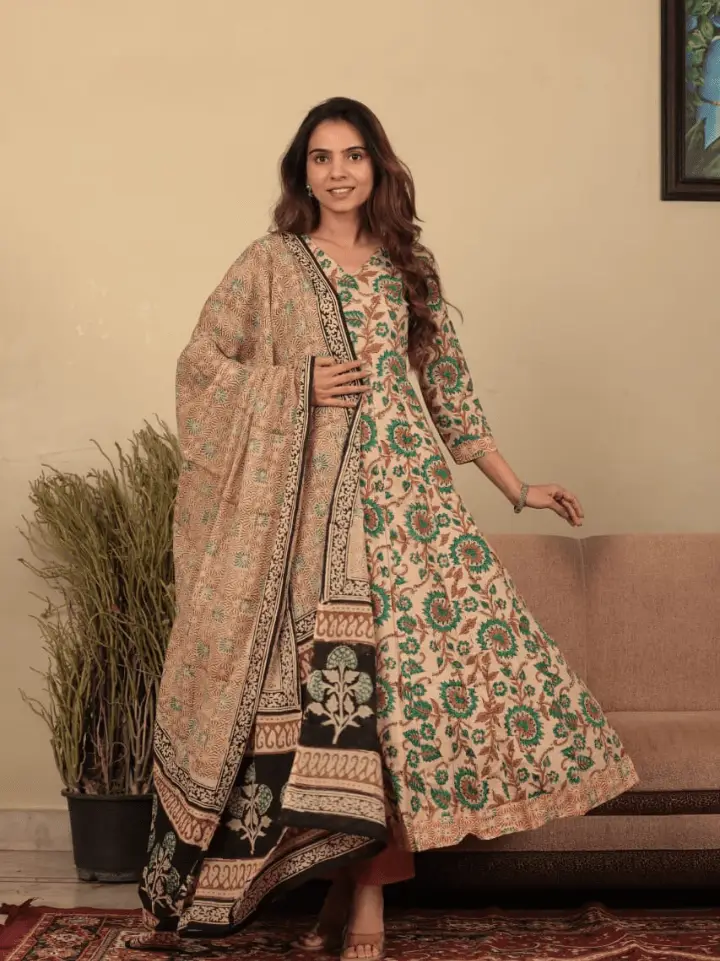
The Anarkali silhouette was made for festivals — it has the sweep and the presence without the effort of draping a saree. This sage green cotton version carries soft hand block floral motifs pressed by Chhipa artisans in Bagru, the kind of print that looks more beautiful the closer you stand to it. The sage tone is quieter than bright green but still unmistakably Teej.
Shop This AnarkaliTropical Green Traditional Motif Anarkali Kurti
Tropical green carries the energy of the monsoon in a way sage or pastel doesn't. The traditional motif print gives it an ethnic grounding without being heavy, and the cotton keeps it genuinely breathable through a warm August day. Pair it with gold jhumkas and fresh flowers in your hair and the outfit does the rest.
Shop This KurtiPure Cotton Suit with Dupatta
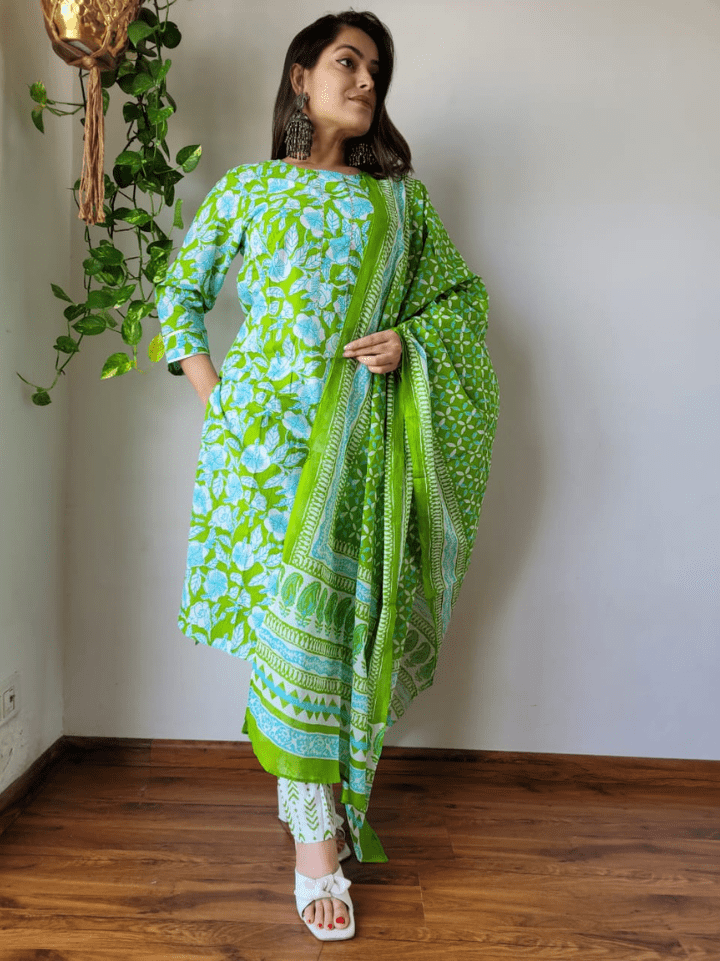
The cotton suit set is the most versatile Teej outfit there is — it moves freely, it photographs well, it works for the morning puja and the afternoon family gathering equally. Dress it up with heavy silver jewellery for a formal occasion, or keep it minimal for a relaxed Teej at home.
Shop This SuitDesigner Short Kurti — Green Kalamkari
Not everyone's Teej is a full-length celebration. The green Kalamkari short kurti is for the woman who wants to mark the occasion without the full festive apparatus — paired with palazzo pants or a printed skirt, it's a complete Hariyali Teej look that still carries genuine craft.
Shop This KurtiHow to Style it — Three Rules
1. Green should do the talking. Keep jewellery tonal — gold or green glass bangles complement without competing. Avoid statement pieces in contrasting colours that pull the eye away from the outfit.
2. Mehndi is part of the look. Style your outfit around the assumption that you'll have mehndi on both hands. Full sleeves or three-quarter length show off the mehndi without hiding it. Heavy embellishment at the wrist competes with the Mehendi — keep it minimal there.
3. Flowers over jewellery in the hair. Marigold and jasmine in the braid are traditional for Teej and photograph beautifully against green fabric. They're also significantly cheaper than a set of gold hair accessories and look more genuinely festive in actual photographs.
Why Hand Block Print for Teej?
Hariyali Teej is a festival rooted in devotion, nature, and handmade things — the swing tied by hand to a Banyan tree, the mehndi applied by a practised hand, the Ghevar made at home in the kitchen. A hand block printed outfit fits this spirit in a way a mass-manufactured synthetic simply doesn't. Every motif on a Bagru block printed piece was pressed by a human hand using a carved wooden block and natural dye, which makes it genuinely handmade in the same tradition the festival celebrates.
If you want to understand the full craft, our complete guide to hand block print walks through the entire process, and the story of Bagru print tells the 450-year history of the community behind every piece.
The Significance of Teej 2026
Hariyali Teej celebrates the reunion of Goddess Parvati and Lord Shiva. The Teej katha recalls that the Devi took 107 births striving to attain Lord Shiva as her husband, and in her 108th life, as Goddess Parvati, she performed tapasya of unimaginable austerity before Lord Shiva recognised her devotion.
During Hariyali Teej, married women are gifted with Shringara items such as traditional clothing, bangles, Mehendi, sindoor, and sweets. Women particularly dress in green lehengas or sarees and spend the day swinging along with dancing and singing with other women.
This year's Teej carries additional significance because Hariyali Teej 2026 falls on 15 August, which is also India's Independence Day, giving the festival a unique dual significance of national pride alongside spiritual festivity.
Frequently Asked Questions
When is Hariyali Teej 2026?
What colour should you wear for Hariyali Teej?
Can unmarried women celebrate Hariyali Teej?
How is hand block printed fabric different from regular printed fabric?
Wear Something Handmade for a Handmade Festival
All Hariyali Teej outfits are hand block printed in Bagru, naturally dyed, and ship free across India in time for 15 August.
Free shipping across India · Worldwide delivery available · 7-day easy returns and exchange
Need help picking the right outfit for Teej? WhatsApp us — Monday to Saturday, 10am to 7pm IST.
Saloni Agrawal is the Founder of SA Fab and an ethical textile researcher dedicated to preserving India's 450-year-old handloom heritage. Working directly with master artisans in Bagru, Rajasthan, her work focuses on zero-waste manufacturing and sustainable natural dyes. Her academic research on indigenous Dabu mud-resist dyeing is officially indexed and published on Google Scholar.