
World Cup 2026 Countries — and the Textile Traditions They Share With India
As the world unites for the beautiful game, five World Cup 2026 nations share something deeper with India — a centuries-old tradition of natural dye craft that no factory has replaced.
48
Nations Competing
6
Continents Represented
5
Craft Traditions Featured
450+
Years of Bagru Block Print
On 11 June 2026, the world's biggest sporting event begins in North America. For the first time, 48 nations will compete in the World Cup — from Morocco to Japan, from Senegal to Argentina. Each nation brings its language, its football culture, its food, and its flag. What most people watching do not know is that several of these nations also share something with a village 30 kilometres outside Jaipur: a tradition of making cloth by hand, using plants and earth for colour, that has survived industrialisation, two world wars, and the synthetic dye revolution.
This is that story. And at the end of it, you can own a piece of India's version — made this week, in Bagru, by SA Fab's Chhipa artisan families.
48 Nations, One Tournament, and a Shared Craft History
The World Cup 2026 is the largest in football history. For the first time, 48 qualified nations will play across 16 venues in the United States, Mexico, and Canada between 11 June and 19 July 2026. The expanded format means Africa has 9 nations represented, Asia has 8, and South America sends 6 of its football powerhouses.
Football, of course, is the shared language. But if you look at the map of qualified nations — Morocco, Japan, Senegal, Mexico, Argentina — you find something else in common. Each of these countries carries a living tradition of handmade textile craft using natural dyes. Each of these traditions is fighting the same battle India's Chhipa artisans face: staying alive in a world that has largely moved to synthetic colour and machine production.
Here are five World Cup 2026 nations and the craft they share with Bagru.
Five World Cup Nations, Five Natural Dye Traditions
Morocco
Natural Dye Weaving · Fez & Atlas MountainsMorocco's textile tradition runs as deep as its football story. In the medinas of Fez and in the villages of the Atlas Mountains, Amazigh artisans have been dyeing wool and cotton using natural sources for centuries — indigo extracted from the indigofera plant for their characteristic deep blues, madder root for warm reds, pomegranate rind for golden ochres, and saffron for the rich yellows seen in Berber weavings. The tanneries of Fez, where natural vegetable dyes still colour leather and cloth in open-air stone vats, are among the oldest working dye houses in the world. Morocco went further at the 2022 World Cup than any African nation in history — and their craft tradition is just as exceptional.
Japan
Aizome Indigo Dyeing · Katazome Stencil PrintingJapan was the first nation to qualify for the World Cup 2026, and its textile heritage is equally first-rate. Japanese indigo dyeing — known as Aizome — is one of the most refined natural dye traditions in the world. Artisans grow and ferment indigo in a process called Sukumo, building a vat that is nurtured like a living culture, fed daily with heat and turning. The resulting blues range from pale sky to almost-black navy across repeated dipping sessions — exactly the same physics that Bagru artisans use in their indigo vats. Japan also has Katazome, a resist-print technique using rice paste applied through carved stencils to create pattern on fabric before dyeing — a close cousin of Bagru's dabu mud resist printing.
Senegal
Bogolanfini · Natural Clay & Plant Resist DyeingSenegal's textile world includes one of West Africa's most distinctive craft traditions: mud-cloth dyeing, closely related to Mali's Bogolanfini. In this tradition, artisans apply fermented clay paste — prepared from river mud — onto cotton fabric in geometric patterns. The mud reacts with the mordant-treated cloth to create deep brown-black marks. Strips of fabric are then dipped in plant dye baths to set the background colour. The clay paste is later washed away, revealing the undyed pattern beneath. If this sounds familiar — it should. It is the same logic as Bagru's dabu mud resist printing, practised on the other side of the world by communities with no documented contact, arriving at the same technique through centuries of independent craft evolution.
Mexico
Oaxacan Natural Dye Weaving · Cochineal & IndigoMexico is both host nation and a country with one of the richest natural dye traditions in the Americas. In Oaxaca, Zapotec and Mixtec artisans have been weaving with natural dyes for over 2,000 years. The most famous is cochineal — a deep crimson extracted from the dried bodies of the cochineal insect that lives on nopal cactus — which became so valuable after the Spanish conquest that it was the second most traded commodity from the Americas after silver. Mexican artisans also work with indigo for blue, marigold flowers (cempasúchil) for yellow, and a purple extracted from the murex sea snail. The colour logic is the same as Bagru: root, plant, earth, and insect as the source of every tone.
Argentina
Andean Textile Weaving · Natural Dye Wool CraftDefending World Cup champions Argentina carry the Andean textile tradition of their indigenous Quechua and Aymara communities — one of the oldest and most technically sophisticated weaving traditions on earth. Andean weavers in the Argentinian northwest use natural dyes including indigo, cochineal, chica (a local plant giving bright yellow), and tara pods (Caesalpinia spinosa, a tannin-rich pod producing warm browns) on hand-spun alpaca and llama wool. The textiles carry encoded symbolic information — patterns that record community identity, seasonal calendars, and geographic markers — a parallel to the way traditional Bagru block print patterns carry the visual identity of the Chhipa community encoded in block design.
World Cup 2026 Nations — Craft Traditions at a Glance
| Nation | Craft Tradition | Natural Dye Used | Shared with Bagru |
|---|---|---|---|
| 🇲🇦 Morocco | Amazigh weaving, Fez tannery dyeing | Indigo, madder, saffron, pomegranate | Indigo, madder root, pomegranate rind |
| 🇯🇵 Japan | Aizome indigo dyeing, Katazome stencil | Natural indigo (sukumo vat) | Indigo vat process, resist printing |
| 🇸🇳 Senegal | West African mud-cloth resist dyeing | Fermented clay, plant baths | Mud resist principle (same as Dabu) |
| 🇲🇽 Mexico | Oaxacan natural dye weaving | Cochineal, indigo, marigold | Indigo, plant-source dye philosophy |
| 🇦🇷 Argentina | Andean wool weaving | Cochineal, indigo, tara pods | Tannin mordanting, natural plant dyes |
| 🇮🇳 India (Bagru) | Chhipa hand block printing | Madder, indigo, harda, iron, pomegranate | The source — 450+ years of practice |
"As the world unites for the beautiful game, SA Fab unites 200 artisan families to preserve the beautiful craft."
SA Fab — Bagru, Jaipur, RajasthanWhile the World Watches the Game — India's Craft Is Still Running
India did not qualify for the World Cup 2026. But India's craft did not need to qualify — it has been in the final for 450 years without interruption. In Bagru, a village 30 kilometres from Jaipur, the Chhipa community has been hand block printing with natural dyes since before modern football was invented. While other nations mechanised their textile industries in the 19th and 20th centuries, Bagru kept going with carved teak blocks, madder root vats, and the mineral-rich water of the Sanja River.
The craft that Morocco, Japan, Senegal, Mexico, and Argentina carry in their textile traditions — natural dye, handmade fabric, community-held knowledge — Bagru carries more completely than almost anywhere else. The 12-step process is unchanged. The blocks are still carved by hand. The dyes still come from the same plant and mineral sources they always did.
SA Fab is based inside Bagru. We work directly with Chhipa artisan families. When you buy from us, you are buying from the workshop, not from a retailer with a romantic story about a workshop. Read the full craft history: The Rich History of Bagru Block Printing and The Complete Guide to Hand Block Printing.
Own a Piece of India's Natural Dye Tradition — Direct from Bagru
While the World Cup 2026 runs through July, SA Fab's Chhipa artisans are printing the same fabric they have always printed — with the same natural dyes, the same carved blocks, the same 12-step process. Below is a selection of hand block printed fabric available to ship across India and worldwide. No minimum order. Free shipping.
All fabric sold in 10-metre rolls. Ajrakh, Dabu, Indigo, and Rapid prints available. Natural dyes only. Made in Bagru, Jaipur by SA Fab.
-
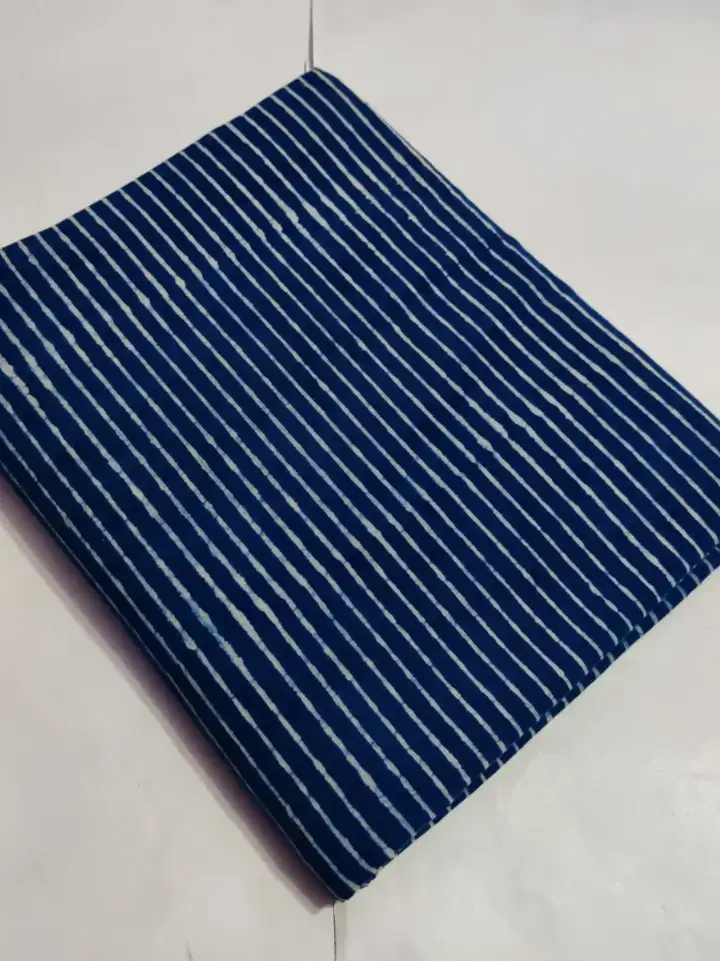
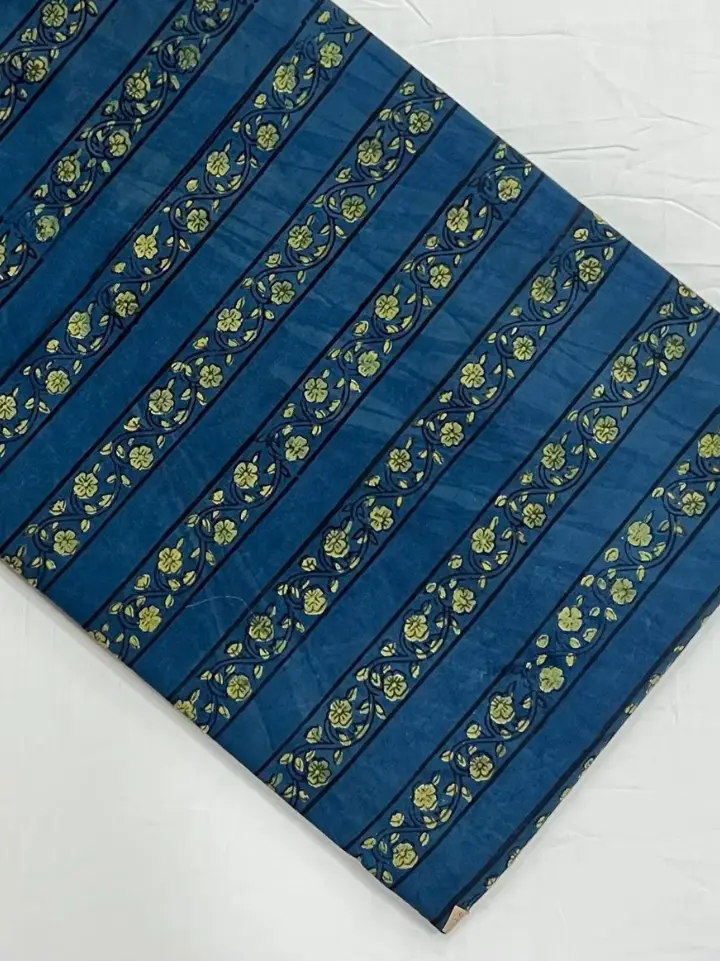
Indigo White Stripe Pure Cotton Fabric – Hand Block Print 10 Metre Roll
$21.96This product has multiple variants. The options may be chosen on the product pageClear10m -
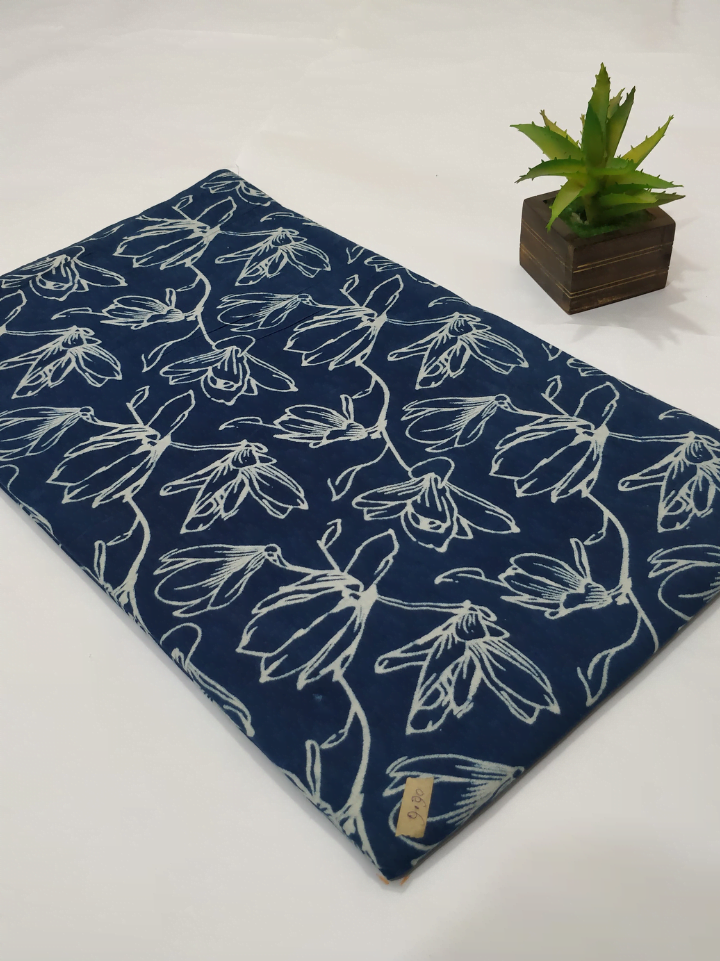
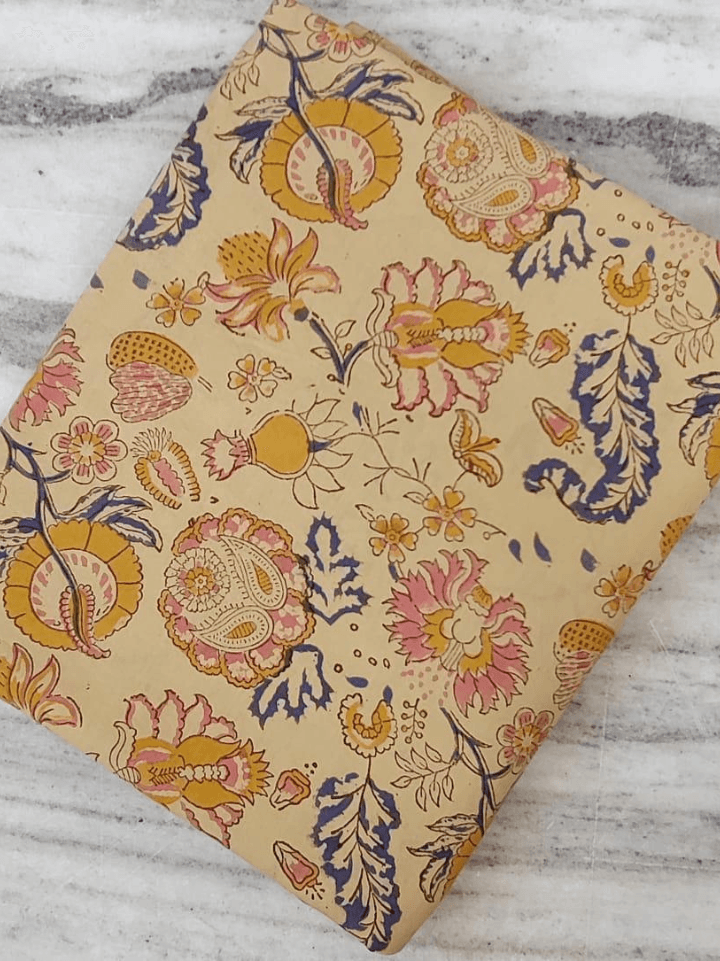
Indigo Floral Print Dyed Pure Cotton Fabric – Hand Block Print 10 Metre Roll
$21.96This product has multiple variants. The options may be chosen on the product pageClear10m -
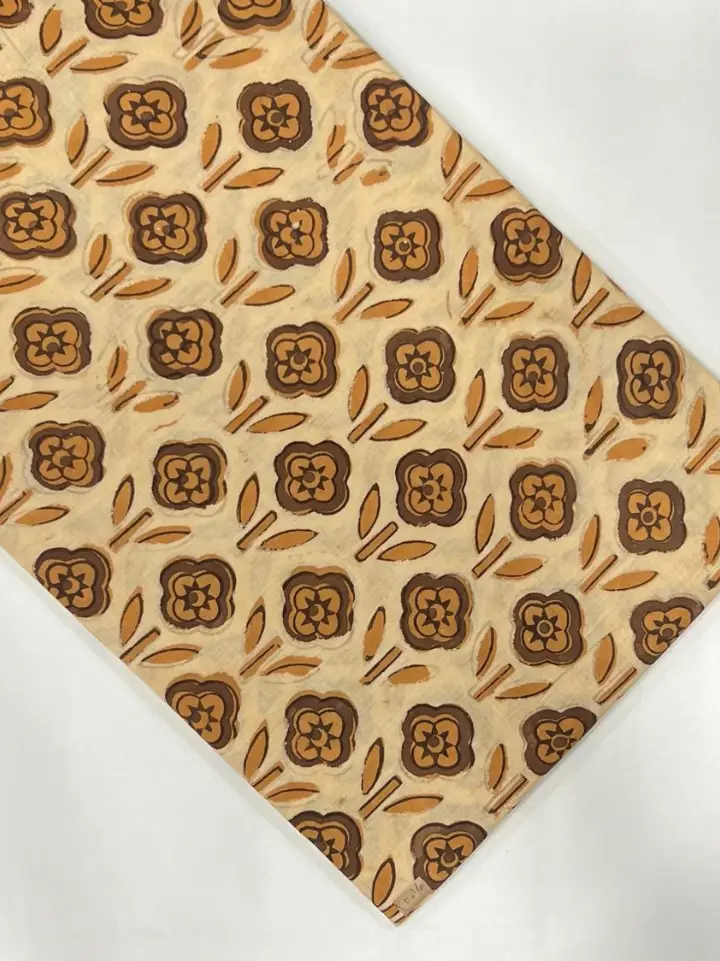
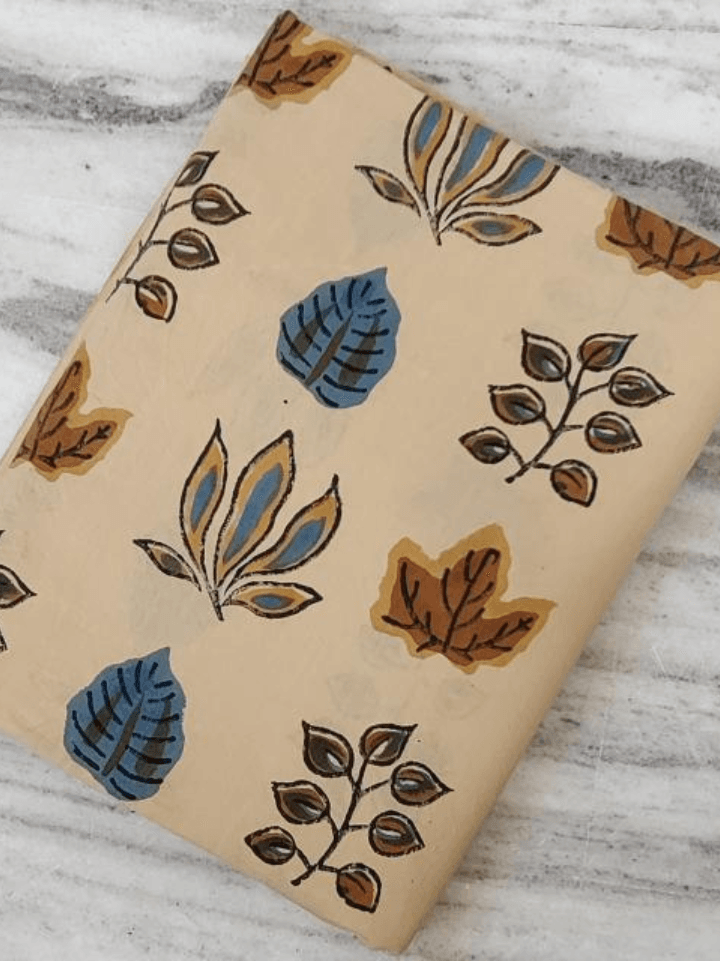
Beige Hand Block Printed Rapid Cotton Fabric 10 Metre Roll — Jaipur Block Print
$25.45This product has multiple variants. The options may be chosen on the product pageClear10m -
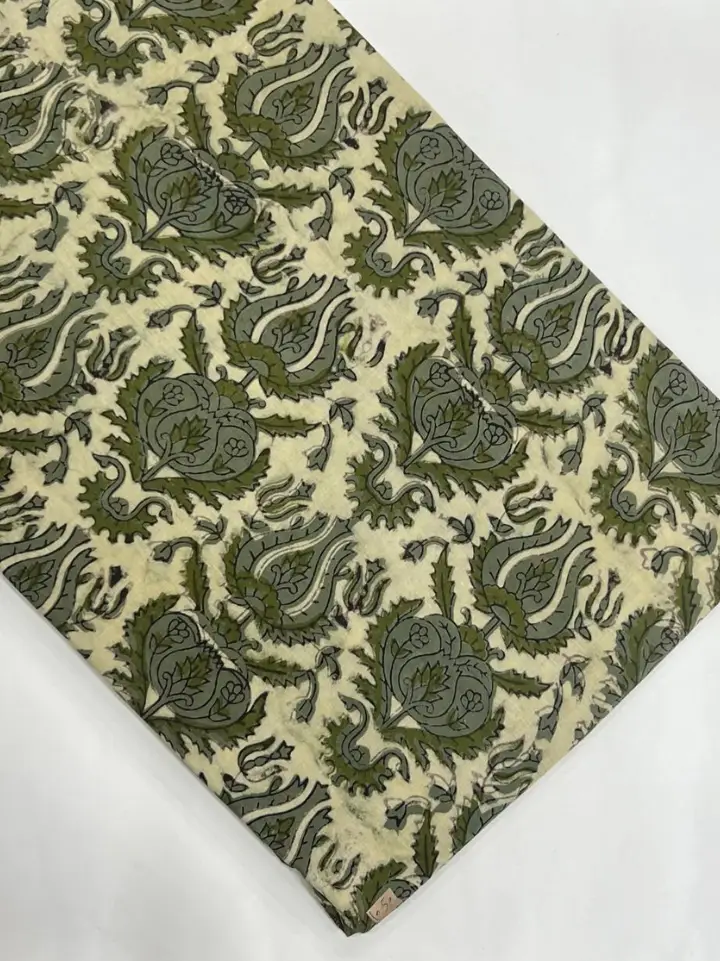
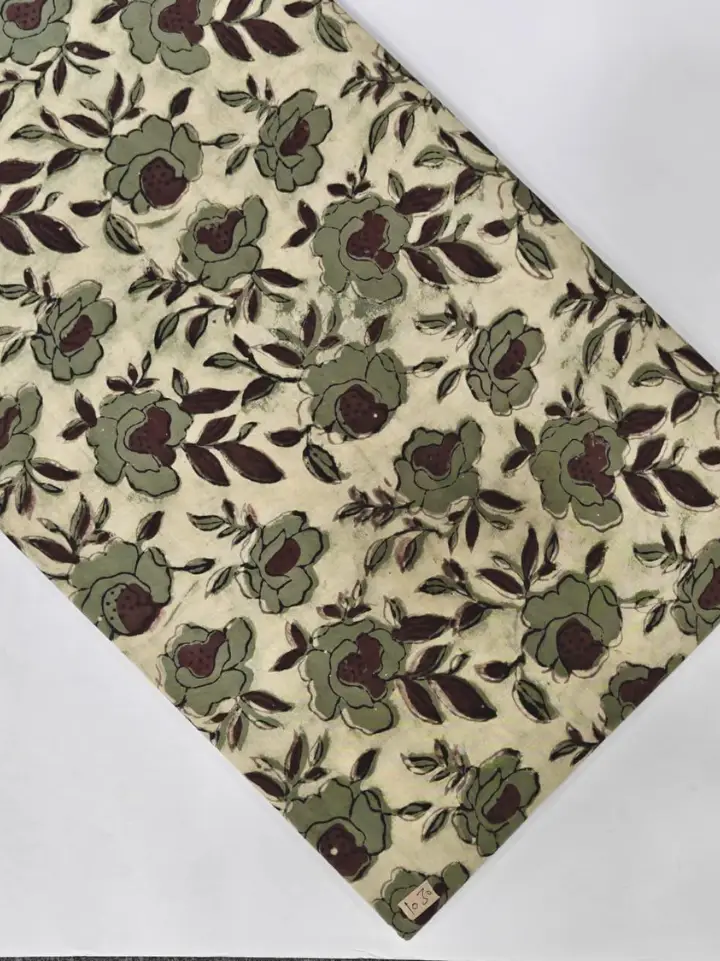
Khaki Floral Rapid Print Pure Cotton Fabric 10 Metre Roll — Hand Block Printed Bagru
$25.45This product has multiple variants. The options may be chosen on the product pageClear10m
Browse by print type: Ajrakh · Dabu · Indigo · Rapid Prints
Why Craft and Football Belong in the Same Conversation
Football endures because it is human. Twenty-two players, one ball, and the outcome is never guaranteed. The craft traditions described above endure for the same reason — they are irreducibly human. A carved wooden block pressed by a human hand cannot be perfectly replicated by a machine. A natural dye vat cannot be bottled and standardised. The variation is the point.
Both football and handmade craft require a community to sustain them. A football nation needs generations of players, coaches, and fans. A block printing village needs generations of artisans who choose to carry the knowledge forward. In Bagru, around 200 Chhipa families still make that choice. SA Fab exists to make that choice economically sustainable — by connecting their work directly to buyers who value what it is.
The World Cup will be over by 19 July 2026. The craft will still be running on 20 July. And the 21st. And the year after. That is what a 450-year tradition looks like. Read more about how it works: The Art of Hand Block Printing — Complete Guide.
The Game Ends. The Craft Doesn't.
Hand block printed fabric and clothing from Bagru, Jaipur. Direct from SA Fab's Chhipa artisan workshop. Free shipping across India.